First Impressions
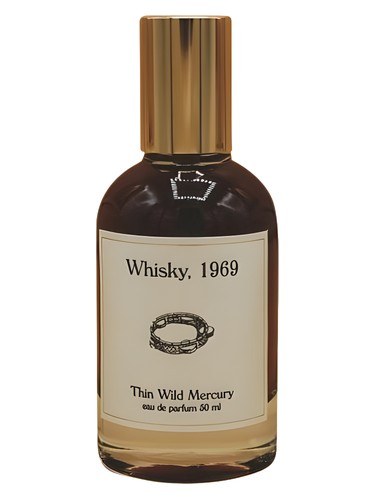
The first spray of Whisky, 1969 delivers what its name promises: warmth, complexity, and a certain amber-lit mystique. Cardamom and pink pepper burst forward with an electric freshness that''s anything but predictable—this is spice with verve, a crackling intensity that suggests the fragrance is far more interested in intrigue than in playing it safe. There''s an immediate sense that you''ve entered a narrative already in progress, one that''s equal parts refined and rebellious. The 1969 might reference a year of cultural upheaval, and this opening feels appropriately unorthodox for something marketed as feminine. It doesn''t whisper; it announces.
The Scent Profile
The architecture of Whisky, 1969 reveals itself as a masterclass in balancing heat with sophistication. Those opening notes—cardamom and pink pepper—dominate the first fifteen minutes with a fresh spiciness that registers at full intensity. The cardamom brings a green, almost eucalyptus-like clarity, while the pink pepper adds a piquant brightness that keeps things from veering too serious too quickly.
As the fragrance settles into its heart, the composition grows both warmer and more nuanced. Nutmeg enters with its characteristic dusty sweetness, layering warm spice over the initial brightness. Here''s where Whisky, 1969 reveals its unexpected twist: raspberry. It''s not the candy-sweet berry note you might fear, but rather a tart, almost wine-like fruitiness that reads more as texture than overtly gourmand. The ylang-ylang weaves through this phase subtly, its creamy floralcy providing just enough softness to prevent the spices from overwhelming.
The base is where the fragrance earns its autumnal allegiance. Cedar provides a dry, pencil-shaving woodiness that grounds the composition, while amber wraps everything in a resinous, skin-like warmth. This isn''t the sweet, vanillic amber of crowd-pleasers; it''s more austere, more contemplative. The woody and amber accords (registering at 82% and 76% respectively) create a foundation that''s substantial without being heavy, intimate without being cloying. The fragrance maintains its aromatic character throughout, that 50% accord ensuring it never loses its crisp edge even as it warms.
Character & Occasion
The community data tells a clear story: Whisky, 1969 is a creature of cold weather and evening light. With fall at 100% and winter at 95%, this is unequivocally a fragrance for when the temperature drops and layers come out. The 91% night rating versus a mere 27% for daytime wear reinforces what the nose already knows—this is a fragrance for after-dark encounters, for dinners that stretch late, for walks through city streets when the air turns crystalline.
The seasonal specificity isn''t a limitation; it''s a strength. This is a fragrance that knows exactly what it wants to be. Wearing it on a warm summer afternoon would be like showing up to a beach party in velvet—technically possible, but missing the point entirely.
Despite its feminine categorization, Whisky, 1969 occupies that increasingly popular territory where gender becomes irrelevant. The spice-forward composition and woody-amber base have a unisex appeal that will attract anyone drawn to warm, complex scents with backbone. It''s for someone who wants presence without projection, mystery without trying too hard.
Community Verdict
A 4.26 rating from 419 votes represents serious appreciation from a substantial community. This isn''t a niche obscurity with twelve devoted fans, nor is it a mainstream darling with thousands of mixed reviews. Instead, it occupies that sweet spot: widely tried, consistently loved. The rating suggests a fragrance that delivers on its promise, that resonates with those who seek it out. There''s a self-selecting quality here—people drawn to something called "Whisky, 1969" from a brand called Thin Wild Mercury probably know what they''re after, and the high rating confirms they''re finding it.
How It Compares
The comparison list reads like a who''s-who of modern niche warmth: Baccarat Rouge 540, Gypsy Water, Gris Charnel, By the Fireplace, Le Labo''s The Noir 29. These are all fragrances that trade in amber, woods, and a certain evening sophistication. Where Whisky, 1969 distinguishes itself is in that fresh-spicy opening—it''s more dynamic, less immediately cozy than By the Fireplace, less overtly luxurious than Baccarat Rouge 540, less hippie-nomadic than Gypsy Water. It carves out space as the option for those who want warmth with an edge, comfort with complexity.
The Bottom Line
Whisky, 1969 succeeds because it commits fully to its identity. This isn''t trying to be a four-season versatile crowd-pleaser; it''s a specialized tool for specific occasions, and it excels in that role. The 4.26 rating reflects a fragrance that''s found its audience and serves them well.
Should you buy it? If you find yourself reaching for spicy, woody fragrances when the weather turns cold, if you prefer your evening scents to have substance and character rather than sweet approachability, if you''re intrigued rather than put off by the comparisons to Gris Charnel and Le Labo—then absolutely. This deserves a spot in any collection focused on cool-weather complexity. It''s distinctive without being difficult, warm without being generic, and confidently itself in a market crowded with fragrances trying to be everything to everyone.
AI-generated editorial review