First Impressions
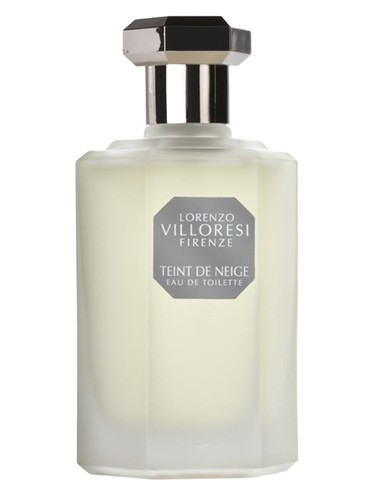
The name says it all: "complexion of snow." One spray of Teint de Neige transports you instantly to a vanity table circa 1920, where silk powder puffs rest in porcelain dishes and rose-scented face powder clouds the air. This is not a whisper of powder—it''s a full-throated declaration. The opening hits with an avalanche of powdery notes so pronounced they register at a perfect 100% in the accord analysis, flanked by a supporting cast of rose, ylang-ylang, and jasmine that peek through like embroidered flowers on vintage lace. Lorenzo Villoresi created this in 2000, but it smells like it could have been formulated a century earlier—and that''s entirely the point.
The Scent Profile
The architecture of Teint de Neige reveals itself as a study in constancy rather than transformation. The top notes announce themselves with that signature powder—think vintage face powder, baby talc, and crushed violet petals—while rose, ylang-ylang, and jasmine provide a floral scaffolding that prevents the composition from collapsing into pure cosmetic territory. But only just.
As the fragrance settles into its heart, rose maintains its position as the backbone, now joined by tonka bean''s subtle almond-vanilla sweetness and a continued presence of jasmine. The floral notes here serve less as individual players and more as a collective murmur beneath the powder''s persistent voice. At 37%, vanilla begins asserting itself more confidently in the middle phase, adding a creamy warmth that tempers what could otherwise feel austere.
The base is where Teint de Neige makes its most interesting move. Heliotrope amplifies the powdery-almondy character—heliotrope being nature''s own powder puff flower—while musk provides a soft, skin-like foundation. Rose and jasmine persist all the way through, creating a through-line from top to base that feels both tenacious and comforting. The musky accord registers at 30%, giving the fragrance a subtle animalic warmth that prevents it from feeling completely dated, while the 17% sweet accord keeps things just this side of confectionery.
Character & Occasion
The data tells a clear story: this is a cold-weather companion. Winter scores a perfect 100% for seasonality, with fall following at 75%. Spring barely registers at 53%, and summer limps in at 25%—and honestly, wearing this in August heat would feel like donning a velvet coat in July. The powder and vanilla need cold air to breathe; they bloom against winter''s chill rather than wilting under humidity.
Interestingly, while Teint de Neige skews heavily toward daytime wear at 87%, it maintains respectable evening credentials at 59%. This makes sense: it''s soft enough for office wear (provided your office appreciates vintage aesthetics), yet possesses enough presence for dinner or theatre. The feminine classification feels appropriate here—not because men couldn''t wear it, but because it speaks the aesthetic language of mid-century femininity without apology.
This is a fragrance for those who appreciate perfume as time travel, who see beauty in the unfashionable, or who simply want to smell like they''ve stepped out of a Visconti film. It''s not for minimalists or those seeking contemporary freshness.
Community Verdict
Here''s where things get interesting: despite its respectable 4 out of 5 rating from 2,615 voters, the specific Reddit community analysis reveals virtually no discussion. The sentiment registers as mixed with a score of 0/10, but this appears to stem from absence rather than active criticism—the fragrance simply wasn''t a focus of conversation in the sampled discussions.
This silence speaks volumes in its own way. Teint de Neige isn''t generating passionate debate or strong polarization in contemporary fragrance forums; it exists in a quieter space, appreciated by its devotees but not creating waves among the hype-driven discourse that dominates current fragrance culture.
How It Compares
The list of similar fragrances reads like a roll call of classic feminine perfumery: Guerlain''s L''Heure Bleue and Samsara, Lancôme''s Poeme, Chanel''s Coco, and Narciso Rodriguez For Her. What unites these is a commitment to unapologetic femininity and classical composition structures. Where Teint de Neige distinguishes itself is in its single-minded devotion to powder. L''Heure Bleue balances its powdery character with anise and iris complexity; Samsara leans into sandalwood warmth; Coco offers spice and depth. Villoresi''s creation is more focused, almost austere in its dedication to that snow-white powder accord. It''s the purist in a family of eclectics.
The Bottom Line
Teint de Neige isn''t for everyone, and it doesn''t pretend to be. With over 2,600 votes averaging 4 out of 5, it''s clearly found its audience—but that audience is specific. This is a litmus test fragrance: you''ll either find it hauntingly beautiful or oppressively dated, with little middle ground.
The value proposition depends entirely on your relationship with powder. If that accord makes you think of elegance, vintage glamour, and sophisticated femininity, Villoresi has created something nearly perfect. If powder reads as old-fashioned or reminds you too strongly of grandmothers'' bathrooms, no amount of beautiful rose or creamy vanilla will save this for you.
Who should try it? Vintage fragrance lovers, those who mourn the passing of true powder accords from modern perfumery, fans of Guerlain''s classic style, and anyone who''s ever wished they could smell like a 1940s film star. At its best, Teint de Neige is transportive—a fragrant portal to an era when femininity was spelled with more letters and wore more layers. At its worst, it''s a museum piece. But even museums have their devoted visitors.
AI-generated editorial review