First Impressions
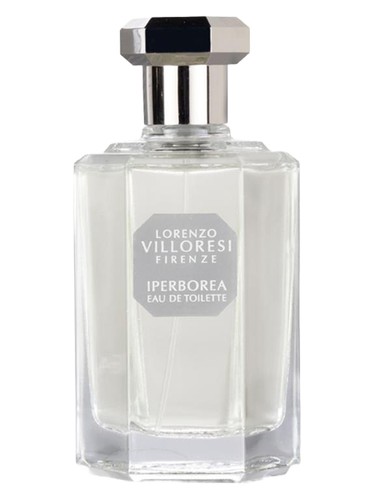
The first spray of Iperborea transports you to a landscape of paradox—the mythical Hyperborea, that sunlit land beyond the north wind where spring reigns eternal. Lorenzo Villoresi''s 2010 creation opens with an almost crystalline clarity, a rush of dewy lily-of-the-valley mingling with bright citruses and the tender green of newly unfurled leaves. There''s a delicate peach softness woven through the composition, like sunlight filtered through white petals. This is not the heavy, heady white floral of tropical nights; rather, it''s the ethereal quality of morning blooms still wet with dew, caught in that liminal moment between winter''s retreat and spring''s full arrival.
The Scent Profile
The opening is a study in luminosity. Lily-of-the-valley takes center stage immediately, its bell-shaped presence both green and floral, accompanied by a chorus of citrus notes—mandarin orange and a brighter, sharper orange—that lift and aerate the composition. The green notes here aren''t sharp or vegetal; they''re the tender green of first growth, while cyclamen adds a subtle peppery freshness. Peach brings an unexpected softness, a flesh-toned warmth that keeps the opening from becoming too austere.
As Iperborea settles into its heart, the lily-of-the-valley refuses to relinquish its starring role, now joined by magnolia''s creamy elegance and mimosa''s powdery golden sweetness. The white flower accord deepens, becoming more substantial without ever turning heavy. Magnolia contributes a velvety texture, while mimosa adds subtle honeyed facets that make the composition feel warmer, more embracing. This middle phase is where Villoresi''s mastery becomes evident—the balance between transparency and richness, between cool and warm, is exquisitely maintained.
The base reveals itself gradually, a gentle landing rather than a dramatic shift. Musk provides a soft, skin-like foundation that allows the white flowers to continue singing. Jasmine and African orange flower add their voices to the composition, enriching without overwhelming. Woody notes ground the bouquet ever so slightly, providing just enough structure to prevent the scent from floating away entirely. The overall effect is of white flowers pressed into clean skin, present but never insistent, radiant but never shouting.
Character & Occasion
Iperborea is unequivocally a spring fragrance—the data confirms what the nose knows instinctively. This is a perfume that mirrors the season''s energy: renewal, lightness, the return of color after monochrome months. Summer is its second home, where its fresh green and citrus accords provide relief without resorting to aquatic clichés. The fact that it scores relatively low for fall and winter wear makes perfect sense; this isn''t a fragrance built for cozy sweaters and shortened days.
The day-versus-night breakdown is equally revealing: Iperborea is overwhelmingly a daytime companion. It lacks the intensity, the drama, the projection needed for evening events. But this isn''t a weakness—it''s a deliberate aesthetic choice. This is a fragrance for morning meetings where you want to project competence with grace, for lunch dates in sunlit gardens, for weekend errands when you want to feel put-together without effort. It''s the olfactory equivalent of a perfectly pressed white linen shirt.
The feminine designation feels somewhat dated in 2024, though understandable for 2010. In truth, Iperborea could be worn by anyone who appreciates transparent white florals and has the confidence to wear softness as strength.
Community Verdict
With a rating of 4.02 out of 5 from 479 voters, Iperborea has earned solid appreciation from those who''ve experienced it. This isn''t a love-it-or-hate-it polarizing fragrance; rather, it''s a quiet achiever that rewards those seeking refinement over shock value. The rating suggests a well-executed composition that delivers what it promises without apology. Nearly 500 votes indicate this isn''t a hidden gem gathering dust in obscurity, but neither is it suffering from overhype. It occupies that interesting middle ground: respected, appreciated, perhaps somewhat overlooked in favor of louder voices in the white floral category.
How It Compares
The list of similar fragrances reads like a who''s-who of sophisticated white florals: Pure Poison''s modern white floral intensity, Organza''s vintage opulence, Narciso Rodriguez For Her''s musky florality, Dia Woman''s radiant bouquet, and Coco Mademoiselle''s sparkling elegance. Among these neighbors, Iperborea distinguishes itself through restraint and transparency. Where Pure Poison leans bold and Organza embraces richness, Villoresi''s creation maintains an almost Nordic clarity—appropriate, given its name. It shares Narciso Rodriguez For Her''s musky foundation but trades that fragrance''s urban sophistication for something more pastoral, more connected to actual gardens than the idea of them.
The Bottom Line
Iperborea succeeds precisely because it doesn''t try to be everything to everyone. It knows what it is: a beautiful, wearable white floral for warm weather and daylight hours. The 4.02 rating reflects this self-assurance—high enough to indicate quality and appreciation, modest enough to acknowledge that this won''t convert those who prefer their florals heavy or their sillage commanding.
Lorenzo Villoresi has crafted something increasingly rare: a fragrance that prioritizes elegance over impact, that understands proximity can be more powerful than projection. For those who find modern white florals either too sweet or too synthetic, Iperborea offers a naturalistic alternative. It''s ideal for anyone building a sophisticated spring wardrobe of scents, or those moments when you want fragrance to be present but not announced. Not every perfume needs to stop traffic; sometimes, the highest compliment is simply drawing someone a little closer.
AI-generated editorial review