First Impressions
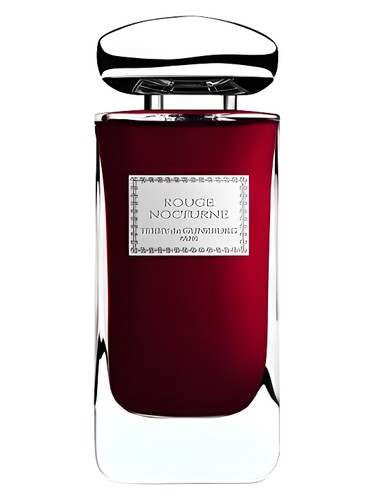
The first spray of Rouge Nocturne feels like entering a dimly lit salon where velvet curtains absorb the lamplight and roses rest in crystal vases, their petals darkening at the edges. This is Terry de Gunzburg at her most unapologetic — a rose fragrance that refuses to play by daylight rules. Where other rose scents might greet you with dewy freshness or powdery softness, Rouge Nocturne arrives already half in shadow, its floral heart wrapped immediately in earthy patchouli and woody undertones that signal this rose has somewhere more interesting to be after sunset.
The name translates to "Red Night," and it''s impossible to ignore how perfectly this captures the scent''s essence. This isn''t crimson — it''s the deeper shade roses turn in candlelight, that burgundy-black hue when petals begin their inevitable transformation from living flower to something preserved, pressed, remembered.
The Scent Profile
Without specified individual notes to chart a traditional pyramid, Rouge Nocturne reveals itself through its dominant accords, and they tell a compelling story. The rose — registering at a complete 100% in the accord profile — doesn''t arrive as a solo performance but rather as the lead singer in a carefully assembled ensemble. This is a rose that''s been cut from the garden and immediately paired with patchouli (69% accord presence), creating that classic gothic romance that perfume lovers either crave or avoid entirely.
The patchouli here isn''t the head-shop variety but a refined, almost resinous interpretation that adds both darkness and depth. It grounds the rose, prevents it from floating into purely floral territory, and introduces an earthy quality (27%) that keeps the composition rooted in something tangible and real. The woody accords (41%) wrap around this rose-patchouli core like a frame, adding structure and a subtle dryness that prevents the fragrance from becoming too overtly romantic or sweet.
What makes Rouge Nocturne particularly sophisticated is the warm spicy element (34%) that weaves through the composition. While we don''t have specific spice notes listed, this warmth reads as an invisible heat source — not overtly cinnamon or clove, but rather the sensation of warmth itself, like standing near (but not too close to) a fireplace. The floral accord sits at just 30%, a surprisingly modest number given the rose dominance, which suggests this rose has been deliberately darkened, shadowed, made less traditionally floral and more complex.
The development is less about distinct phases and more about deepening intensity. Rouge Nocturne doesn''t so much evolve as it gradually reveals more of itself, like eyes adjusting to a dark room and discovering details that were there all along.
Character & Occasion
The seasonal and occasion data tells us exactly when Rouge Nocturne wants to emerge. This is a fragrance built for fall (100%) and winter (71%), with dramatically reduced enthusiasm for spring (45%) and summer (23%). The reasons become obvious on the skin — this is a rich, enveloping scent that needs cooler air to breathe properly. In summer heat, it would likely feel suffocating; in autumn''s crisp evenings, it becomes magnetic.
The day versus night data is particularly revealing: while 58% find it acceptable for daytime wear, a commanding 89% mark it for nighttime. This nine-point difference suggests Rouge Nocturne truly comes alive after dark. It''s not that you can''t wear it during the day — clearly many do — but the fragrance seems designed for reduced light, for evening engagements, for moments when intensity is an asset rather than an imposition.
This is a fragrance for someone who''s made peace with making an impression. The woman who wears Rouge Nocturne isn''t trying to blend in at the office (though she might wear it anyway, consequences be damned). She''s dressing for dinner, for the theater, for late conversations and lingering goodbyes.
Community Verdict
With a solid 4.04 out of 5 rating based on 430 votes, Rouge Nocturne has clearly found its audience. This is a strong score that suggests consistent appreciation rather than polarizing controversy — though with a scent this intentionally dark and rose-forward, there''s surely some self-selection at play. Those drawn to sample it likely already know whether they''re predisposed to love or hate a patchouli-wrapped rose.
The vote count of 430 indicates a fragrance with a dedicated following rather than mass-market ubiquity. Terry de Gunzburg operates in the niche space where quality trumps marketing budget, and Rouge Nocturne appears to be exactly the kind of sophisticated, uncompromising fragrance that rewards those who seek it out.
How It Compares
The comparison list reads like a who''s-who of elevated dark florals: Tom Ford''s Noir de Noir, Serge Lutens'' La Fille de Berlin, Dior''s Midnight Poison, Frederic Malle''s Portrait of a Lady, and Amouage''s Lyric Woman. These are heavy hitters, each commanding serious respect in the rose-patchouli-woods territory.
Rouge Nocturne holds its own in this distinguished company by offering a slightly more restrained hand than some of these powerhouses. It shares Portrait of a Lady''s rose-patchouli devotion but wears somewhat closer to the skin. It has Noir de Noir''s nocturnal sensibility without quite the same gourmand sweetness. Against these benchmarks, Rouge Nocturne emerges as perhaps the most purely focused on the rose-patchouli relationship itself, with less distraction from other agendas.
The Bottom Line
Rouge Nocturne succeeds at exactly what it sets out to do: create a sophisticated, uncompromising rose fragrance for evening wear in cooler months. At 4.04 out of 5, it''s clearly resonating with those who experience it, and the accord profile suggests why — this is a focused, intentional composition that doesn''t try to be all things to all people.
Should you try it? If you''re already a fan of any fragrance in its comparison set, absolutely. If you''ve been searching for a rose scent that doesn''t feel like a garden party, Rouge Nocturne deserves a wearing. If you shy away from patchouli or prefer lighter, airier florals, you can confidently skip it. This is a fragrance that knows exactly who it''s for — the question is simply whether that person is you.
AI-generated editorial review