First Impressions
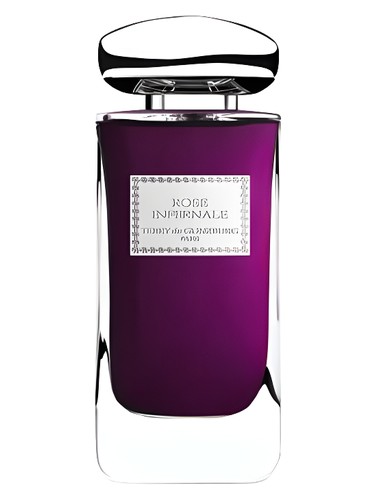
The first spray of Rose Infernale announces itself not with a whisper, but with a proclamation. This is no demure rose tucked behind an ear or pinned to a lapel. Terry de Gunzburg has conjured something altogether more provocative: a rose that seems to have passed through fire and emerged transformed, its petals singed with incense and its roots tangled in dark, resinous earth. The opening is unapologetically floral, but there''s an immediate warmth—almost a heat—that signals this fragrance''s true intentions. Where other rose perfumes might court you gently, Rose Infernale seduces with intensity, wrapping you in amber and smoke before you''ve had time to catch your breath.
The Scent Profile
The composition unfolds with a floral overture that wastes no time on pleasantries. While the top notes are simply noted as flowers, they serve primarily as a brief, almost ceremonial introduction to what follows. This isn''t about the journey from citrus to heart; it''s about diving directly into the rose itself.
And what a rose it is. The heart reveals the fragrance''s true architecture: a double rose accord built from Turkish red rose and damask rose. These aren''t the fresh-cut stems of a florist''s bouquet. The Turkish rose brings a deep, almost wine-like richness, while the damask variety contributes its classic, opulent character. Together, they create a rose that feels both timeless and thoroughly modern—fully formed, utterly confident, and slightly dangerous.
But the genius of Rose Infernale lies in what happens beneath those petals. The base notes of incense and Haitian vetiver don''t simply support the rose; they fundamentally alter its character. The incense adds that signature smokiness that dominates the accord profile at 82%, creating the olfactory equivalent of a rose observed through a veil of ceremonial smoke. Meanwhile, the Haitian vetiver—known for being particularly earthy and woody—grounds the composition with a dark, almost gothic foundation. This vetiver isn''t the crisp, green variety used in summer colognes; it''s the kind that speaks of damp soil and ancient roots.
The result is a fragrance where rose reigns supreme at 100% of the accord profile, but it''s a rose transformed by its companions. The 92% amber accord brings warmth and resinous depth, while the 53% woody and 51% balsamic elements ensure this never tips into simple floral territory. It''s a rose that burns rather than blooms.
Character & Occasion
Rose Infernale reveals its ideal habitat through its seasonal performance: this is a fragrance born for autumn, where it achieves perfect resonance at 100% suitability. As temperatures drop and wool coats emerge from storage, this perfume finds its element. Winter follows closely at 63%, making it clear that Rose Infernale thrives in cold weather, where its warmth becomes a second skin rather than an overwhelming presence.
Spring manages a respectable 45%, suggesting it can transition into milder weather for those who wear their fragrances with conviction. Summer, at 25%, is best avoided unless you''re specifically seeking that intense, heated rose experience or spending your evenings in heavily air-conditioned environments.
The day/night split is revealing: 64% for day and 68% for night. This near-parity suggests remarkable versatility. Rose Infernale possesses enough sophistication for professional settings—provided your office tolerates bold choices—while having the depth and intensity to hold its own through dinner and beyond. It''s equally at home in a gallery opening or a boardroom, though perhaps not at a garden party.
This is decidedly a feminine fragrance, but it''s for women who appreciate their roses with edge, who find traditional florals too tame, and who aren''t afraid of making an olfactory statement.
Community Verdict
With a rating of 3.87 out of 5 based on 482 votes, Rose Infernale has garnered solid appreciation from those who''ve experienced it. This score reflects a fragrance that knows its audience and serves them well, even if it doesn''t aim for universal appeal. The nearly 500 votes provide a meaningful data set—this isn''t a niche obscurity with only a handful of reviews, nor is it trying to please everyone.
The rating suggests a well-executed fragrance with clear strengths that resonate strongly with rose lovers and those drawn to amber-smoky compositions. It''s worth noting that divisive fragrances often indicate strong character rather than flaws, and Rose Infernale certainly has character to spare.
How It Compares
Rose Infernale exists in distinguished company. Its closest kinship is with Portrait of a Lady by Frederic Malle, the modern benchmark for roses given dramatic treatment with patchouli and incense. Also in its constellation are Lyric Woman and Memoir Woman by Amouage—both fragrances that approach florals with maximal richness—along with Serge Lutens'' La Fille de Berlin and, more surprisingly, Dior''s Dune.
What distinguishes Rose Infernale within this group is its particular balance of smoke and rose, the way incense becomes not just an accompaniment but an integral part of the rose''s identity. Where Portrait of a Lady leans into spice and patchouli, Rose Infernale takes the smokier, more mystical route through incense and vetiver.
The Bottom Line
Rose Infernale is a fragrance that lives up to its name—this is indeed an infernal rose, burning with amber warmth and wreathed in ceremonial smoke. Terry de Gunzburg has created something that respects the rose''s classic beauty while refusing to present it in conventional terms. With a 3.87 rating from nearly 500 voters, it''s proven its worth to a substantial audience who appreciate roses rendered in chiaroscuro rather than pastel.
This isn''t a fragrance for those seeking safe, pretty florals or everyday accessibility. It''s for the rose devotee who''s tired of the predictable, for the wearer who wants their fragrance to be a conversation rather than background music. If you''ve found yourself drawn to Portrait of a Lady or the Amouage feminines, Rose Infernale deserves a place on your sampling list. Just wait for autumn to truly understand what it can do.
AI-generated editorial review