First Impressions
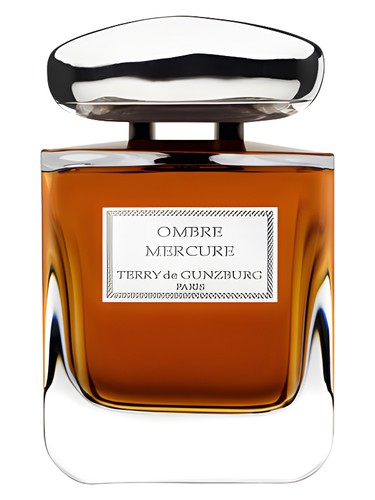
The first touch of Ombre Mercure reveals Terry de Gunzburg''s mastery of restraint. Violet leaf—green, slightly metallic, with that characteristic cucumber-like freshness—announces itself with quiet confidence. There''s no fanfare here, no loud citrus blast demanding attention. Instead, this opening whispers of expensive cosmetics and vintage compacts, of silver trays in Parisian boudoirs. Within moments, you understand this is a fragrance built on texture rather than volume, on nuance rather than projection. The mercurial quality suggested by its name becomes immediately apparent: this is a scent that shifts and changes like quicksilver, never quite the same from one moment to the next.
The Scent Profile
That introductory violet leaf dissolves into one of perfumery''s most ambitious floral hearts. Here, Gunzburg layers violet and iris with orris root—creating a doubled-down emphasis on that signature powdery quality that defines the entire composition. The orris root, extracted from iris rhizomes aged for years, brings its characteristic lipstick-like creaminess and subtle earthiness. This isn''t the fresh, watery iris of contemporary interpretations; this is old-school, unapologetically powdered iris that recalls the golden age of French perfumery.
But Gunzburg doesn''t stop there. She enriches this violet-iris core with ylang-ylang''s creamy exoticism, rose''s soft romance, and jasmine''s subtle indolic presence. These supporting florals never overshadow the stars, but they add crucial depth and prevent the composition from becoming a one-dimensional iris study. The ylang-ylang, in particular, brings a warmth that bridges the cool opening with what''s to come.
The base is where Ombre Mercure reveals its woody, warm intentions. Benzoin adds its vanilla-like sweetness and resinous depth, while sandalwood provides creamy woodiness. Vanilla softens the edges without turning gourmand, and patchouli—that most earthy of ingredients—grounds everything with its dark, slightly musty presence. This foundation explains the 67% woody accord rating and that notable 41% earthy quality. The result is a powder that never floats away, anchored firmly by these base notes that add weight and longevity.
Character & Occasion
The community data tells a clear story: this is a fall and winter fragrance par excellence. The 100% fall rating and 80% winter score reveal a scent that thrives in cooler weather, when its powdery warmth can bloom against cold skin without becoming cloying. Spring receives a moderate 55% approval, suggesting it can work during transitional weather, while summer''s mere 13% confirms what the composition already suggests—this is too rich, too enveloping for heat.
Interestingly, Ombre Mercure shows remarkable versatility in its day-to-night split. The 87% day rating positions it as primarily a daytime fragrance, sophisticated enough for professional settings where its refined powder won''t overwhelm. Yet that respectable 57% night rating indicates it can transition into evening wear, particularly for cultural events, intimate dinners, or occasions requiring understated elegance rather than overt seduction.
This is a fragrance for those who appreciate the art of subtlety, who understand that power doesn''t require volume. It suits the woman who has moved beyond trendy and into timeless, who values craftsmanship over novelty.
Community Verdict
With a solid 4.1 out of 5 stars from 575 voters, Ombre Mercure has found its admirers. This rating suggests a fragrance that delivers on its promise—not universally beloved (those rarely exist above 4.0), but deeply appreciated by those who seek exactly what it offers. The substantial vote count indicates this isn''t a niche obscurity but a fragrance that has been genuinely explored and evaluated by a significant community.
The high marks likely come from those who value iris-forward compositions and aren''t afraid of powder in an era that often prioritizes freshness and transparency. The rating also suggests good performance and longevity, crucial for a fragrance at this level.
How It Compares
Ombre Mercure sits comfortably among illustrious company. Its similarities to Guerlain''s Samsara Eau de Parfum, L''Heure Bleue, and Shalimar Parfum Initial place it firmly in the French powdery tradition. The comparison to Prada''s Infusion d''Iris makes sense given the shared iris obsession, though Gunzburg''s interpretation leans warmer and more old-fashioned. The Dune reference speaks to a shared sophisticated woodiness and complexity.
What distinguishes Ombre Mercure is its commitment to powder without apology. Where many modern iris fragrances try to "update" the note with aquatic or synthetic freshness, Gunzburg embraces the vintage character fully while maintaining a contemporary smoothness in execution.
The Bottom Line
Ombre Mercure represents Terry de Gunzburg''s clear point of view: powder is not passé, iris deserves center stage, and sophistication needn''t shout. At 4.1 stars, it delivers what serious perfume lovers expect—excellent construction, quality materials, and a distinctive voice in a crowded market.
This isn''t a safe blind buy for everyone. If you dislike powdery fragrances or find iris too makeup-like, no amount of beautiful craftsmanship will change your mind. But for those who light up at the mention of orris root, who own multiple iris fragrances and still want another perspective, Ombre Mercure deserves a place on your testing list. It''s a fall and winter companion that rewards patience and repays attention, revealing new facets with each wearing—mercurial, indeed.
AI-generated editorial review