First Impressions
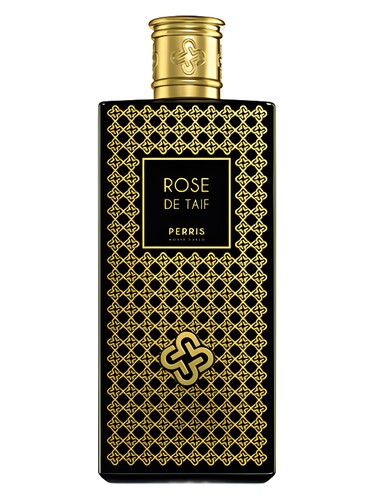
The first spray of Rose de Taif announces itself with an unexpected brightness—a citrus-threaded overture that feels more Mediterranean garden than Arabian desert. This is not the rose you expect. Instead of diving headlong into plush, velvety petals, Perris Monte Carlo opens with a counterpoint: geranium''s green sharpness, lemon''s sunny acidity, and a whisper of nutmeg that adds just enough warmth to hint at what''s coming. It''s a deliberate misdirection, a moment of anticipation before the legendary Taif rose—one of the world''s most precious and storied flowers—takes center stage.
This opening gambit speaks to creative director Gian Luca Perris''s approach: respect the star ingredient, but don''t suffocate it with reverence. The fresh spicy accord (registering at 63% intensity) works alongside the aromatic elements to create breathing room, preventing what could have been a heavy, museum-piece rose from feeling stifling from the start.
The Scent Profile
The architecture of Rose de Taif is deceptively simple on paper—essentially a rose soliflore with strategic embellishments—but the execution reveals nuance. Those opening notes of geranium and lemon don''t simply vanish; they linger at the edges, maintaining a sense of lift even as the heart emerges.
And what a heart it is. The Taif rose, cultivated in the mountains of Saudi Arabia and harvested for only a brief window each spring, forms the singular focus of this composition. It''s presented in its full complexity: sweet but not cloying, rich but not jammy, with a subtle honeyed quality that distinguishes it from the sharper profile of its Turkish or Bulgarian cousins. The rose accord registers at 100%—this is unabashedly, unapologetically about the flower.
As the fragrance settles into its base, Damask rose reinforces and deepens the central theme while musk provides a soft, skin-like foundation. This is where the powdery accord (18%) makes itself felt—not as vintage cosmetic powder, but as a gentle diffusion that keeps the rose from turning too literal or green. The musk here is clean and subtle, serving more as a smoothing agent than a distinct note in its own right.
The evolution is less about dramatic transformation and more about revelation—watching a single ingredient unfold its various facets over several hours. Longevity proves solid, with the rose gradually fading to a soft skin scent that maintains its character without overstaying its welcome.
Character & Occasion
Rose de Taif wears its seasonality data like a roadmap: spring at 100%, falling to 79% for autumn, 56% for summer, and just 47% for winter. This makes perfect sense when you consider the fragrance''s composition. The fresh spicy and citrus elements (34%) make it far more wearable in warmer weather than most rose-centric fragrances, while the aromatic aspects (43%) give it the brightness that thrives in spring air.
The day/night split—83% day versus 53% night—reveals its character as primarily a daytime proposition. This isn''t the seductive, opulent rose of evening wear; it''s the rose you wear to a garden party, a spring luncheon, or a weekend stroll through a botanical garden. There''s an elegance here, but it''s approachable rather than intimidating.
That said, the community data suggests caution: this fragrance can prove "thick and suffocating in humid climates." The recommendation for dry climate wear makes sense given the Taif rose''s desert origins, but it''s worth noting for those in tropical or humid continental zones. What feels refreshing in low humidity can turn cloying when the air is heavy with moisture.
Community Verdict
Here''s where Rose de Taif''s story becomes complicated. Based on 22 opinions from the r/fragrance community, the sentiment scores a middling 6.5 out of 10—mixed at best. The 3.88 rating from 770 voters suggests competence rather than passionate devotion.
The pros paint a picture of quality: "highly transportive and evocative," "unique and distinctive," and offering "quality niche fragrance with good blending." These aren''t faint compliments—they speak to technical execution and artistic vision. But there''s a telling observation that undermines these strengths: Rose de Taif is "not widely discussed or mentioned in community recommendations."
In the democratized world of fragrance forums, obscurity isn''t necessarily a mark against quality, but it does suggest a lack of evangelists. The community summary is particularly revealing: "rarely mentioned in r/fragrance community''s discussions, making it difficult to establish a strong consensus." It may appeal to "niche fragrance enthusiasts" seeking "unique experiences," but it hasn''t broken through to broader awareness.
The climate caveat appears repeatedly, suggesting this is a real limitation rather than isolated complaint. If you live in Houston, Singapore, or Miami, approach with caution—or at least a tester first.
How It Compares
The similar fragrances list reads like a who''s who of high-end rose perfumery: Frederic Malle''s Portrait of a Lady, Tom Ford''s Noir de Noir, Serge Lutens''s La Fille de Berlin. These are heavyweight comparisons, and Rose de Taif doesn''t quite land in their weight class in terms of recognition or passionate following.
Portrait of a Lady offers more complexity with its patchouli and incense; Noir de Noir brings oud and chocolate into the equation. Rose de Taif, by contrast, plays it relatively straight—focused, pure, but perhaps less conceptually ambitious. It''s closer in spirit to Un Jardin Sur Le Nil''s light-handed approach than to the opulence of the others, despite the precious Taif ingredient.
The Bottom Line
Rose de Taif finds itself in an interesting position: technically well-executed, featuring a genuinely special ingredient, yet somehow flying under the radar. The 3.88 rating suggests it''s good but not transcendent—a fragrance that does exactly what it promises without pushing boundaries or creating converts.
Who should seek this out? If you''re building a rose collection and want something that captures a specific terroir rather than a perfumer''s abstract vision, Rose de Taif delivers. If you live in a dry climate and want a spring rose that doesn''t wear like your grandmother''s perfume, this merits sampling. If you value purity of ingredient over conceptual complexity, you''ll appreciate its straightforward approach.
But be realistic about what this is and isn''t. It''s not a conversation-starter, not the rose that will make someone stop you on the street. It''s refined, polite, and ultimately somewhat quiet—a beautiful fragrance that lacks the personality to become unforgettable. At niche pricing (Perris Monte Carlo doesn''t come cheap), that may not be enough.
AI-generated editorial review