First Impressions
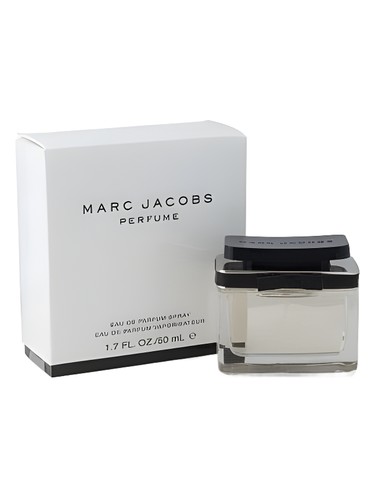
The first spray of Marc Jacobs transports you to a lush conservatory where gardenias bloom with abandon, their creamy petals still cool with morning dew. There''s an immediate burst of brightness—bergamot cutting through the floral richness like sunlight through greenhouse glass—but make no mistake, this is a white floral through and through. At 100% on the white floral accord scale, this fragrance doesn''t whisper its intentions; it announces them with the confidence of a designer stepping onto the runway at the height of minimalist chic.
Released in 2001, this was Marc Jacobs'' first foray into fragrance, and it carries all the hallmarks of turn-of-the-millennium perfumery: clean, sophisticated, and unabashedly feminine. The opening is both pristine and slightly sharp, that fresh spicy accord (21%) hinting at something more complex beneath the floral facade.
The Scent Profile
The composition unfolds with gardenia and bergamot leading the charge—a pairing that manages to feel both luxurious and approachable. The gardenia here isn''t the indolic, overripe variety that can overwhelm; it''s rendered in a more restrained, almost translucent manner that allows the citrus to breathe.
As the fragrance settles into its heart, the tuberose emerges with commanding presence (29% accord dominance). It''s joined by jasmine and honeysuckle, creating a triumvirate of white florals that could easily veer into headache territory, but the inclusion of white pepper provides crucial counterbalance. This isn''t just a bouquet; it''s a bouquet with architecture. The pepper adds texture and dimension, while the honeysuckle contributes a subtle sweetness that prevents the composition from feeling too stark or soapy.
The lactonic quality (17%) becomes more apparent in this phase—there''s a creamy, almost coconut-like smoothness that softens the floral intensity without making it feel heavy or dated. It''s here that the animalic accord (21%) also begins to whisper, adding warmth and skin-like intimacy to what could otherwise be a distant, cold-white floral.
The base is where Marc Jacobs shows its woody-spicy backbone. Ginger provides a gentle heat that echoes the white pepper from the heart, while cedar grounds the composition with a clean, pencil-shaving dryness. Musk wraps everything in a soft, skin-like embrace, though this is also where the fragrance''s weakness becomes apparent—the base doesn''t have the tenacity you might hope for in a designer fragrance at this price point.
Character & Occasion
The data tells a clear story: this is overwhelmingly a spring fragrance (82%), with strong summer viability (64%) and diminishing returns as the weather cools. It''s purely a daytime scent (100% day rating versus just 40% night), and that tracks perfectly with its clean, fresh-spicy character. This isn''t a fragrance for seduction or mystery; it''s for competence, approachability, and that particular brand of polished casualness.
Marc Jacobs works beautifully in office environments where you want to smell intentional without being distracting. It''s ideal for brunch dates, spring garden parties, and any situation where "fresh and put-together" is the aesthetic goal. The fragrance reads decidedly youthful—not in a teenage way, but in that aspirational young-professional manner. It''s the olfactory equivalent of your first designer handbag: a signal that you''re entering a new phase of adulthood.
Community Verdict
With a 4.13/5 rating from 1,292 votes, Marc Jacobs enjoys broad approval, but the Reddit community reveals a more nuanced picture with a mixed sentiment score of 6.5/10 based on 43 opinions. The divide is illuminating.
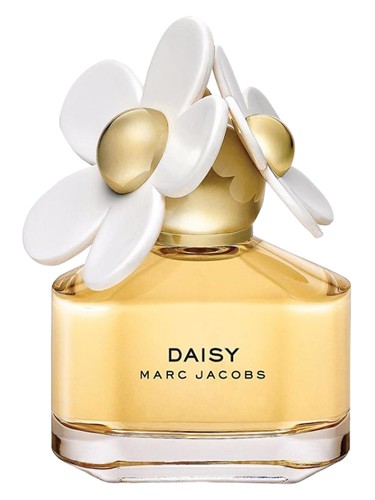
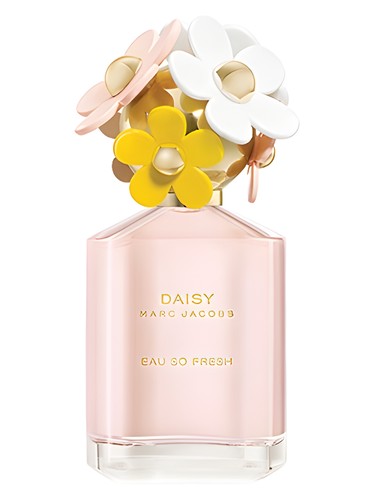
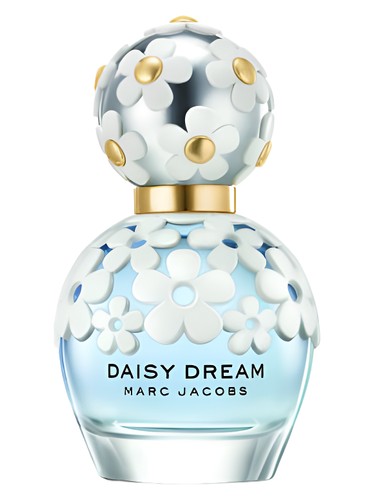
Supporters praise its pleasant, approachable floral character and its status as an excellent entry-level designer fragrance for younger wearers. The iconic bottle design—with its oversized daisy cap—earns consistent acclaim, and the extensive flanker line (Eau So Fresh, Wild, Love) demonstrates Marc Jacobs'' versatility as a concept.
The criticism, however, is pointed: poor longevity and weak projection plague many wearers'' experiences. For a fragrance commanding $140+, expectations are high, and Marc Jacobs doesn''t always deliver the performance metrics that price point suggests. The violet and floral notes strike some as generic or dated, trapped in 2000s amber like a perfume time capsule. Perhaps most tellingly, older wearers sometimes find it skews "too young," its nostalgia factor working against rather than for it.
How It Compares
Marc Jacobs occupies interesting territory alongside Pure Poison by Dior, Alien by Mugler, J''adore by Dior, Crystal Noir by Versace, and Dior Addict. It''s notably less intense than Alien''s otherworldly jasmine or Crystal Noir''s seductive gardenia. It lacks J''adore''s golden radiance and Pure Poison''s mysterious sweetness. Instead, it carves out a cleaner, more restrained space—less bombshell, more girl next door with excellent taste.
The community notes that the flankers, particularly Eau So Fresh and Daisy Wild, receive stronger praise than the original, suggesting that Marc Jacobs'' real genius may have been in establishing a platform that improved with iteration.
The Bottom Line
Marc Jacobs is a fragrance caught between eras. It''s technically accomplished—a well-constructed white floral with enough complexity to stay interesting through its (admittedly brief) lifespan. The 4.13 rating reflects genuine affection from those who connect with its aesthetic. But the longevity issues and premium pricing create a value proposition problem that''s hard to ignore.
This is best suited for those seeking their first serious designer fragrance, particularly younger wearers who appreciate clean florals and want something with brand recognition but without overwhelming intensity. If you''re drawn to fresh, daytime white florals and don''t mind reapplying, Marc Jacobs delivers a polished, professional presence. Just know you''re paying partly for the iconic bottle and the brand heritage—the juice itself, while lovely, doesn''t quite justify the $140+ investment on performance alone.
Sample before you buy, especially if longevity matters to you. And don''t dismiss the flankers—they might be where the real magic lies.
AI-generated editorial review