First Impressions
The first spray of L''Eau Papier arrives with a whisper rather than an announcement. There''s an immediate softness here, a grounded comfort that settles on the skin like cotton sheets dried in open air. You expect crispness—the sharp bite of paper, perhaps the woody scratch of pencil shavings that the name suggests. Instead, what emerges is something altogether different: a gentle cloud of musk that carries with it the subtle sweetness of steamed rice and the fuzzy warmth of mimosa. It''s clean, undeniably so, but with a curious food-forward quality that transforms this would-be literary fragrance into something more domestically intimate. Within moments, you realize Diptyque has written a different story than the one their marketing promised.
The Scent Profile
Without specified top, heart, and base notes to guide us, L''Eau Papier reveals itself through its dominant accords—and here, musk reigns absolutely at 100%. This isn''t the animalic musk of vintage perfumery, but rather a modern, skin-like softness that creates the foundation for everything else. Close behind at 85% powdery accord comes a delicate dusting that never ventures into grandmotherly territory, instead maintaining a contemporary, almost minimalist restraint.
The surprise protagonist emerges in the yellow floral accord at 53%, primarily manifesting as mimosa—that peculiar blossom that smells simultaneously of honey, cucumber, and violets. This is where L''Eau Papier finds its unique voice, though it''s the same voice that divides its audience. The mimosa intertwines with what many wearers identify as rice or sesame notes, creating that aforementioned food-forward quality that reads less "stationary shop" and more "tranquil Asian tearoom."
Woody notes appear at 44%, providing subtle structure without ever asserting themselves aggressively. There''s a gentle sweetness (28%) that rounds the edges, while the general floral accord (23%) adds just enough botanical legitimacy to remind you this is, technically, a perfume. The composition evolves minimally over its 4-5 hour lifespan, instead maintaining a consistent soft musky-powdery character that sits close to the skin with intimate determination.
Character & Occasion
The data reveals L''Eau Papier as an adaptable chameleon, scoring highest for spring (96%) and fall (89%), though it remains perfectly wearable in summer (68%) and winter (67%). This broad seasonal versatility speaks to its restrained nature—there''s nothing so sharp it offends in heat, nothing so light it disappears in cold.
Where L''Eau Papier truly shows its colors is in the day/night distinction: 100% day versus a mere 41% night. This is unequivocally a daytime fragrance, best suited for moments when you want to smell clean, composed, and quietly present rather than dramatically announced. The office beckons as its natural habitat, where its soft projection won''t invade colleagues'' personal space. It shines in professional settings, post-shower summer afternoons, and casual weekend errands when you want the comfort of fragrance without the commitment of presence.
This is a scent for the "clean girl aesthetic" enthusiast, the minimalist who views perfume as an extension of well-being rather than ornamentation. It''s for those seeking fragrance as personal ritual rather than social statement, for bedtime comfort rather than cocktail party conversation.
Community Verdict
The Reddit fragrance community approaches L''Eau Papier with measured appreciation, landing at a 6.5/10 sentiment score—decidedly mixed. The broader rating of 4.18/5 across 5,381 votes suggests general public favor, but the enthusiast community digs deeper and finds complications.
The praise centers on its clean, soft, and comforting character with a notably grounded quality. Many consider it a safe blind buy specifically for office and casual settings, appreciating the unique rice and mimosa combination as unlike typical Diptyque offerings. The intimate sillage and 4-5 hour longevity suit those seeking unobtrusive wear.
However, the criticisms cut to the heart of expectation versus reality. That food-forward rice/sesame quality? Some wearers report it smells distinctly like takeout rather than perfume—a dealbreaker for those seeking conventional beauty. The advertised paper and pencil shaving notes are largely absent, replaced instead by clean floral muskiness that feels like false advertising to some. Projection and performance disappoint at this luxury price point, and chemistry dependency means it performs notably better on clothes than skin for many wearers.
The consensus: well-executed for what it actually is, but not necessarily what it promised to be.
How It Compares
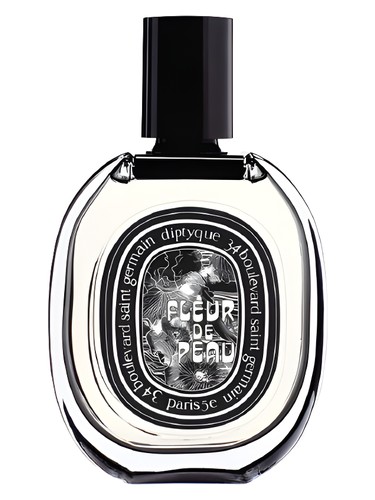
L''Eau Papier finds itself in distinguished company among skin-like modern musks. Diptyque''s own Fleur de Peau Eau de Parfum shares its musky-powdery DNA, while Le Labo''s Another 13 and Byredo''s Mojave Ghost occupy similar "your skin but better" territory. Glossier''s You and Maison Francis Kurkdjian''s Gentle Fluidity Gold round out this category of intimate, chemistry-dependent fragrances designed to merge with the wearer rather than announce them.
Within this context, L''Eau Papier distinguishes itself primarily through that rice-mimosa combination—a quirk that''s either charming or problematic depending on your palate.
The Bottom Line
L''Eau Papier presents a curious case: a fragrance that fails to deliver its conceptual promise yet succeeds as something entirely different. Those seeking an actual paper-and-ink olfactory experience should look elsewhere—perhaps to Comme des Garçons'' more literal explorations. But for those open to a clean, comforting, subtly food-tinged musk with unique rice and mimosa facets, this offers genuine appeal.
At luxury pricing with modest performance, value becomes subjective. If you measure worth in hours of projection, this disappoints. If you value comfort, wearability, and subtle uniqueness for professional settings, it delivers. The 4.18/5 rating across thousands of votes suggests it finds its audience, even if fragrance enthusiasts approach with more reservation.
Try before you buy, ideally wearing it for a full day to assess both the rice note''s evolution and your skin chemistry''s compatibility. This is a fragrance that demands personal experience over blind faith—appropriate, perhaps, for something named after blank paper, waiting for each wearer to write their own story.
AI-generated editorial review