First Impressions
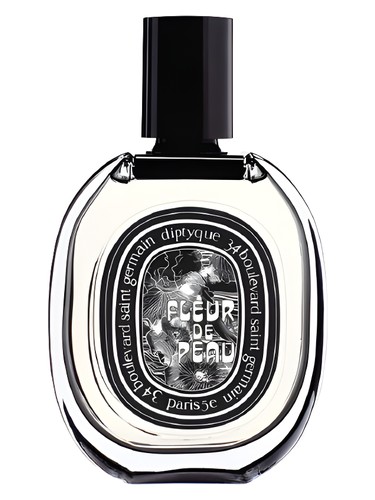
The first spray of Fleur de Peau is a paradox—both immediate and elusive. A whisper of aldehydes lifts off the skin, that soapy sparkle reminiscent of freshly laundered linen still warm from the iron. Pink pepper adds a barely-there tingle, more suggestion than statement, while bergamot and angelica create a halo of brightness that feels scrubbed clean. This isn''t the fragrance that announces your arrival. It''s the one that makes people lean closer, wondering what that clean, intimate something is that seems to emanate from your very pores. Diptyque''s 2018 creation positions itself as "fleur de peau"—flower of the skin—and from the opening moment, that name proves to be more than marketing poetry.
The Scent Profile
The evolution of Fleur de Peau reads less like a traditional fragrance pyramid and more like a gradual focusing of the same image, moving from soft blur to crystalline clarity. Those opening aldehydes, touched with the green, almost metallic edge of angelica and the citrus brightness of bergamot, set the stage for what''s to come: a study in restraint.
As the top notes settle, iris emerges as the fragrance''s cool, composed heart. This is iris in its most sophisticated guise—not the candied, powdery iris of violet pastilles, but the earthy, almost austere quality of the root itself, with its subtle carrot-like facets (appropriately, carrot seed appears in the base). Turkish rose provides companionship here, but it''s a muted presence, offering a touch of warmth without any full-blown floral drama. The heart of Fleur de Peau feels like grey cashmere, like expensive minimalism, like the fragrance equivalent of a perfectly cut suit in a neutral tone.
But it''s in the base where Fleur de Peau reveals its true agenda. This is where musk—the dominant accord at 100%—takes full command. We''re talking about a constellation of musks here: animalic ambrette (musk mallow), mineral ambergris, and modern synthetic musks that create a second-skin effect so convincing it borders on disorienting. Sandalwood and amberwood provide woody structure, while the softest whisper of leather adds an almost imperceptible edge. The powdery accord, clocking in at 87%, wraps everything in a talc-like softness that manages to feel both vintage and thoroughly contemporary.
Character & Occasion
Here''s where Fleur de Peau becomes genuinely intriguing in its versatility—or perhaps, more accurately, its refusal to commit. The data shows equal suitability for all seasons, and neither day nor night claims dominance. This is a fragrance that exists in the in-between spaces, equally at home in July or January, in the office or at midnight.
That said, this radical seasonless quality stems from the fragrance''s restraint rather than adaptability. Fleur de Peau doesn''t change its character to suit the weather or the hour; instead, it maintains its quiet, musky, powdery presence regardless of context. It''s a fragrance for those who want to smell expensive without broadcasting it, who prefer suggestion to declaration. The soft spicy accord (33%) ensures it never reads as cold, while the amber notes (33%) provide just enough warmth to prevent it from feeling austere.
This is decidedly a fragrance for the converted, for those who''ve moved beyond the need for compliments and into the realm of personal satisfaction. The feminine designation feels almost arbitrary here—Fleur de Peau''s minimalism transcends traditional gender boundaries.
Community Verdict
Here we encounter a curious silence. Fleur de Peau appears to have slipped through the r/fragrance community discussions without generating significant conversation. Despite its respectable 4.11/5 rating from over 5,000 votes on the broader fragrance database, the Reddit community data reveals a neutral sentiment score and no specific pros, cons, or recommendations captured in the analyzed threads.
This absence itself tells a story. Fleur de Peau isn''t a fragrance that inspires passionate debate or generates strong reactions. It''s not polarizing enough to defend or denounce. This might be its greatest strength or its fatal flaw, depending on your perspective. The lack of community buzz suggests a fragrance that''s respected rather than loved, appreciated rather than coveted.
How It Compares
The listed similar fragrances create an illuminating constellation: Glossier''s You, Diptyque''s own L''Eau Papier, Byredo''s Blanche and Mojave Ghost, and Le Labo''s Another 13. What unites these scents is their commitment to intimacy over projection, their preference for skin-musk effects over traditional perfumery theatrics.
Within this category of "barely-there" fragrances, Fleur de Peau distinguishes itself through its iris-powder axis. Where Another 13 goes woody-synthetic and Mojave Ghost plays with magnolia, Fleur de Peau leans into that vintage powder room aesthetic while maintaining a thoroughly modern musk foundation. It''s perhaps closest to Blanche in its clean minimalism, but with more perceptible warmth.
The Bottom Line
Fleur de Peau occupies a fascinating position in the contemporary fragrance landscape. Its 4.11/5 rating reflects solid approval without overwhelming enthusiasm—a fitting score for a fragrance this deliberately understated. This isn''t a scent that will convert the skeptics of minimalist perfumery, nor will it disappoint those already drawn to the "skin scent" aesthetic.
The value proposition here depends entirely on what you prize. If you measure worth in longevity, projection, and dramatic evolution, Fleur de Peau''s premium Diptyque pricing might feel unjustified. But if you value impeccable execution, refined materials, and the kind of subtlety that reads as confidence, the investment makes sense.
Who should seek this out? Those who''ve worn Glossier You and wished for more complexity. Anyone who finds traditional florals cloying but misses their romance. People who receive "you smell clean" as the highest compliment. Those building a capsule wardrobe fragrance collection where every piece earns its place through versatility rather than volume.
Fleur de Peau won''t be everyone''s flower of skin. But for those it fits, it fits like a second skin—which is, after all, precisely the point.
AI-generated editorial review