First Impressions
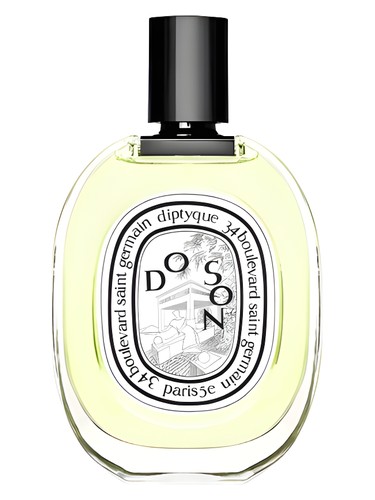
The first spray of Do Son transports you to a sun-drenched garden where tuberose reigns supreme. Named after a seaside resort in northern Vietnam where Diptyque co-founder Yves Coueslant spent childhood summers, this fragrance opens with a deceptively luminous burst—African orange flower mingles with iris and rose, creating a soft, almost translucent veil. But make no mistake: this is merely the overture. Within moments, the true star emerges, and it''s unmistakably, unapologetically tuberose. There''s an immediate warmth here, a creamy richness that feels both innocent and knowing, like catching the scent of night-blooming flowers at midday.
The Scent Profile
Do Son''s evolution is less a dramatic transformation than a graceful deepening. Those opening notes of African orange flower, iris, and rose create an intriguing complexity—the orange flower adds a honeyed brightness, while iris contributes a subtle, almost buttery quality that softens what could be an aggressive floral assault. The rose is quiet here, more of a supporting player than a diva, lending just enough classic floral elegance to ground the composition.
But the heart is where Do Son reveals its true nature. Tuberose dominates completely, backed by an unexpected twist of pink pepper that adds a delicate spiciness without disrupting the composition''s essential creaminess. This isn''t the narcotic, rubber-inflected tuberose of some white florals—it''s cleaner, more ethereal, yet still undeniably voluptuous. The tuberose accord registers at 77% intensity, creating a presence that''s substantial without being overwhelming.
As the fragrance settles into its base, musk and benzoin provide a soft, skin-like foundation. The musk adds that animalic quality (registering at 34% in the accord profile) that gives Do Son its subtle sensuality, while benzoin contributes a whisper of vanilla-tinged warmth and a powdery finish that''s never grandmotherly. The overall effect is surprisingly sheer for such a tuberose-forward fragrance—this is white floral as watercolor rather than oil paint.
Character & Occasion
With spring scoring a perfect 100% and summer close behind at 74%, Do Son is decidedly a warm-weather fragrance. This makes intuitive sense—tuberose''s natural blooming season aligns perfectly with the perfume''s performance characteristics. The eau de toilette concentration keeps things appropriately light for heated days, though those drawn to its charms in cooler months (fall at 37%, winter at 22%) will find it surprisingly wearable with the right layering.
The day/night split tells an interesting story: 93% day versus 33% night. This is primarily a daytime white floral, lacking the heavy-hitting projection or darker undertones that typically characterize evening scents. It''s the fragrance for garden parties, seaside lunches, morning meetings where you want to feel polished but approachable. There''s an elegance here that reads more Grace Kelly than Marilyn Monroe—refined rather than provocative, despite tuberose''s reputation.
Marketed as feminine, Do Son embodies a particular kind of femininity—graceful, assured, with just enough warmth to avoid feeling austere. It''s for those who appreciate white florals but find many commercial interpretations too heavy-handed or synthetic.
Community Verdict
Here''s where things become notably quiet. The Reddit fragrance community data reveals virtually no discussion of Do Son specifically—a surprising absence given the brand''s cult following and the fragrance''s respectable 3.95 rating from 4,572 votes on broader platforms. This silence is itself revealing. Do Son appears to be one of those fragrances that exists in a curious middle ground: well-regarded by those who know it, worn faithfully by a devoted subset, yet somehow failing to generate the passionate discourse that surrounds more polarizing releases.
The lack of detailed community pros and cons suggests Do Son may suffer from being "too nice"—pleasant and well-executed, but perhaps not distinctive enough to inspire heated debate or fervent evangelism. It''s the fragrance equivalent of a beautifully written but quiet novel that never quite becomes a conversation piece.
How It Compares
The similar fragrances list reads like a who''s who of modern white floral classics: Pure Poison, Alien, J''adore, Narciso Rodriguez For Her, and Carnal Flower. This placement reveals Do Son''s quality tier—it''s running with serious competition. Against Frédéric Malle''s Carnal Flower, Do Son feels considerably more restrained and less unabashedly carnal. Where Carnal Flower amplifies tuberose''s natural indolic intensity, Do Son smooths and civilizes it. Compared to the juggernaut popularity of J''adore or the otherworldly strangeness of Alien, Do Son occupies a more understated position—sophisticated where others are spectacular.
The Bottom Line
A 3.95 rating from over 4,500 votes indicates consistent appreciation rather than love-at-first-sniff obsession. Do Son does one thing exceptionally well: it captures the essence of tuberose in its most approachable, wearable form. This is both its strength and its limitation. Those seeking a challenging, boundary-pushing white floral should look elsewhere (Carnal Flower awaits). But for anyone who''s been intimidated by tuberose''s intensity or found other white florals too synthetic, Do Son offers an elegant entry point.
The Diptyque name commands premium pricing, and at eau de toilette concentration, longevity is moderate—expect 4-6 hours with subtle sillage. This makes Do Son more of an investment for true white floral devotees than a must-have for casual collectors. But for spring and summer wear, for those moments when you want to feel graceful and quietly confident, it remains a beautiful choice. Just don''t expect it to announce your arrival from across the room—and perhaps that''s precisely the point.
AI-generated editorial review