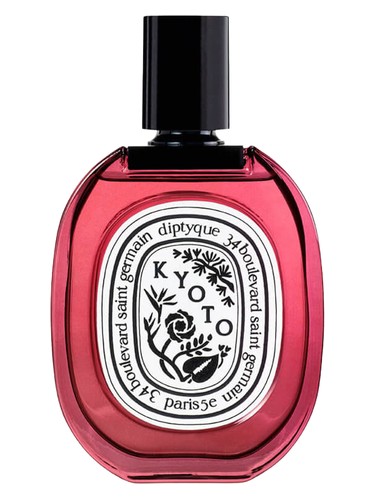
First Impressions
The first spray of Diptyque''s Kyoto delivers something unexpected: a rose that refuses to behave like one. Rather than the bright, dewy petals you might anticipate, what emerges is something darker, more contemplative—a rose caught between garden soil and temple smoke. This is the scent of petals scattered on ancient wooden floorboards, touched by incense and time. It''s immediately clear that Kyoto has no interest in the conventional rose playbook, and that calculated defiance is precisely what makes it fascinating.
The opening moments announce this fragrance''s complexity with confidence. Rose dominates—the accord registers at 100%—but it arrives wrapped in earthy shadows and aromatic wisps that transform it entirely. This isn''t grandmother''s rose water; it''s the ghost of roses in a space where something sacred has just burned away.
The Scent Profile
Kyoto''s structure reveals itself as a study in restraint and nuance, though Diptyque has chosen to keep the specific note breakdown enigmatic. What we can trace through wear is the interplay of its dominant accords, each one informing and reshaping the others.
The rose that anchors this composition feels photorealistic—green-stemmed and garden-fresh rather than perfumed or candied. But it never stands alone. The earthy accord (84%) grounds it immediately, bringing with it the mineral richness of turned soil and wet stone. There''s a vegetal quality here that makes the rose feel alive, still rooted in the ground rather than cut and arranged.
As the fragrance settles, the woody elements (73%) emerge with quiet authority, providing structure without overwhelming the delicate floral heart. These woods feel meditative, perhaps reminiscent of hinoki cypress or cedar—materials that evoke traditional Japanese architecture and gardens. The aromatic accord (66%) weaves through everything, adding herbal complexity that prevents the composition from feeling heavy despite its earthy foundation.
The most distinctive character arrives through the interplay of amber (62%) and smoke (55%). This is where Kyoto achieves its temple-like quality—the amber provides warmth without sweetness, while the smoky elements suggest incense burning in a quiet corner. Together, they transform the rose from a simple floral study into something approaching a spiritual experience, meditative and introspective.
Throughout its wear, Kyoto maintains remarkable balance. Nothing screams; everything whispers. The composition feels purposefully understated, which proves either captivating or frustrating depending on your expectations.
Character & Occasion
Kyoto is fundamentally a transitional season fragrance, and the data confirms what the scent suggests. It achieves perfect scores for fall (100%) and near-perfect marks for spring (93%)—those in-between seasons when nature is either waking or settling into sleep. There''s something about Kyoto''s earthy, contemplative character that mirrors these liminal moments.
Summer wearability sits at 65%, which makes sense given the fragrance''s incense-heavy complexity. On warm days, it works best in shaded gardens or air-conditioned galleries rather than direct sunlight. Winter scores lower (39%), as the composition lacks the richness and projection needed to cut through cold air.
The day/night split tells its own story: 97% for day versus 46% for night. Kyoto is decidedly a daylight fragrance—too subtle and meditative for evening drama, but perfect for quiet hours of contemplation, creative work, or mindful walks through botanical spaces.
This is a fragrance for those who already love incense-forward compositions and want to see how rose can be reimagined through that lens. It appeals to the niche fragrance explorer rather than the casual wearer, someone who appreciates restraint and complexity over immediate impact.
Community Verdict
The Reddit fragrance community awards Kyoto a sentiment score of 6.8/10—decidedly mixed, though leaning positive. With 48 opinions analyzed and a broader rating of 3.97/5 from 524 votes, the pattern is clear: this is a fragrance that inspires strong reactions in both directions.
Praise centers on the composition itself. Community members consistently highlight its exceptional balance and nuanced construction. The photorealistic quality of the rose gets particular attention, with many noting how it avoids the "granny rose" trap that makes so many rose fragrances unwearable for modern tastes. The incense, vegetal, and earthy elements create complexity that rewards repeated wearing and close attention.
The criticism, however, focuses squarely on practical concerns. Performance is the most frequent complaint—longevity clocks in at a modest 4-6 hours with weak to moderate projection. For a fragrance carrying a $190 price tag, this feels inadequate to many reviewers. The price-to-performance ratio becomes a sticking point, especially considering this appears to be an eau de toilette concentration.
The fragrance''s unconventional nature also divides opinion. What some consider sophisticated restraint, others find disappointingly faint or too strange. Its limited edition status and availability issues add frustration for those who do connect with it.
How It Compares
Kyoto finds itself in interesting company among its similar fragrances. Portrait of a Lady by Frederic Malle shares the non-traditional rose approach but with more opulence and projection. La Fille de Berlin by Serge Lutens offers another perspective on rose with incense, though with more sweetness. The inclusion of Bal d''Afrique, Black Orchid, and Baccarat Rouge 540 in its comparison set speaks to Kyoto''s niche positioning—these are fragrances for those seeking something beyond the mainstream.
Where Kyoto distinguishes itself is in its restraint. It''s quieter than all its comparisons, more meditative, more concerned with balance than boldness.
The Bottom Line
Kyoto''s 3.97/5 rating reflects exactly what it is: a beautiful, unconventional fragrance that won''t be for everyone. The community sentiment of 6.8/10 confirms the divide—this is a love-it-or-find-it-perplexing proposition.
Should you try it? Absolutely, if you''re an incense lover seeking a non-traditional rose, or if you appreciate fragrances that prioritize artistry over performance. The composition itself deserves the attention it receives.
Should you buy it blindly at $190? Probably not. The weak longevity makes this a test-first fragrance, and you''ll want to confirm that its subtle character works with your skin chemistry. For some, those 4-6 hours will feel like a meditative journey worth repeating. For others, they''ll simply feel too fleeting to justify the investment.
Kyoto is a garden of contradictions—beautiful but divisive, artful but impractical, captivating but ephemeral. Like the city that inspired it, it rewards those who approach with patience and an open mind.
AI-generated editorial review