First Impressions
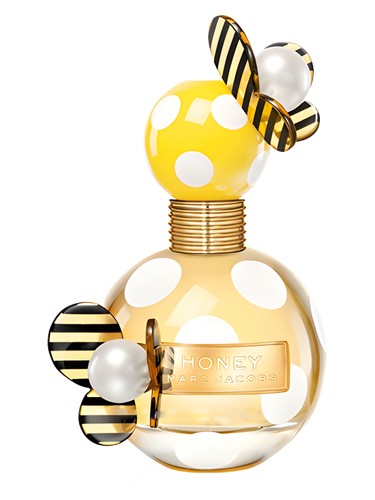
The first spray of Marc Jacobs Honey arrives like a fruit punch spilled across a sunlit patio—immediate, unabashed, and impossibly sweet. There''s no subtlety in this opening gambit: mandarin orange and pear crash together with the artificial brightness of a tropical cocktail, while something vaguely punch-like hovers in the background. It''s the olfactory equivalent of a neon sign, announcing its presence with zero apology. This is not a fragrance that whispers. It shouts, giggles, and demands attention from the moment it touches skin.
The name "Honey" proves somewhat misleading in these opening moments. What emerges instead is a fruit basket tipped over into a florist''s shop, with honey playing a supporting role rather than the starring part you might expect. It''s this disconnect between expectation and reality that sets the stage for everything that follows—a fragrance that divides its audience almost down the middle.
The Scent Profile
Marc Jacobs Honey builds itself on a foundation that''s 100% fruity according to its dominant accord, and that construction is immediately apparent. The top notes of punch, pear, and mandarin orange create a syrupy-sweet opening that borders on candy-like. The pear, in particular, carries that characteristic juicy-sweet quality that defined many feminine fragrances of the early 2010s—think Escada summer editions rather than Hermès sophistication.
As the fruit cocktail begins to settle, the heart reveals what gives this fragrance its actual character: honeysuckle, orange blossom, and peach. The honeysuckle dominates here, contributing to that 63% white floral accord. This is where opinions fracture most dramatically. For some, the honeysuckle offers a nostalgic, summery quality—the scent of suburban evenings and childhood memories. For others, particularly those expecting actual honey, this note veers into cloying territory. The orange blossom attempts to add sophistication, but it''s largely drowned out by the louder, sweeter elements surrounding it.
The base is where the honey finally makes its entrance, paired with vanilla and woody notes. At 48% honey accord and 24% vanilla, this drydown leans decidedly gourmand. The woody notes—unspecified and somewhat generic—provide just enough structure to prevent the composition from collapsing entirely into dessert territory. Yet even here, the sweetness persists with a 67% sweet accord running through the entire fragrance. This is a scent that commits fully to its sugar-rush aesthetic, for better or worse.
Character & Occasion
The data tells a clear story about Honey''s ideal habitat: this is a warm-weather, daytime fragrance without question. With 82% spring and 72% summer ratings, and a decisive 100% day versus only 10% night designation, Marc Jacobs Honey knows its lane. It''s designed for casual brunches, outdoor festivals, shopping trips, and lazy afternoons—situations where a loud, cheerful presence feels appropriate rather than intrusive.
Fall sees a 24% rating, suggesting some brave souls extend their wearing season into early autumn, but the mere 10% winter rating confirms what the nose already knows: this is not a fragrance for cold weather or cozy evenings. The composition lacks the depth, spice, or richness that would make it suitable for bundling up indoors.
The personality here skews decidedly young and playful. This isn''t a fragrance for boardroom power moves or sophisticated dinner dates. It''s for someone embracing—or nostalgic for—a carefree, girly aesthetic. The 3.63 out of 5 rating from 2,661 voters suggests a fragrance that''s pleasant enough for many but fails to inspire devotion from most.
Community Verdict
The Reddit fragrance community delivers a mixed verdict with a 5.5 out of 10 sentiment score based on 31 opinions—essentially a polarized shrug. The divide here is striking and informative.
On the positive side, wearers appreciate Honey as a fun, youthful option with genuine floral character. Some report decent longevity and projection, which matters at this price point. Its widespread availability at discount retailers like TJ Maxx and Marshall''s has actually become a selling point—positioning it as an accessible entry-level fragrance for newcomers exploring sweet florals. At around $35 at these outlets, the value proposition shifts dramatically.
The criticisms, however, cut deeper. The most common complaint centers on that honeysuckle-heavy composition being overly sweet and cloying, with many noting it doesn''t actually smell like honey despite the name. Longevity becomes contentious—some find it adequate, others report it disappearing disappointingly fast, especially problematic at full retail pricing. Experienced fragrance wearers consistently label it as basic and unoriginal, lacking the complexity that would justify department store prices. Perhaps most tellingly, some reviewers find the scent actively unpleasant, describing it as rotten or off-putting.
The community consensus suggests Honey works best for budget-conscious buyers at discount stores, young fragrance beginners, and casual everyday wear applied sparingly.
How It Compares
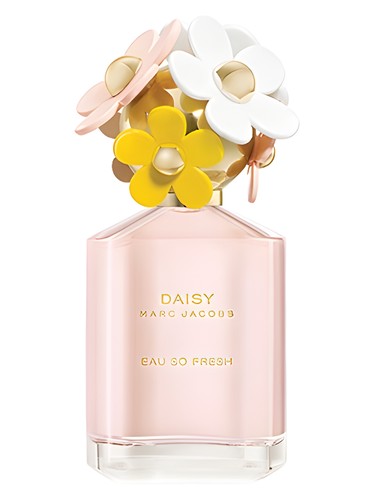
Marc Jacobs Honey exists in crowded territory alongside fragrances like its own brand siblings Dot and Daisy Eau So Fresh, plus mainstream sweet florals like Britney Spears Fantasy, Dior J''adore, and Lancôme La Vie Est Belle. The comparison to Fantasy is particularly apt—both occupy that accessible, unapologetically sweet space designed for mass appeal rather than niche appreciation.
Where Honey distinguishes itself is in that prominent honeysuckle note, though whether this counts as distinction or liability depends entirely on individual taste. Compared to the more refined J''adore or the sophisticated gourmand structure of La Vie Est Belle, Honey reads as decidedly more casual and less complex.
The Bottom Line
Marc Jacobs Honey presents a case study in fragrance positioning and perception. At full retail price, the 3.63 rating and mixed community sentiment suggest disappointment—a basic, overly sweet composition that doesn''t deliver enough complexity or performance to justify premium pricing. The disconnect between the name and the actual scent profile (honeysuckle-dominant rather than honey-centric) creates expectations it cannot meet.
However, at discount pricing of around $35, the value equation shifts entirely. As an entry-level sweet floral for warm-weather wear, it becomes a reasonable option for younger wearers or those just beginning to explore fragrance. The key is managing expectations and application—this wants to be worn lightly on spring and summer days when its fruit-punch sweetness can feel cheerful rather than overwhelming.
Should you try it? If you''re browsing TJ Maxx and curious about accessible sweet florals, it''s worth a test spray. If you''re seeking actual honey notes, sophisticated complexity, or a signature scent worth full price, keep walking. Honey is exactly what it appears to be: a fun, loud, undemanding fragrance that knows its audience—you just need to know if you''re part of it.
AI-generated editorial review