First Impressions
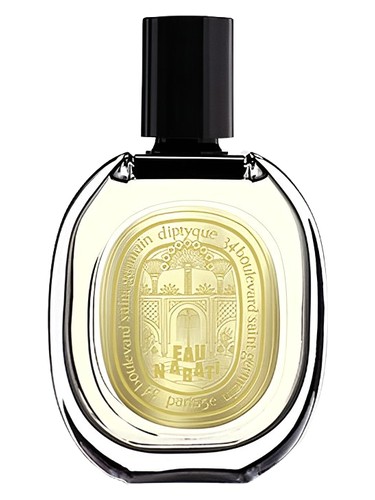
The first spray of Eau Nabati presents a delightful contradiction—a fragrance that refuses to choose between warmth and brightness, instead insisting on both. There''s an immediate rush of citrus that feels sun-drenched and optimistic, yet within seconds, a sophisticated amber warmth rises to meet it. This isn''t the heavy, incense-laden amber of winter evenings, nor is it the sharp, cologne-like citrus of summer mornings. It''s something more nuanced: a fragrance that seems to capture the golden hour, that transitional moment when day hasn''t quite surrendered to dusk.
What strikes you next is the herbal quality, green and aromatic, lending an almost botanical garden atmosphere to the composition. Diptyque has created something that feels simultaneously ancient and modern, referencing traditional amber structures while maintaining a contemporary lightness that makes it immediately wearable.
The Scent Profile
Without specific note breakdowns available, Eau Nabati reveals itself through its dominant accords, and they tell a fascinating story. The amber foundation (registering at full intensity) provides the backbone—it''s resinous and warm, with that characteristic honeyed glow that amber lovers seek. But this isn''t a simple amber soliflore.
The citrus element, nearly as prominent at 90%, creates an unusual dynamic. Rather than appearing solely at the opening and fading quickly as citrus typically does, it seems to persist, dancing with the amber throughout the wear. This suggests a careful layering technique, possibly using both bright top notes and more enduring citrus materials that extend into the heart.
The herbal and green accords (both hovering around 83-86%) add crucial dimension. These elements prevent the amber from becoming too sweet or cloying, introducing an aromatic quality that feels fresh and alive. Think of crushed leaves, garden herbs touched by morning dew, the verdant aspect balancing the warmth with remarkable grace.
The woody facet (83%) likely provides structure, creating a framework that supports both the brightness and the warmth. Combined with the balsamic undertones (71%), you get depth and complexity—something that suggests sap and resin, the smell of bark warmed by autumn sun.
What makes Eau Nabati particularly interesting is how these accords seem to coexist rather than following a strict chronological evolution. It''s less about a journey from top to base and more about a shifting perspective on a complete composition that reveals different facets as your nose adjusts and as the fragrance settles into your skin.
Character & Occasion
The community has spoken clearly on this point: Eau Nabati is supremely versatile. Its perfect alignment with fall (100%) makes immediate sense—that amber-woody core wrapped in green and citrus mirrors the season itself, where warmth lingers in the air while leaves turn and the light becomes golden and slanted.
But the 75% spring rating reveals something equally important: this isn''t a heavy, oppressive fragrance. The herbal and citrus elements give it enough brightness to transition beautifully into warmer weather. Even its respectable summer and winter scores (60-61%) suggest a fragrance that adapts rather than insists.
The day/night split is particularly telling. At 93% day wear, Eau Nabati clearly shines in daylight hours—it has that brightness and accessibility that makes it office-appropriate, brunch-suitable, perfect for gallery openings or long walks through botanical gardens. Yet the 60% night rating suggests it doesn''t disappear when the sun sets; that amber warmth carries enough presence for evening occasions, though it might feel more intimate than imposing.
This is a fragrance for someone who appreciates complexity without theatrics, warmth without weight. The feminine classification seems almost incidental—Eau Nabati possesses that sophisticated androgyny that characterizes much of Diptyque''s best work.
Community Verdict
With 370 votes landing at a solid 3.9 out of 5, Eau Nabati has earned respectable marks from the community. This isn''t a polarizing love-it-or-hate-it creation, but rather something that appeals to a broad audience while maintaining its distinctive character. The rating suggests a well-executed fragrance that delivers on its promise without necessarily revolutionizing the category.
That near-4-star rating, bolstered by hundreds of reviews, indicates consistency—people generally get what they expect, and they''re pleased with it. It''s worth noting that very few fragrances achieve universal acclaim; a 3.9 represents solid approval from a discerning community.
How It Compares
The list of similar fragrances reads like a who''s who of modern amber compositions, yet each comparison reveals different facets of Eau Nabati''s personality. The connection to Ani by Nishane suggests shared gourmand-amber tendencies, while Chergui by Serge Lutens points to a honeyed, tobacco-tinged warmth. The Oud Wood reference is particularly interesting—it hints at the woody depth and sophisticated restraint both fragrances share.
Perhaps most telling is the comparison to Diptyque''s own Benjoin Bohème, suggesting Eau Nabati fits comfortably within the house''s amber vocabulary while carving its own identity. The Maison Martin Margiela By the Fireplace reference evokes that same cozy-yet-refined aesthetic, though Eau Nabati seems brighter and more herb-focused.
Where Eau Nabati distinguishes itself is in that unusual citrus-amber marriage and the prominent herbal-green character. It''s less overtly gourmand than Ani, less smoky than Chergui, more accessible than Oud Wood.
The Bottom Line
Eau Nabati represents Diptyque doing what Diptyque does best: creating wearable sophistication that doesn''t sacrifice complexity. At 3.9 stars with nearly 400 votes, it''s clearly resonating with people who appreciate nuanced fragrance that works across multiple contexts.
This isn''t a revolutionary scent or a statement fragrance. It won''t announce your presence across a room or challenge conventional notions of what perfume should be. Instead, it offers something perhaps more valuable: a beautifully balanced composition that adapts to your life rather than demanding your life adapt to it.
For someone seeking an amber fragrance that escapes the heavy, winter-only trap, Eau Nabati deserves serious consideration. If you love the category but want something you can actually wear year-round, particularly during those transition seasons when most fragrances feel slightly wrong, this could be exactly what you''re looking for. Those who appreciate Diptyque''s aesthetic—that Parisian intellectual warmth, that sense of understated refinement—will find much to love here.
At its heart, Eau Nabati is a fragrance for people who understand that versatility and complexity aren''t mutually exclusive, and that sometimes the most interesting fragrances are the ones you can actually wear.
AI-generated editorial review