First Impressions
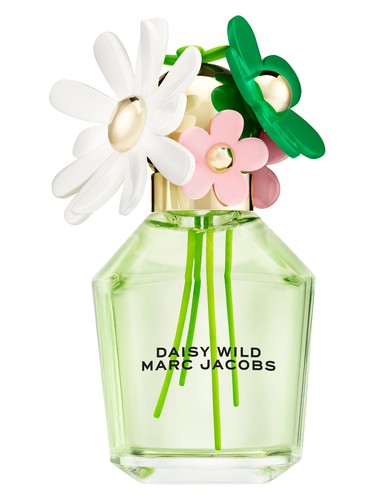
The first spray of Daisy Wild announces itself with an audacious tropical flourish—banana flower, that rare perfumery ingredient that hovers somewhere between creamy fruit and exotic bloom. It''s a bold opening gambit from Marc Jacobs, veering away from the daisy-chain innocence of its lineage toward something more adventurous. That initial moment delivers a lush, verdant freshness that feels like stepping into a sunlit greenhouse, where the air is thick with green stems and ripening fruit. The banana flower note doesn''t scream "banana smoothie"—instead, it offers a waxy, slightly honeyed floral quality with just enough fruity undertones to justify the fragrance''s dominant accord.
This is clearly a perfume designed to turn heads in the most casual, daylight settings. The opening feels optimistic, uncomplicated, and designed for warm-weather ease. But as with many contemporary launches in the crowded fruity-floral category, the question isn''t whether it starts well—it''s whether it can sustain that promise through the drydown.
The Scent Profile
Daisy Wild''s structure follows a familiar blueprint but with a few unexpected detours. The banana flower top note carries the composition through those crucial first fifteen minutes, radiating a fruity-floral brightness that registers at full intensity. This isn''t a subtle whisper of fruit; it''s proudly tropical, unapologetically contemporary.
As the heart emerges, jasmine steps forward with classic white floral richness, supported by an unusual companion: macadamia. This nutty accent adds a creamy, slightly buttery texture that rounds out the jasmine''s sharper edges. The combination creates a soft-focus effect, like viewing flowers through a gauzy filter. The macadamia doesn''t assert itself as a distinct "note" so much as it contributes to an overall impression of smooth, milky floralcy. At this stage, the fragrance lives comfortably in its white floral accord (82%), with the initial fruitiness still lingering around the edges.
The base, however, is where opinions diverge sharply. Vetiver and sandalwood anchor the composition with woody, aromatic depth—a combination that should provide elegant structure. Yet something in the execution seems to polarize wearers. The vetiver brings its characteristic earthy, slightly bitter green quality, while sandalwood attempts to smooth things over with its soft, creamy wood profile. But the interplay between these base notes and the lingering florals creates what many describe as a dusty, powdery effect that reads more "fabric softener" than "sophisticated woody floral."
Character & Occasion
The data paints a clear picture: Daisy Wild is a spring and summer specialist, with spring registering at 100% and summer close behind at 91%. The fall and winter months see this fragrance struggle to find relevance (13% and 7% respectively), and that makes perfect sense. This is a perfume that needs warmth, sunshine, and bare skin—or rather, light cotton and linen—to shine.
The day versus night breakdown is even more decisive: 90% day wear, with a mere 9% voting for evening occasions. Daisy Wild isn''t trying to be mysterious, sensual, or sophisticated in the traditional sense. It''s designed for farmer''s markets, weekend brunches, outdoor festivals, and those unhurried summer Saturdays when you want to smell fresh without overthinking it.
Who is this for? The woman who gravitates toward approachable, feel-good fragrances rather than challenging compositions. Someone building a warm-weather wardrobe who wants something current and accessible. But there''s an important caveat that the community data reveals: this perfume performs notably better on clothing than directly on skin, which narrows its ideal audience to those willing to spray their garments rather than their pulse points.
Community Verdict
The r/fragrance community delivers a decidedly mixed verdict, scoring Daisy Wild at 5.5 out of 10—right in the territory of "it''s complicated." Based on 16 opinions, a pattern emerges: genuine enthusiasm for the opening and initial development, followed by disappointment with how the fragrance settles.
The pros are straightforward: that fresh, pleasant opening earns consistent praise, and multiple commenters note it smells beautiful on paper strips and clothing. For those seeking an uncomplicated spring and summer option, it delivers what''s promised in the top notes.
The cons, however, are more specific and damning. The drydown''s dusty, powdery quality—attributed to musky base notes—emerges as the primary complaint. Several wearers describe it as reminiscent of fabric softener or laundry products, which might be comforting to some but registers as generic to those seeking more personality. The vetiver and woody notes in the base don''t appeal to everyone, creating a disconnect between the tropical-floral opening and the earthy conclusion.
There''s also a subtle fatigue with Marc Jacobs'' aggressive marketing for the Daisy line, which may predispose some to skepticism before they even smell the juice. Performance issues on skin versus fabric suggest potential chemistry challenges that could frustrate those expecting consistent wear.
How It Compares
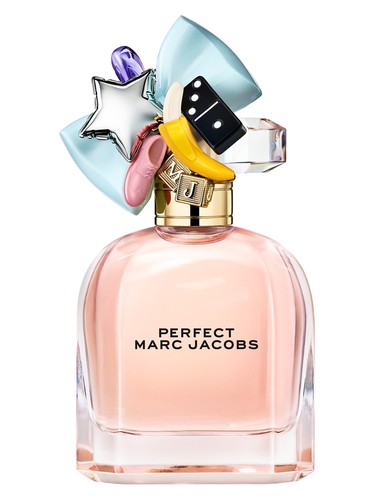
Positioned alongside heavy-hitters like J''adore, Flowerbomb, and Valentino Donna Born In Roma, Daisy Wild occupies more accessible territory. Where those fragrances project sophistication and occasion-worthy presence, Daisy Wild aims for breezy, democratic appeal. The comparison to Burberry Her and Marc Jacobs'' own Perfect feels more apt—these are modern, fruity-florals designed for mass appeal rather than niche credibility.
Within the crowded Daisy franchise itself, Wild attempts to inject tropical energy and green notes into a formula that''s been endlessly reworked. Whether it succeeds depends largely on your skin chemistry and wearing preferences.
The Bottom Line
With a respectable 3.99 out of 5 rating from 1,944 voters, Daisy Wild sits firmly in "liked but not loved" territory. That rating reflects its strengths—approachable, seasonally appropriate, inoffensive—while acknowledging its limitations.
The value proposition here depends on expectations. If you''re seeking a tropical-leaning white floral for daytime summer wear and you''re willing to spray it on clothing rather than skin, Daisy Wild could serve that purpose admirably. The banana flower note offers enough novelty to distinguish it from countless other fruity-florals, at least initially.
But if you prioritize interesting development, skin-compatible chemistry, and a drydown that matches the promise of the opening, proceed with caution. Sample first, preferably wearing it through a full day to experience that contentious base. The divide between enthusiasts and detractors is real enough to warrant testing before committing.
Daisy Wild is best suited for those building a casual fragrance wardrobe who value freshness over complexity, and who won''t mind the laundry-product associations that plague its later stages. It''s a perfectly fine warm-weather option—just not a wild success.
AI-generated editorial review