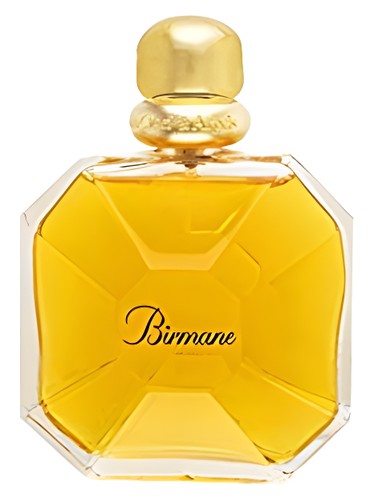
First Impressions
The first spray of Birmane reveals a perfume that refuses to announce itself with loud fanfare. Instead, it whispers an invitation—a tropical brightness softened immediately by something plush and comforting. The pineapple emerges not as the sharp, acidic fruit you''d encounter poolside, but as a sweetened, almost candied interpretation, smoothed by the warmth of Brazilian rosewood and the gentle citrus kiss of bergamot and lemon. This opening promises indulgence without excess, setting the stage for what becomes a remarkably cohesive journey through layers of velvety sweetness.
There''s an old-world elegance here that feels distinctly late-''90s, yet somehow timeless. Birmane doesn''t try to shock or seduce with aggressive projection; it settles close to the skin like a cashmere wrap, radiating warmth rather than demanding attention.
The Scent Profile
The tropical brightness of that pineapple opening transitions with surprising grace into Birmane''s heart, where the composition reveals its true character. Heliotrope takes center stage, bringing its characteristic almond-like powderiness that reads almost edible. This isn''t the raw, green floralcy you might expect from the orchid and rose also listed in the heart—instead, these florals feel softened, as if viewed through gauze, their edges rounded by that dominant heliotrope.
The rose never quite blooms into full recognition; rather, it lends a subtle rosy whisper that adds depth without competing with the sweeter elements. The orchid contributes a creamy, slightly vanillic texture that begins the seamless transition into the base notes, where Birmane truly settles into its identity.
And what an identity it is. The base is where the fragrance''s main accord profile—sweet at 100%, vanilla at 97%, and powdery at 85%—makes perfect sense. Tonka bean and vanilla form an inseparable duo, creating that characteristic gourmand warmth that defined so many turn-of-the-millennium fragrances. But Birmane balances this sweetness with sandalwood''s creamy woodiness and a soft musk that prevents the composition from tipping into cloying territory. The woody accord registers at 81%, providing just enough structure to keep this confection grounded.
The drydown lingers for hours, a gentle vanilla-sandalwood haze with that persistent powdery quality that makes Birmane feel simultaneously nostalgic and comforting—like expensive face powder left open on a vanity, mixed with vanilla sugar and warm skin.
Character & Occasion
Birmane is unquestionably an autumn and winter fragrance. The community data shows 100% suitability for fall and 70% for winter, and one wearing confirms why. This is a perfume that craves cooler weather, where its sweetness and warmth can radiate without becoming overwhelming. The vanilla-tonka base would feel suffocating in summer heat (just 31% suitability), though spring''s milder temperatures (42%) might accommodate it on cooler days.
The day/night split is interesting: 86% for daytime wear versus 61% for evening. This makes Birmane something of a chameleon—refined enough for office wear when applied with restraint, yet cozy and enveloping enough for dinner dates or evening relaxation. It''s not a nightclub fragrance; there''s nothing overtly seductive or mysterious here. Instead, it occupies that sophisticated middle ground of approachable elegance.
Who is Birmane for? The woman who appreciates subtle complexity over bold statements. Someone who remembers when "gourmand" didn''t mean smelling like a bakery explosion, but rather added a touch of edible warmth to a well-rounded composition. It suits those who find comfort in powdery, vanillic scents but want something more nuanced than a straightforward vanilla soliflore.
Community Verdict
With a solid 4.11 out of 5 rating from 531 votes, Birmane has clearly resonated with those who''ve discovered it. This isn''t a massive sample size—suggesting the fragrance hasn''t achieved blockbuster status—but that rating indicates consistent appreciation from those in the know. Scores above 4.0 in the fragrance community typically indicate a well-crafted, if perhaps not universally appealing, composition.
The relatively modest vote count also hints at Birmane''s status as something of a hidden gem. Van Cleef & Arpels never achieved the same fragrance house recognition as Dior or Guerlain, despite producing several quality offerings. This means Birmane rewards seekers—those willing to look beyond the department store bestsellers to find something more distinctive.
How It Compares
Birmane sits comfortably in the company of late-''90s and early-2000s oriental-gourmands. Its similarity to Chopard''s Casmir, Dior''s Dolce Vita and Hypnotic Poison, Guerlain''s Samsara, and Mugler''s Angel places it firmly in that era''s sweet, warm aesthetic. However, Birmane distinguishes itself through restraint. Where Angel goes maximalist with patchouli and caramel, and Hypnotic Poison leans heavily into almond and licorice, Birmane takes a softer approach.
The heliotrope-vanilla combination gives it common ground with Guerlain''s Samsara, though Birmane feels less overtly spiritual and more casually elegant. Against Dolce Vita''s lily-forward sweetness, Birmane offers more pronounced vanilla warmth. It''s perhaps closest to Casmir in overall vibe—both favor powdery oriental warmth—but Birmane''s fruity opening and sandalwood base give it a slightly airier quality.
The Bottom Line
Birmane deserves more attention than it receives. At 4.11 out of 5, it''s clearly satisfying those who try it, but its relatively low profile means many potential fans have never encountered it. This is both a weakness and a strength—you won''t smell it on everyone (or anyone), but you may need to hunt for it.
If you''re drawn to powdery vanillas with enough complexity to stay interesting, Birmane merits exploration. It''s particularly worth seeking if you''ve enjoyed the fragrances in its peer group but want something less ubiquitous than Hypnotic Poison or Angel. The price point for vintage or remaining stock tends to be reasonable, making it an accessible entry into the Van Cleef & Arpels catalog.
This isn''t a revolutionary fragrance, but revolution isn''t always the goal. Sometimes, quiet excellence is enough—and Birmane delivers exactly that.
AI-generated editorial review