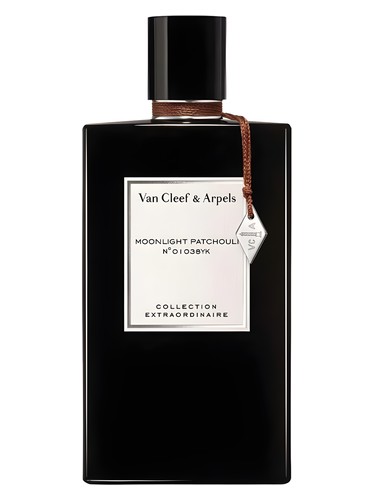
First Impressions
The first spray of Bois d''Iris delivers something most iris fragrances wouldn''t dare attempt: salt. Not the bracing oceanic blast of an aquatic cologne, but something more nuanced—a mineral whisper that reads like silk scarves left to dry in coastal air. It''s an unexpected handshake from Van Cleef & Arpels, a jeweler-turned-perfumer known for precious compositions, and it immediately signals that this 2009 release has no intention of following the well-trodden iris path.
That saline opening feels almost avant-garde against what you know is coming: the earthy, powdered elegance of iris root. It''s as if someone scattered fleur de sel across a palette of violets and woods, creating a tension that shouldn''t work but absolutely does. Within moments, you understand this isn''t trying to be another comforting iris soliflore—this is iris with an edge, iris with intrigue.
The Scent Profile
The salt accord, singular and striking in the top notes, creates a crystalline veil that hovers for perhaps fifteen minutes before the heart asserts itself. And what a heart it is. The iris here is uncompromising—rooty, earthy, and unmistakably the star of this composition. This is iris in its most authentic form: slightly metallic, decidedly powdery, with that characteristic coolness that feels like touching fine paper or running your fingers along suede.
The powdery quality builds as the fragrance settles, joined by whispers of violet that emerge from iris''s natural character rather than feeling like a separate ingredient. There''s an earthy depth that grounds what could have been an overly ethereal composition—a reminder that iris comes from the ground, from rhizomes that must be aged and processed with patience.
As Bois d''Iris moves into its base, vetiver and ambergris create a foundation that''s both woody and softly amber-toned. The vetiver adds a dry, almost smoky quality without turning masculine or sharp. Meanwhile, the ambergris brings warmth and a subtle animalic smoothness that keeps the composition from floating away entirely into powder. Together, they create a skin-like finish that wears close and intimate, transforming the initial salt-iris drama into something more contemplative and personal.
The progression feels less like traditional top-heart-base and more like a gradual deepening—imagine watching storm clouds gather over a beach at dusk, the light changing by degrees rather than in distinct acts.
Character & Occasion
The data tells us what our noses confirm: this is fundamentally an autumn fragrance, scoring perfectly for fall wear, with strong spring credentials at 78%. It makes sense. That earthy iris core, the woody vetiver backbone, the powdery drydown—these are transitional season notes, perfect for days when you need something with presence but not projection, depth but not heaviness.
Winter wearers will find it compatible at 60%, though perhaps best saved for milder winter days or indoor settings where its relative subtlety won''t be lost to heavy coats and harsh winds. Summer, at 38%, is possible but pushes against the fragrance''s nature—this isn''t built for heat, and the powdery elements might feel stifling in humidity.
The day-versus-night split is revealing: 94% day to 47% night. This is decisively daytime territory. The elegance reads as refined rather than seductive, intellectual rather than sensual. Picture it for gallery openings, weekend brunches in well-cut separates, or the kind of office where taste is noticed and appreciated. It can transition to evening, certainly, but it won''t announce itself across a dinner table or command attention in a crowded bar.
Marketed as feminine, Bois d''Iris possesses that quality many iris fragrances share: a sophistication that transcends gender boundaries. The woody, earthy elements provide enough structure that anyone drawn to elegant, understated compositions could wear this beautifully.
Community Verdict
With 2,618 votes landing at a 4.25 out of 5 rating, the community has spoken clearly: this is a fragrance worth your attention. That score, hovering in the "excellent" range without quite reaching "masterpiece" territory, suggests a composition that delivers on its promises while perhaps having some limitations—likely in projection or longevity, common concerns with iris-dominant fragrances.
The substantial vote count itself indicates this isn''t a hidden gem languishing in obscurity. Over a decade after its 2009 release, Bois d''Iris has built a loyal following of wearers who return to it, recommend it, and consider it a staple in the iris category.
How It Compares
The comparison to Prada''s Infusion d''Iris is inevitable—both are refined, earthy takes on the note. But where Prada leans into citrus brightness and neroli, Van Cleef & Arpels chose salt and vetiver, creating something darker and more mysterious. Bal d''Afrique by Byredo might seem an odd companion until you consider both fragrances play with violet-adjacent florals against woody bases, though Byredo''s composition is sunnier and more overtly African-inspired.
The Guerlain references—Shalimar, Mon Guerlain—point to a shared DNA of powdery elegance and amber warmth, though Bois d''Iris is far more restrained than Shalimar''s opulent vanilla or Mon Guerlain''s lavender drama. Black Orchid''s inclusion suggests that shoppers who appreciate sophisticated, slightly unconventional takes on traditional accords might find themselves drawn to Van Cleef & Arpels'' vision.
The Bottom Line
Bois d''Iris stands as one of the more interesting iris compositions of its era, distinguished by that brave salt opening and commitment to showcasing the note''s earthy, powdery reality rather than sweetening it for mass appeal. The 4.25 rating reflects genuine appreciation from a sizable community—this isn''t a cult favorite with twelve devotees; it''s a broadly respected fragrance that delivers quality.
Should you try it? If you''re building an iris wardrobe and want something beyond the usual suspects, absolutely. If you''re curious about how a mineral accord can transform a classic floral-woody structure, yes. If you need something for daytime wear that signals sophistication without shouting, this deserves a spot on your testing list. Just know what you''re getting: this is elegant restraint, not bold statement-making. And sometimes, that''s exactly what excellence looks like.
AI-generated editorial review