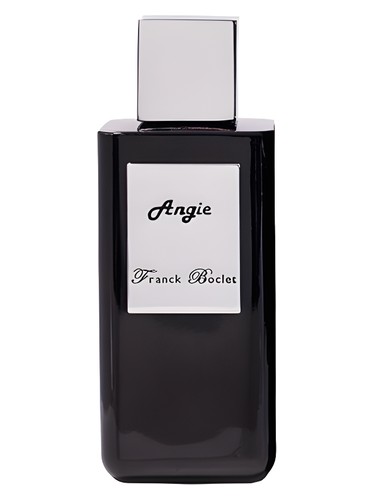
First Impressions
The first spritz of Franck Boclet''s Angie delivers a trifecta of fig in full Mediterranean glory—fruit, nectar, and leaf unite in a green-sweet opening that immediately transports you to sun-dappled groves. But wait a moment. This isn''t the fresh, watery fig you might expect. There''s a woody backbone asserting itself from the very beginning, creating an intriguing tension between the verdant fruit and something altogether more substantial lurking beneath. It''s as if someone planted a fig tree in a sandalwood forest and captured the precise moment where green meets grain, where sweetness surrenders to structure.
This unexpected woody dominance—registering at 100% in the accord profile—announces that Angie has no intention of being a typical fruity-floral feminine. Instead, Boclet has crafted something more architectural, more deliberate, a fragrance that uses fig as its muse rather than its entire story.
The Scent Profile
The opening act belongs entirely to fig in its triple expression. The fig fruit itself brings a soft, honeyed sweetness with that characteristic milky-green quality. Fig nectar amplifies this sweetness, adding a almost jammy intensity, while fig leaf contributes a latex-like greenness that keeps the composition from veering into dessert territory. This trinity creates a complex, multifaceted introduction that''s simultaneously sweet (72% accord strength), green (55%), and subtly fruity (51%).
As the fragrance settles into its heart, the woody architecture reveals itself in full. Sandalwood and Virginia cedar form a creamy-dry framework that completely transforms the fig''s character. The sandalwood brings its signature buttery smoothness, while the cedar adds pencil-shaving dryness and a subtle spice. Hawthorn introduces a delicate, almost almond-like floralcy, and unspecified floral notes (71% floral accord) weave throughout, creating a gauzy, romantic middle phase that''s never overtly feminine or cloying. This is where Angie''s true personality emerges—not as a fig fragrance with woody notes, but as a woody fragrance that happens to open with fig.
The base is where comfort resides. Vanilla, musk, and amber create a soft landing that registers as distinctly powdery (64% accord strength). The vanilla never reaches gourmand levels; instead, it adds a gentle roundness that smooths the edges between wood and skin. Musk provides clean, skin-like intimacy, while amber contributes warmth without heaviness. This foundation allows the fragrance to maintain presence without shouting, creating what becomes an increasingly personal scent as it dries down completely.
Character & Occasion
The seasonal profile tells a compelling story: Angie shines brightest in fall (99%) and spring (96%), those transitional seasons where neither extreme heat nor bitter cold dominates. This makes perfect sense—the woody-sweet composition has enough warmth for cooler days but sufficient green freshness for spring sunshine. Summer compatibility at 80% suggests it won''t wilt in heat, though you might want to apply with a lighter hand. Even winter scores a respectable 72%, meaning this is genuinely versatile across the calendar.
The day/night breakdown is telling: 100% day-appropriate versus only 47% for evening wear. Angie is decisively a daylight fragrance, perfect for daytime activities where you want presence without drama. Think weekend brunches, gallery openings, farmers markets, or the office when you want to feel polished but approachable. The powdery-woody combination creates an elegant but unfussy aura that feels more refined-casual than black-tie.
This is a fragrance for someone who appreciates complexity but doesn''t need to announce it loudly. It suits those who''ve moved beyond overtly sweet or aggressively floral feminines but still want something undeniably warm and wearable.
Community Verdict
With 440 votes landing at 3.68 out of 5, Angie occupies solid "very good" territory. This isn''t a polarizing love-it-or-hate-it composition, nor is it achieving universal acclaim. The rating suggests a well-executed fragrance that delivers on its promise without necessarily breaking new ground or creating devoted obsessives. That near-four-star rating from a substantial voter base indicates consistent quality—people appreciate what Angie does, even if it doesn''t become their signature scent.
The respectable vote count also suggests this isn''t an overlooked gem languishing in obscurity, but rather a fragrance that''s found its audience and earned their moderate approval. For those exploring Franck Boclet''s range, this rating positions Angie as a safe, worthwhile discovery.
How It Compares
The comparison list reads like a who''s-who of modern sweet-woody feminines. Zadig & Voltaire''s This is Her shares that creamy-sweet approachability, while By Kilian''s Angels'' Share brings similar woody warmth (though with significantly more cognac-soaked intensity). The Tom Ford Black Orchid reference is interesting—both feature that woody-powdery backbone, though Black Orchid skews far darker and more gothic. Amouage''s Sunshine Woman and Xerjoff''s Dolce Amalfi represent the brighter, more Mediterranean end of this spectrum, where Angie also stakes its claim.
Within this company, Angie distinguishes itself through restraint. It''s less overtly luxurious than the Xerjoff, less boozy than the Kilian, less dramatic than the Ford. It occupies a middle ground that prioritizes wearability over statement-making.
The Bottom Line
Franck Boclet''s Angie succeeds as a sophisticated daily wear that defies easy categorization. The fig opening is lovely but brief; the real story is in that persistent woody-powdery core that feels both modern and timeless. At 3.68 stars from 440 reviews, it won''t disappoint those seeking a refined, versatile fragrance for daytime wear across multiple seasons.
Should you try it? Absolutely, if you''re drawn to woody compositions that maintain femininity without relying on heavy florals or candy-sweet notes. If you loved the idea of a fig fragrance but found most too fresh or green, Angie''s woody interpretation might be exactly what you''ve been seeking. Just know you''re buying the sandalwood story with fig as the charming introduction, not the other way around.
AI-generated editorial review