First Impressions
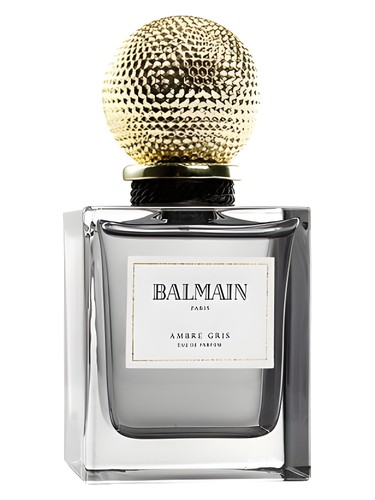
The first spray of Ambre Gris surprises with its restraint. Where you might expect a heavy-handed amber bomb, Balmain delivers something more composed—a pink pepper sparkle tempered by sage''s herbal clarity. This opening feels almost contradictory: warm yet clean, spicy yet fresh. It''s the olfactory equivalent of a cashmere turtleneck worn with tailored trousers, suggesting sophistication without demanding attention. Within minutes, the brightness begins to soften, and you sense the amber core stirring beneath like golden resin warming in sunlight.
The Scent Profile
Ambre Gris builds its architecture on a foundation that''s thoroughly amber-dominant (registering at 100% in its accord profile), but the journey there unfolds with unexpected nuance. The pink pepper and sage introduction provides a clean, almost medicinal brightness that defies expectations for a fragrance released in 2008—an era drunk on fruity florals and sugary gourmands. This isn''t sweet accessibility; it''s grown-up restraint.
As the top notes recede, the heart reveals its true ambitions. Myrrh oil and incense bring a resinous, church-like solemnity that''s immediately cut by tuberose''s creamy opulence and frangipani''s tropical whisper. This is where Ambre Gris becomes genuinely interesting. The incense adds a meditative quality, while the white florals prevent the composition from becoming too austere or masculine. The interplay creates something both devotional and sensual—think less "temple ritual" and more "silk prayer shawl."
The base is where that promised amber finally takes center stage, joined by benzoin''s vanilla-tinged sweetness, genuine ambergris (or its synthetic analog) providing a subtle animalic musk, tonka bean adding creamy depth, and cedar offering a woody backbone. This foundation registers as warm and spicy (37%), balsamic (30%), with detectable sweet (18%), animalic (18%), and vanilla (17%) facets. The result feels enveloping without being cloying, complex without being chaotic. It''s an amber that breathes.
Character & Occasion
Seasonally, Ambre Gris knows exactly what it is: a fall and winter fragrance first and foremost. The data shows it peaks at 100% suitability for autumn and maintains 87% relevance through winter. Spring viability drops to 36%, and summer limps in at just 20%—this is decidedly not a warm-weather companion. The amber-resin core and spice elements need cooler air to truly sing; in heat, they risk becoming oppressive.
Interestingly, the day/night split reveals versatility. With 88% day and 72% night suitability, Ambre Gris proves equally comfortable in conference rooms and cocktail bars. That sage-and-pink-pepper opening keeps it appropriate for professional settings, while the incense and myrrh heart adds enough intrigue for evening wear. This is a fragrance for the woman who doesn''t change her personality when the sun sets—she simply adjusts the lighting.
Community Verdict
The fragrance community''s relationship with Ambre Gris is decidedly mixed, landing at a 6.5/10 sentiment score across 31 opinions. The split reveals interesting fault lines. Advocates praise its clean, wearable aesthetic that manages to feel occasion-appropriate without boring into background noise. The composition''s complexity—that progression from bright spice to resinous incense to warm amber—earns genuine appreciation from those who value evolution on skin.
However, the criticism cuts deep where it lands. Longevity and projection emerge as significant concerns, with multiple wearers reporting disappointing performance. For an amber-dominant fragrance, poor staying power feels like a fundamental failure. Others find the green, herbaceous sage note polarizing—you either appreciate its freshness or find it clashes with the warmer elements. The discontinued status adds collector frustration; those who love it can''t easily restock.
The pros and cons reveal a fragrance that works beautifully for some while leaving others underwhelmed. Its suitability for professional settings and warm climates (despite being a fall/winter scent) suggests it wears lighter than its note pyramid implies. Some consider it among their favorites; others forget it entirely. This inconsistency—whether due to batch variations, skin chemistry, or storage conditions—defines the Ambre Gris experience.
How It Compares
Positioned alongside classics like Chanel''s Coco, Dior''s Poison, and Guerlain''s Shalimar, Ambre Gris enters rarified territory. These are powerhouse Oriental fragrances that defined their era. Compared to Shalimar''s legendary vanilla-amber embrace or Poison''s audacious spice assault, Balmain''s offering feels more restrained—a modern interpretation that trades projection for wearability.
The comparison to Serge Lutens'' Chergui and Dior''s Dune suggests Ambre Gris occupies middle ground: warmer and more resinous than Dune''s oceanic freshness, but less aggressively spiced than Chergui''s tobacco-honey intensity. It''s amber for those intimidated by the category''s heavyweights, or for devotees seeking something office-appropriate.
The Bottom Line
At 4.12 out of 5 stars from 1,846 votes, Ambre Gris earns solid if not spectacular approval. That rating suggests broad competence rather than cult devotion—a fragrance people generally like without necessarily loving. Given its discontinued status, value assessment becomes tricky; secondary market prices vary wildly based on bottle condition and seller desperation.
Who should seek this out? The woman who loves amber but lives in reality—who needs something sophisticated enough for daytime professionalism but warm enough for evening comfort. If you''re intrigued by incense and myrrh but want white florals to soften the austere edges, this delivers. However, if you demand beast-mode performance or want an amber that announces your presence, look elsewhere. Ambre Gris whispers when others shout, which is either its greatest strength or fatal flaw, depending on what you''re seeking.
AI-generated editorial review