First Impressions
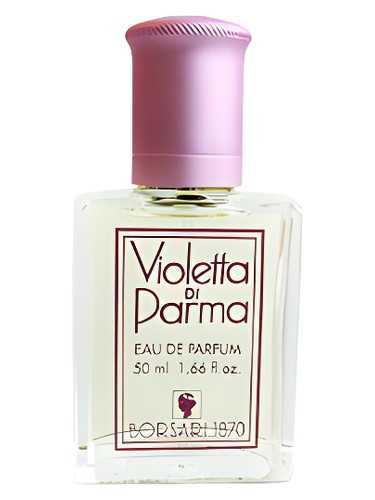
The first spray of Violetta di Parma feels like opening a velvet-lined box that''s been tucked away in someone''s vanity for decades. There''s an immediate softness—a cloud of powder that envelops you before the violet itself comes into focus. This isn''t the green, fresh-picked violet of spring gardens; it''s the candied, cosmetic violet of vintage beauty rituals. The powdery accord dominates at 100%, announcing itself with unapologetic intensity. Behind it, the violet note follows at 90%, sweet and nostalgic, reminiscent of those old-fashioned violet pastilles your grandmother might have kept in a cut-glass dish. It''s unabashedly retro, and whether that''s charming or dated depends entirely on your relationship with powder.
The Scent Profile
Borsari hasn''t disclosed the specific note breakdown for Violetta di Parma, but the accord structure tells the story clearly enough. The powdery character reigns supreme from first spray to final dry-down, creating a soft-focus halo around everything else. The violet accord at 90% provides the heart and soul of this composition—sweet, slightly metallic, with that distinctive ionone character that gives violet its otherworldly quality.
The floral accord at 57% suggests supporting players, likely other soft blooms that blend into the violet rather than competing with it. At 37%, both woody and iris accords add structure and depth, preventing the composition from becoming too saccharine. The iris, in particular, reinforces that cosmetic powder quality—think makeup compacts and face powder rather than the earthy, rooty iris found in contemporary niche fragrances. A white floral presence at 27% adds a gentle creaminess to the base.
The evolution is subtle rather than dramatic. Violetta di Parma settles into its personality quickly and stays there, a true soliflore that prioritizes clarity over complexity. The woody base keeps it from floating away entirely, grounding the powder and violet in something faintly substantial, though the overall impression remains decidedly soft and intimate.
Character & Occasion
Violetta di Parma is overwhelmingly a spring fragrance, scoring 100% for that season—and it makes perfect sense. This is violet season personified, though rendered through a vintage lens rather than a botanical one. Summer scores 55%, suggesting it works well in warm weather thanks to its lightness, while fall and winter trail behind at 32% and 29% respectively. This isn''t a fragrance that needs cold weather to bloom; it''s already delicate enough to risk disappearing in frigid air.
The day/night split is equally telling: 97% day versus 27% night. Violetta di Parma is a daylight creature, best suited to brunch, afternoon tea, garden parties, or quiet mornings at home. It lacks the projection or drama for evening wear, and that''s clearly by design. This is a perfume for people who want to smell pretty rather than intriguing, comforting rather than provocative.
The feminine designation from 1970 still holds—this isn''t a fragrance that easily crosses gender lines in the way modern violet fragrances sometimes do. It''s unabashedly pretty, soft, and traditionally ladylike.
Community Verdict
With 425 votes yielding a 4.11/5 rating, Violetta di Parma enjoys solid respect, though the Reddit community sentiment tells a more nuanced story. The mixed reception (6.5/10 sentiment score based on 29 opinions) reveals clear dividing lines.
Violet lovers appreciate it as a competent soliflore and an affordable option in a category dominated by expensive niche offerings. Multiple community members note its similarity to Guerlain Meteorites, that cult-favorite makeup powder, and position it as an accessible alternative to luxury iris and violet fragrances that can cost three or four times as much.
The criticisms are equally clear: the powdery, soapy character actively repels those who avoid powder notes in perfumery. Longevity issues surface repeatedly, with the fragrance fading faster than niche alternatives. Perhaps most tellingly, several reviewers mention it can smell "generic or dated" depending on skin chemistry—a damning assessment in an era that prizes uniqueness.
The consensus: this is a fragrance for a specific audience. Budget-conscious shoppers seeking violet expressions and those hunting for Guerlain Meteorites alternatives will find value here. Those wanting complex, modern, or rooty violet interpretations should look elsewhere.
How It Compares
The similar fragrances list reads like a who''s-who of classic perfumery: Guerlain''s Après l''Ondée and L''Heure Bleue, Samsara, Chanel No. 5 Parfum, and Prada''s Infusion d''Iris. This company places Violetta di Parma firmly in the realm of vintage-style compositions, though it''s significantly more affordable than any of these iconic fragrances.
Where Après l''Ondée offers violet with anise and heliotrope, and L''Heure Bleue adds bergamot and vanilla complexity, Violetta di Parma stays simpler and more straightforward. It''s the accessible cousin at the family reunion—pleasant and familiar, but without the pedigree or refinement of its more celebrated relatives.
The Bottom Line
Violetta di Parma occupies an interesting position: respectable but not remarkable, affordable but not cheap-smelling, vintage but not necessarily timeless. The 4.11 rating suggests general approval, but the mixed community sentiment reveals that approval comes with significant caveats.
This is emphatically not a fragrance for everyone. If powder notes make you recoil, stay far away. If you want modern complexity or hours of longevity, look to niche alternatives. But if you''re a violet devotee on a budget, or if you''ve been searching for a fragrance that captures the scent of Guerlain Meteorites, Violetta di Parma delivers exactly what it promises: a soft, powdery, unambiguously violet experience that smells like spring afternoons in 1970.
At over fifty years old, it remains relevant precisely because it never tried to be anything other than what it is—a simple, pretty violet perfume that knows its lane and stays in it. That kind of honesty, even when it results in a polarizing fragrance, deserves respect.
AI-generated editorial review