First Impressions
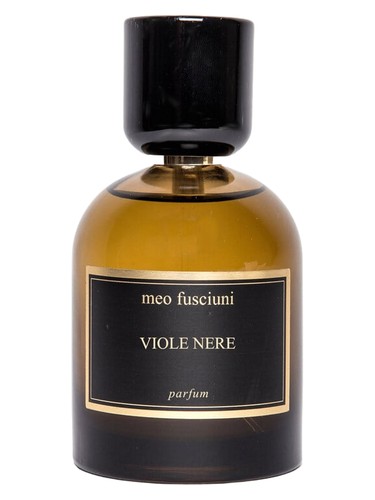
Viole Nere—"Black Violets"—arrives not as the demure floral you might anticipate, but as something altogether more complex and shadowed. The first spray reveals Meo Fusciuni''s signature approach: artisanal, cerebral, unapologetically Italian in its commitment to craftsmanship over mass appeal. This is violet stripped of candy sweetness, rendered instead through a lens of powder and wood that feels both vintage and thoroughly modern. There''s an immediate sense of depth here, a fragrance that doesn''t reveal itself all at once but rather unfolds in layers of soft, earthy darkness.
The powdery quality hits first—not the face powder softness of conventional florals, but something more akin to crushed orris root and weathered cosmetic compacts discovered in forgotten drawers. It''s the kind of powder that whispers of another era while maintaining contemporary relevance.
The Scent Profile
Working without specified note breakdowns forces us to rely on what the accord structure reveals, and Viole Nere''s composition is dominated equally by powdery and woody facets—both registering at full intensity. This dual foundation creates the fragrance''s essential character: violet refracted through a prism of wood and earth rather than the expected green stems and ionone sweetness.
The violet accord, strong at 88%, manifests not as fresh-cut flowers but as their essence captured in something drier, more abstract. Think violet petals pressed between aged book pages, their color faded but their soul intact. This isn''t the candied violet of pastilles or the bright purple burst of living blooms; it''s the idea of violet, intellectualized and darkened.
The earthy component at 66% provides crucial grounding. There''s soil under these flowers—damp forest floor, perhaps, or the mineral quality of stones after rain. This earthiness prevents the powder from becoming too cosmetic, too conventionally pretty. It adds weight and shadow, pulling the composition down into deeper registers.
Iris, at 53%, reinforces the powdery dimension while adding its characteristic rooty, almost metallic quality. The relationship between iris and violet here creates a dialogue of related but distinct botanical voices, both singing in minor keys. A subtle mossy undertone at 37% adds textural complexity—not the sharp oakmoss of classic chypres, but something softer, like lichen on bark or the green-gray growth on aging stone.
Throughout the wear, the woody foundation remains constant, providing structure for the more ephemeral floral and powder notes to play against. This is wood as architecture rather than decoration—supportive, solid, essential.
Character & Occasion
The seasonal data tells a clear story: Viole Nere is a creature of cooler weather, peaking in fall at 100% suitability and maintaining strong relevance through winter (85%) and spring (83%). Summer, at 29%, is notably less hospitable to this fragrance''s dense, layered construction. This makes intuitive sense—the earthy powder and substantial wood need crisp air to properly breathe, while humid heat would likely make the composition feel heavy.
Intriguingly, day and night wear score equally at 80%, suggesting remarkable versatility. This is a fragrance that transitions seamlessly from afternoon gallery openings to evening dinners, from studio work sessions to late-night conversations over wine. The powdery elements keep it appropriate for daylight, while the woody darkness ensures it holds its own after sunset.
Despite its feminine classification, there''s an androgynous quality to Viole Nere that should appeal beyond traditional gender boundaries. Anyone drawn to artistic, unconventional florals will find something compelling here—this is perfume for those who prefer their beauty tinged with melancholy, their flowers viewed through a philosophical lens.
Community Verdict
With a rating of 4.22 out of 5 based on 398 votes, Viole Nere has earned solid appreciation from those who''ve experienced it. This isn''t a fragrance with thousands of reviews—Meo Fusciuni operates in artisanal territory—but the nearly 400 voices that have weighed in speak with impressive consensus. A rating above 4.0 indicates genuine quality and appeal, while stopping short of universal acclaim suggests this is, as expected, a perfume with a specific aesthetic that won''t suit everyone. That''s not a weakness; it''s a sign of artistic integrity.
How It Compares
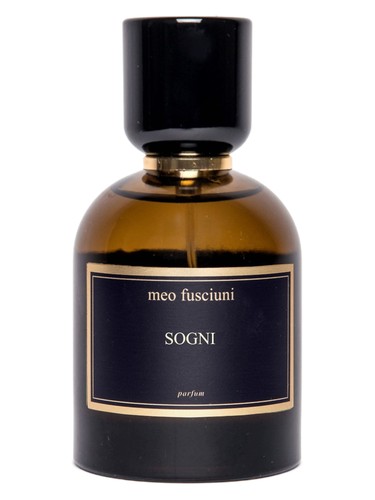
The listed similarities offer useful context. Two other Meo Fusciuni fragrances—L''Oblìo and Sogni—appear as closest relatives, suggesting a house style that devotees will recognize. The inclusion of Tom Ford''s Black Orchid points to shared gothic floral territory, though Viole Nere trades Black Orchid''s opulent fruitiness for something more austere and powdery. Feminité du Bois by Serge Lutens is perhaps the most illuminating comparison: both explore the relationship between flowers and wood through an artistic, unconventional lens. The Shalimar reference likely speaks to the powdery vintage quality rather than any oriental lushness.
Where Viole Nere distinguishes itself is in its commitment to abstraction. This is violet as concept, rendered through masterful layering of powder, earth, and wood rather than through literal floral realism.
The Bottom Line
Viole Nere represents Meo Fusciuni''s artisanal approach at its most refined. This is niche perfumery for those who appreciate when flowers are treated as philosophical subjects rather than decorative elements. The strong community rating confirms what the accord structure suggests: this is a well-crafted, thoughtfully composed fragrance that delivers on its dark floral premise.
Should you try it? Absolutely, if you''re drawn to unconventional florals, if you appreciate powder that doesn''t feel dated, if you want violet without predictability. This is a fragrance for autumn walks through cities where old architecture meets contemporary art, for those who wear black not as minimalism but as a canvas for complexity. At its best in cooler seasons but versatile enough for three-season wear, Viole Nere offers sophistication without stuffiness, darkness without heaviness. It''s beautifully strange—and in the world of artisanal Italian perfumery, that''s precisely the point.
AI-generated editorial review