First Impressions
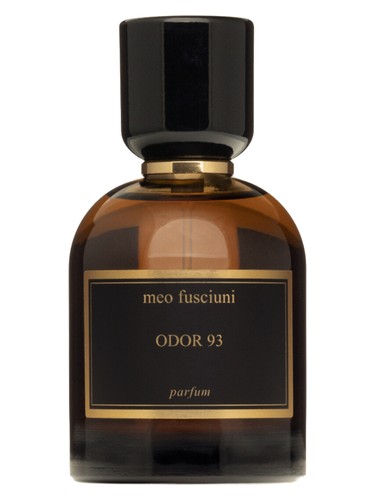
The first spray of Odor 93 presents a paradox wrapped in smoke. There''s an immediate jolt of birch leaf—green, almost medicinal—that collides with the earthy heat of cumin and the piercing sweetness of clove. This isn''t the polite introduction of a white floral waiting to happen. Instead, it''s the scent equivalent of walking into a dimly lit room where someone has laid tuberose stems across aged tobacco leaves, then set a bundle of dried herbs smoldering nearby. Meo Fusciuni, the Italian niche house known for Giuseppe Imprezzabile''s intensely personal compositions, has created something that defies the typical feminine fragrance blueprint. This is a scent that announces itself not with a whisper, but with a knowing glance.
The Scent Profile
The opening trio of birch leaf, cumin, and clove creates an unexpected gateway into what will eventually reveal itself as a tuberose composition. The birch brings a slightly bitter, green-woody aspect that feels more like autumn forest floor than spring garden. Cumin adds a distinctive warmth that borders on the animalic—not everyone''s cup of tea, but essential to the fragrance''s unconventional character. Clove punctuates with its spiced sweetness, hinting at the complexity to come.
As Odor 93 settles into its heart, the tuberose finally steps forward, but this is tuberose seen through a veil of sage and narcissus. Rather than the creamy, indolic bloom you might expect, this is a drier, more austere interpretation. The sage brings herbal earthiness that keeps the white flowers grounded, while narcissus adds a slightly green, cool-weather facet. The tuberose here doesn''t scream; it speaks in a lower register, backed by woody undertones that have already begun their ascent from the base.
The foundation of this fragrance is where everything coheres into something genuinely distinctive. Tobacco emerges as a major player—not sweet pipe tobacco, but the dry, slightly bitter scent of cured leaves. Patchouli and vetiver provide earthy depth, while guaiac wood contributes a smoky, resinous quality that makes perfect sense alongside the birch from the opening. Oud adds an animalic darkness, though it''s more suggestion than statement. Vanilla appears last, and crucially, it doesn''t sweeten so much as smooth—rounding edges without compromising the composition''s essential darkness. This is a base that unfolds over hours, revealing new facets as it interacts with skin chemistry.
Character & Occasion
The community data tells a clear story: Odor 93 belongs to autumn and winter. With fall scoring 100% and winter close behind at 89%, this is definitively a cold-weather fragrance. Spring wearers (68%) might find opportunities during cooler, overcast days, but summer (22%) is largely off the table unless you''re seeking something deliberately contrarian for air-conditioned spaces.
The day-to-night split—74% day versus 79% night—suggests remarkable versatility within its seasonal window. This is a fragrance that works for a wool-coat morning commute as readily as it does for evening gatherings. The woody-tobacco dominance (100% and 69% respectively) gives it a sophisticated, somewhat intellectual character that reads as put-together without being corporate.
Despite its feminine classification, Odor 93 feels decidedly unisex, even leaning masculine in its woody-tobacco-patchouli emphasis. It''s best suited for someone who views fragrance as personal expression rather than gender performance—someone comfortable with complexity and unafraid of scents that challenge conventional prettiness.
Community Verdict
With a rating of 4.11 out of 5 from 421 votes, Odor 93 has earned genuine respect from its wearers. This isn''t a massive sample size—this is niche territory—but the rating suggests strong appreciation from those who''ve sought it out. Above a 4.0 indicates a fragrance that delivers on its promises, though the fact it hasn''t reached 4.5 or higher suggests it''s not universally beloved. This makes sense: the cumin, the dry tuberose, the prominent tobacco—these are polarizing elements. But for its audience, it clearly resonates.
How It Compares
The lineup of similar fragrances reveals Odor 93''s peer group: 1740 Marquis de Sade by Histoires de Parfums, Fathom V by BeauFort London, Nuit de Bakélite by Naomi Goodsir, Black Orchid by Tom Ford, and Fille en Aiguilles by Serge Lutens. These are fragrances that embrace darkness, that pair florals with unexpected partners, that refuse to be merely decorative.
Where Black Orchid plays up opulence and Fille en Aiguilles explores the relationship between pine and incense, Odor 93 stakes its claim in the territory where white florals meet tobacco and wood. It''s less immediately seductive than Tom Ford''s offering, more restrained than some of its niche siblings, but no less committed to its vision.
The Bottom Line
Odor 93 isn''t trying to please everyone, and that''s precisely its strength. This is a thoughtfully composed fragrance that rewards patience and curiosity. The 4.11 rating reflects genuine quality—a scent that knows what it wants to be and achieves it with skill.
Is it worth the niche price point? For someone seeking an unconventional take on tuberose, or a woody-tobacco composition with floral complexity, absolutely. For someone wanting their first dark fragrance or an easy-wearing crowd-pleaser, probably not. Sample first, ideally in autumn when the composition makes most sense against cooling air.
If you''ve worn and loved any of its similar fragrances, if you find yourself drawn to tobacco notes and don''t fear a little cumin, if you want a fragrance that feels like a secret rather than an announcement—Odor 93 deserves time on your skin.
AI-generated editorial review