First Impressions
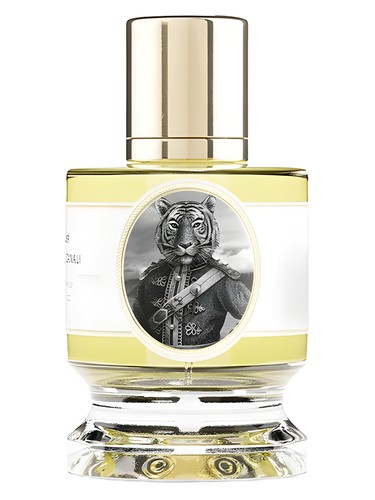
The first spray of Tiger delivers an unexpected jolt—not the roar you might anticipate, but something more cunning. Kumquat''s tart brightness cuts through the air, immediately tempered by the golden warmth of saffron and the green-tinged spice of cardamom. This opening is both exhilarating and disorienting, like stepping into dappled forest light where shadows and sun compete for dominance. There''s nothing overtly sweet or conventionally feminine here; instead, Tiger announces itself as something altogether more complex, a fragrance that refuses to be easily categorized despite its feminine designation.
Within moments, you sense the architecture beneath—the woody foundation that will come to define this scent''s character. But first, Tiger wants you to experience its layers, to follow it deeper into the undergrowth.
The Scent Profile
That citrus-spice opening evolves with remarkable speed. The kumquat, so bright and tangy at first spray, begins to fade within fifteen minutes, making way for the heart''s more contemplative composition. Here, Tiger reveals its true nature: carrot seeds bring an earthy, almost root-vegetable quality that grounds the composition in soil and shadow. This might sound unappealing on paper, but in practice, it creates a fascinating vegetal quality that feels genuinely wild.
The incense threads through everything, adding smoke and mystery without overwhelming. It''s not the heavy, church-like frankincense of classical perfumery, but something lighter, more meditative. Ambrette contributes a subtle musk that whispers rather than shouts, while jasmine sambac provides the only conventionally floral element—and even this is rendered earthy and indolic rather than sweet and pretty.
As the fragrance settles into its base, the woody accord that dominates Tiger''s profile (registering at a full 100% in the accord breakdown) fully emerges. Vetiver brings its characteristic smoky, slightly bitter greenness. Ebony tree and papyrus create an almost library-like quality, conjuring images of aged wood and paper, while suede wraps everything in a soft, tactile leather finish. This base is where Tiger truly earns its name—not through aggression, but through a quiet, prowling strength that lingers for hours.
The warm spicy accord (59%) and aromatic qualities (58%) never fully disappear; they pulse through the composition like a heartbeat, reminding you that beneath the woody sophistication lies something untamed.
Character & Occasion
Tiger is decidedly a cool-weather creature. The community consensus strongly favors fall (100%), followed by winter (71%) and spring (69%), with summer trailing at 51%. This makes perfect sense—the combination of incense, vetiver, and woody notes would feel stifling in heat, but wrapped in a sweater on an October afternoon, Tiger feels like armor and invitation in equal measure.
Interestingly, the day/night split shows Tiger as remarkably versatile: 81% for day wear, 75% for evening. This dual nature speaks to the fragrance''s complexity—it''s substantial enough for nighttime presence but never so heavy that it overwhelms a morning meeting. Picture it in a library at noon, at a gallery opening at dusk, on a hiking trail where the air smells of decomposing leaves and distant woodsmoke.
While marketed as feminine, Tiger''s leather and woody profile (leather at 35%, earthy at 34%, musky at 33%) suggests it would wear beautifully on anyone drawn to unconventional, nature-inspired compositions. This is for someone who finds most florals boring, who gravitates toward the perfume counter''s edgier offerings, who doesn''t need fragrance to announce gender but rather to express character.
Community Verdict
With 587 community votes landing at 3.87 out of 5, Tiger occupies interesting middle ground. This isn''t a polarizing love-it-or-hate-it fragrance, nor is it a safe crowd-pleaser scoring universal acclaim. Instead, that rating suggests a well-crafted scent that delivers on its concept while perhaps not achieving transcendence.
The solid rating with substantial vote count indicates a fragrance worth exploring, particularly for those already drawn to Zoologist''s artistic, animal-inspired approach. Nearly 600 people felt moved to rate it—that level of engagement suggests Tiger has sparked conversation and found its audience, even if it hasn''t converted everyone into devotees.
How It Compares
Tiger shares DNA with several notable fragrances in the woody-aromatic space. Within Zoologist''s own menagerie, it aligns with Musk Deer and Civet, while showing kinship with Chipmunk—all animal-inspired scents that prize naturalism over conventional beauty. The comparison to Lalique''s Encre Noire is particularly apt; both embrace vetiver''s darker, more austere qualities. The connection to Maison Martin Margiela''s By the Fireplace suggests similar smoky, contemplative qualities, though Tiger skews more vegetal and less gourmand.
What distinguishes Tiger is its specifically feminine orientation within this typically masculine territory. It doesn''t achieve this through flowers or sweetness, but through the subtlety of its musk and the delicacy of its touch—it''s powerful without being loud, present without being imposing.
The Bottom Line
Tiger represents Zoologist doing what Zoologist does best: translating an animal''s essence into olfactory experience without resorting to literal interpretation. At 3.87/5, this isn''t the brand''s masterpiece, but it''s a confident, well-executed composition that successfully carves out its own niche in the woody feminine category.
The real question is whether you''re the right wearer. If you find yourself reaching for leather jackets over lace, if incense appeals more than vanilla, if you''d rather smell like an ancient forest than a flower garden—Tiger deserves your attention. It won''t purr or play nice, but it will make you feel capable, mysterious, and decidedly unbothered by conventional expectations.
For those building a cool-weather wardrobe of distinctive, artistic fragrances, Tiger earns its place. Just don''t expect it to behave.
AI-generated editorial review