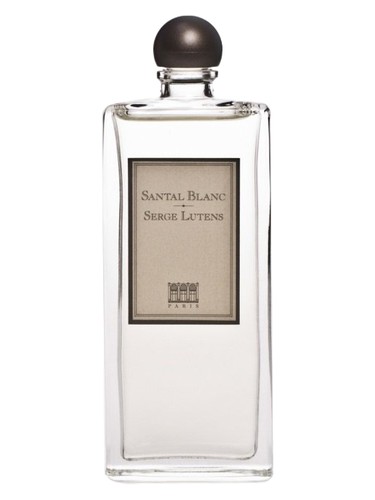
First Impressions
The first spray of Santal Blanc feels like stepping into a sunlit room where someone has been sifting cinnamon through silk. There''s an immediate softness here—not the aggressive projection that characterized many early-2000s releases, but something more intimate. The sandalwood announces itself not with fanfare but with a gentle warmth, like cashmere against skin. Within moments, a distinctive powdery quality emerges, the kind that hovers between vintage face powder and freshly sanded wood. This is Serge Lutens in contemplative mode, creating a fragrance that demands you lean in rather than commanding attention from across the room.
The Scent Profile
Without the traditional note breakdown to guide us, Santal Blanc reveals its architecture through its dominant accords, and what an architecture it is. The woody accord registers at full intensity—this is unquestionably a sandalwood composition at heart—while the powdery element follows so closely behind at 98% that the two become virtually inseparable. This isn''t the creamy, lactonic sandalwood of modern interpretations; it''s drier, more meditative, with an almost chalky softness that some will find comforting and others might describe as dusty.
The warm spicy accord (68%) weaves through the composition, primarily manifesting as cinnamon (40%), though never with the sharp bite of baking spices. Instead, it''s muted, almost abstract—the memory of spice rather than spice itself. Musk (65%) provides a skin-like quality that helps the fragrance meld with the wearer, while iris (47%) contributes to that distinctive powdery dryness, adding a rooty, almost carrot-like earthiness that prevents the sandalwood from becoming too sweet or simple.
The evolution is subtle rather than dramatic. Santal Blanc doesn''t surge through distinct phases; instead, it slowly unfurls like a meditation, with different facets catching the light at different moments. The warmth intensifies slightly as it settles, the powder softens, and what emerges is a unified, cohesive vision of sandalwood filtered through Lutens'' distinctly hazy, dreamlike aesthetic.
Character & Occasion
Here''s where Santal Blanc reveals its versatility—and perhaps its identity crisis. The data shows it as suitable for all seasons, with no strong lean toward day or night wear. This speaks to its remarkable adaptability, but also to its restraint. It''s neither so heavy that summer heat makes it oppressive, nor so light that winter cold strips it of presence.
In practice, this translates to a fragrance that feels most at home in transitional moments: autumn afternoons spent reading in fading light, early spring mornings that still carry winter''s chill, quiet dinners where conversation matters more than impression. The community particularly champions it for cold weather, where its warmth becomes more pronounced, and its powdery character reads as cozy rather than dusty.
This is decidedly a comfort scent, one for those days when you''re dressing for yourself rather than for others. Spice enthusiasts will appreciate the cinnamon''s gentle presence, while sandalwood devotees seeking something softer than Mysore''s richness but more substantial than synthetic substitutes will find much to love here.
Community Verdict
With a solid 3.93 out of 5 stars from 900 votes and a positive sentiment score of 7.8 out of 10, Santal Blanc has earned its place as a respected, if not universally adored, entry in the Lutens canon. The community''s appreciation centers on three key strengths: the smooth, creamy sandalwood base that provides genuine warmth; impressive longevity and performance that belies its soft character; and a unique balance between spicy and sweet elements that avoids predictability.
However, the criticisms are worth noting. That powdery quality, beloved by many, reads as excessively dusty to some wearers—a valid concern given the iris and musk combination that creates it. More significantly, several community members report sensitivity to certain synthetic components, suggesting that despite its natural-smelling character, the construction may include modern molecules that don''t agree with everyone''s skin chemistry. Perhaps most telling is the observation that sandalwood, despite dominating the composition conceptually, sometimes feels less prominent than the name suggests—the powder and spice occasionally overshadowing the wood itself.
How It Compares
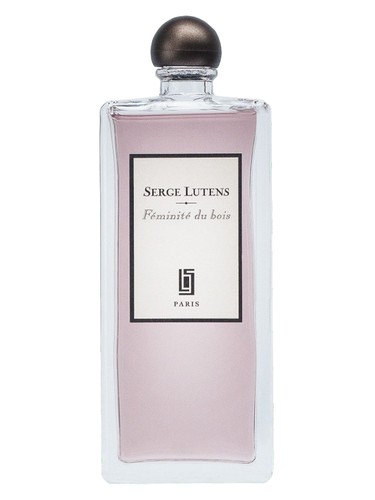
Placed alongside Guerlain''s Samsara, Santal Blanc reveals itself as the more abstract, less opulent interpretation of sandalwood. Where Samsara drapes you in jasmine-laced luxury, Santal Blanc offers something more austere. Its kinship with Feminité du Bois makes sense—both share that Lutens talent for making wood feel soft and approachable—though Santal Blanc strips away much of the fruit and plum. Santal Majuscule, its sibling in the line, takes the concept in a more cocoa-rich direction, making Santal Blanc the purer, more meditative expression. Daim Blond''s suede texture finds an echo in the powder here, while Dune''s spiced dryness creates a similar mood, if with more aldehydic brightness.
In the broader sandalwood landscape, Santal Blanc occupies an interesting middle ground: warmer than minimalist takes, softer than the Indian sandalwood giants, more powdery than contemporary creamy interpretations.
The Bottom Line
Santal Blanc isn''t trying to be your signature scent or your showstopper. Released in 2001, it represents Serge Lutens at his most restrained—which is to say, still deeply artistic, but with the volume turned down. The rating reflects this: 3.93 is the score of a fragrance that does what it sets out to do very well, even if what it sets out to do won''t appeal to everyone.
The value proposition depends entirely on what you''re seeking. If you want sandalwood with all the trimmings—richness, creaminess, immediate impact—look elsewhere. But if you''re drawn to the idea of sandalwood as a canvas for powder, spice, and subtle musk; if you appreciate fragrances that reward attention rather than demanding it; if you''re someone who finds comfort in dusty libraries and cashmere scarves, then Santal Blanc deserves your time.
Those with skin sensitivities should sample before committing, and anyone expecting traditional sandalwood opulence may find this too ethereal. But for cold weather contemplation and quiet luxury, Santal Blanc remains a compelling argument that sometimes the most interesting things happen when you whisper.
AI-generated editorial review