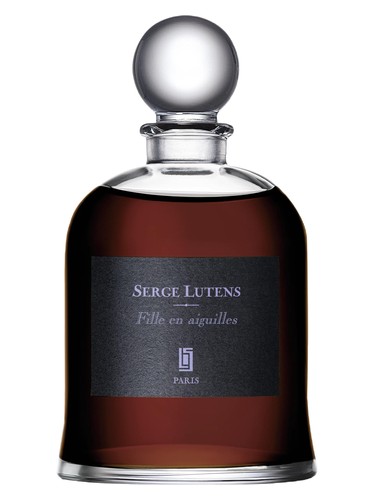
First Impressions
The first spray of Ambre Sultan is nothing short of confrontational. This is not the golden, honeyed amber of conventional perfumery—it''s something altogether wilder. Released in 1993, Serge Lutens'' creation announces itself with a burst of spices that some find intoxicating and others find overwhelming. There''s an immediate pungency, a savory quality that reads more like a Moroccan spice market than a traditional oriental fragrance. The amber accord—rated at 100% dominance—sits at the heart of this composition, but it''s been stripped of its usual vanilla sweetness and dressed instead in robes of coriander, pepper, and smoke.
This is amber with an edge, amber that demands you pay attention.
The Scent Profile
While specific note breakdowns aren''t provided for Ambre Sultan, the accord analysis tells a compelling story. The amber foundation is unmistakable and all-encompassing, but it''s the supporting players that create the controversy. Aromatic elements (36%) bring an herbal, almost medicinal quality to the opening, while fresh spicy (32%) and warm spicy (26%) accords create a dual-temperature effect that keeps the composition from settling into easy territory.
The balsamic accord (31%) provides resinous depth, evoking labdanum and benzoin without the cloying sweetness that typically accompanies them. There''s a woody undertone (26%) that grounds the composition, preventing it from floating into pure abstraction. What emerges is a fragrance that evolves not in traditional top-heart-base fashion, but rather in waves of intensity—the spices bloom and recede, the amber pulses, the balsamic resins wrap everything in a slightly medicinal embrace.
The experience is less linear development and more circular meditation, with facets revealing themselves differently with each wearing. On some days, the coriander dominates. On others, the peppery bite softens into something almost creamy. The fragrance seems to change with body chemistry, mood, and temperature—a characteristic that contributes to its polarizing reception.
Character & Occasion
The data speaks clearly: Ambre Sultan is a cold-weather creature. Winter suitability registers at 100%, fall at 98%, while summer limps in at a mere 23%. This is a fragrance that blooms in frost, that needs the bite of autumn air or the chill of winter darkness to truly shine. In warm weather, those spice notes can turn oppressive, even sour.
Interestingly, while it performs well during the day (61%), it truly comes alive at night (89%). There''s something about darkness that suits Ambre Sultan''s moody, unconventional character. This isn''t a boardroom fragrance or a first-date safe choice—it''s for evening gatherings, for intimate dinners, for walks through night markets or cozy evenings by the fire.
Originally marketed as feminine, modern wearers have thoroughly rejected such limitations. This is a fragrance for anyone drawn to bold, uncompromising compositions that prioritize character over crowd-pleasing accessibility.
Community Verdict
The Reddit fragrance community gives Ambre Sultan a mixed reception, scoring it 6.2 out of 10—and that measured response tells you everything about its polarizing nature. The official rating of 4.18 from 7,681 votes suggests broad appreciation, but the community feedback reveals significant divisions.
Supporters praise its unique spicy amber profile, particularly appreciating the coriander and pepper notes that set it apart from vanilla-dominant competitors. Performance earns consistent praise—this is a long-lasting fragrance with genuine projection. For those actively avoiding sweet amber fragrances, Ambre Sultan offers a rare alternative.
The criticisms, however, are equally passionate. Multiple reviewers note that the spice notes can feel pungent and poorly blended, particularly in the opening. The savory, food-like qualities that some find intriguing strike others as off-putting or even unpleasant. Some wearers report that it turns sour on their skin chemistry. Perhaps most damaging, several community members note that when compared directly to alternatives like L''Air du Desert Marocain, Ambre Sultan often comes up short.
How It Compares
The list of similar fragrances reads like a who''s who of legendary orientals: Tauer''s L''Air du Desert Marocain, Chanel''s Coco, Guerlain''s Shalimar, Portrait of a Lady by Frederic Malle, and sibling fragrance Fille en Aiguilles. This is rarefied company, and it''s telling that community feedback specifically mentions L''Air du Desert Marocain as a preferred alternative for many seeking that spiced, non-sweet amber experience.
Where Ambre Sultan distinguishes itself is in its uncompromising approach to spice and its refusal to soften the amber with vanilla. It''s rougher around the edges than Shalimar, more savory than Portrait of a Lady, less polished than Coco. Whether that''s a feature or a bug depends entirely on what you''re seeking.
The Bottom Line
Ambre Sultan occupies a fascinating position in the fragrance landscape. With a solid 4.18 rating from nearly 8,000 voters, it''s clearly beloved by many. Yet the community sentiment reveals something important: this is not a universally appealing fragrance, and it''s not trying to be.
This is a fragrance for those who find conventional ambers too sweet, too safe, too predictable. It''s for people who want their perfume to have rough edges and strong opinions. If you''re seeking an easy-wearing crowd-pleaser, look elsewhere. If you''re drawn to challenging, character-driven compositions that smell like nowhere else, Ambre Sultan deserves your attention—particularly if you can sample it first to see how those notorious spice notes behave on your skin.
At over 30 years old, it remains relevant precisely because it refuses to conform. In an era of focus-grouped, mass-appeal fragrances, there''s something admirable about a scent this determinedly itself. Just know what you''re getting into before you commit.
AI-generated editorial review