First Impressions
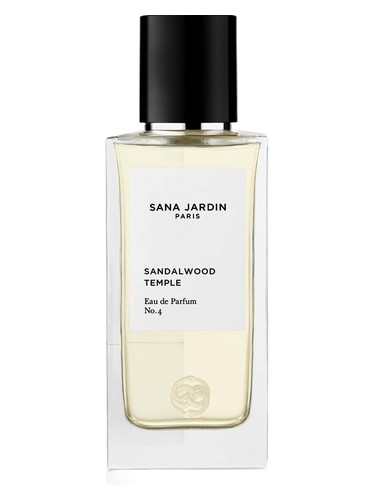
The first spray of Sandalwood Temple feels like stepping through weathered wooden doors into a space of unexpected serenity. There''s an immediate luminosity—bright bergamot and neroli dancing with orange blossom—that contradicts any expectations of heavy incense or solemn woodiness. Instead, Sana Jardin''s 2017 offering announces itself with a paradox: this is a temple built from light as much as from ancient timber. The citrus opening is generous without being sharp, soft-edged and almost creamy, hinting at the substantial wood foundation waiting beneath. This is not a fragrance that shouts its spirituality; it whispers it.
The Scent Profile
The opening movement of Sandalwood Temple showcases the sophisticated interplay between Tunisian neroli and orange blossom, with bergamot providing a clean, slightly green citrus framework. This isn''t the tart, assertive bergamot of a classic cologne—it''s mellowed and rounded, clearly aware of the journey ahead. The neroli brings a honeyed, almost indolic quality that keeps the composition from feeling too polite, while the orange blossom adds a soapy-clean softness that begins building the powdery character that will define much of this fragrance''s development.
The transition to the heart reveals cedar as the structural centerpiece—a somewhat unexpected choice given the fragrance''s name. Here, the cedar functions as a bridge between the bright citrus opening and the deeper sandalwood base. It''s drier than the top notes suggest, more contemplative, and it''s in this middle phase that Sandalwood Temple reveals its architectural intentions. The cedar isn''t aggressive or pencil-sharp; rather, it feels like sun-warmed wood planks, smooth from years of footsteps.
The base is where the promise of the name finally materializes in full. Sandalwood emerges not as a single note but as part of a carefully orchestrated woody chorus. Guaiac wood adds a subtle smokiness and depth, while Haitian vetiver provides an earthy, slightly rooty quality that grounds the composition. Vanilla threads through this foundation—never dominant at just 31% of the accord profile, but essential in softening the woods and enhancing that notable powdery quality that sits at 40% of the overall character. The result is a sandalwood that feels both traditional and contemporary, reverent but not austere.
Character & Occasion
The community data tells a clear story about when Sandalwood Temple thrives. This is overwhelmingly an autumn and winter fragrance, scoring 100% and 85% respectively for those cooler months. The substantial woody backbone and warming vanilla base make perfect sense when temperatures drop and heavier fabrics emerge. Yet there''s enough brightness in the composition—thanks to that citrus and neroli opening—that spring wearers still rate it at 65%. Summer, at 38%, is where Sandalwood Temple shows its limitations; this isn''t a fragrance designed for heat and humidity.
The day versus night split is particularly revealing: 91% day wear versus 49% night suggests a fragrance with enough presence for evening but with a character fundamentally suited to daylight hours. This makes sense given the bright opening and the fact that despite being 100% woody, it maintains an accessible, almost office-appropriate demeanor. The powdery quality keeps it from reading as too casual, while the citrus notes prevent it from feeling evening-formal.
This is a fragrance for someone seeking substance without pretension—the person who wants to smell composed and thoughtful rather than loud or overtly seductive. It skews feminine in its original marketing but possesses enough woody depth to appeal across gender boundaries.
Community Verdict
With a solid 4.2 out of 5 rating across 501 votes, Sandalwood Temple has earned its place as a reliable performer in the Sana Jardin lineup. This isn''t a cult favorite with a tiny devoted following, nor is it a polarizing experiment that divides opinion sharply. Instead, the rating suggests a well-executed fragrance that delivers on its promises without dramatic highs or lows. Over 500 votes provide a meaningful sample size—this isn''t a rating based on a handful of opinions but rather a genuine consensus that Sandalwood Temple is worth the exploration.
How It Compares
The comparison to Byredo''s Gypsy Water makes immediate sense—both offer woody frameworks softened by other elements, though Gypsy Water leans more into incense and pine. Maison Martin Margiela''s By the Fireplace shares that warm, comforting wood-and-vanilla combination but pushes harder into gourmand territory. BDK''s Gris Charnel and Nishane''s Ani both play with similar warm, spicy-sweet wooded structures, while Kilian''s Angels'' Share ventures into boozy, cognac-soaked sweetness that Sandalwood Temple only hints at. Within this constellation of modern woody fragrances, Sandalwood Temple distinguishes itself through restraint—it''s perhaps the most meditative and least overtly attention-seeking of the group.
The Bottom Line
Sandalwood Temple represents Sana Jardin''s ability to create fragrances that honor traditional perfumery structures while maintaining modern wearability. At 4.2 out of 5, it''s not revolutionary, but revolution isn''t always the goal. This is a fragrance that does exactly what it sets out to do: provide a wearable, elegant woody composition with enough complexity to reward attention but enough accessibility to work in daily life.
For those seeking an entry point into sandalwood-dominant fragrances without the intensity of pure sandalwood oils or the severity of some niche offerings, this is an excellent starting place. The bright opening makes it less intimidating than many wood-focused scents, while the substantial base provides enough depth to satisfy those beyond beginner stages. It''s particularly well-suited to cooler weather day wear, those moments when you want to feel pulled-together and present without making a dramatic statement. Not every fragrance needs to be a showstopper—sometimes, the quiet confidence of a well-made woody scent is exactly what the moment requires.
AI-generated editorial review