First Impressions
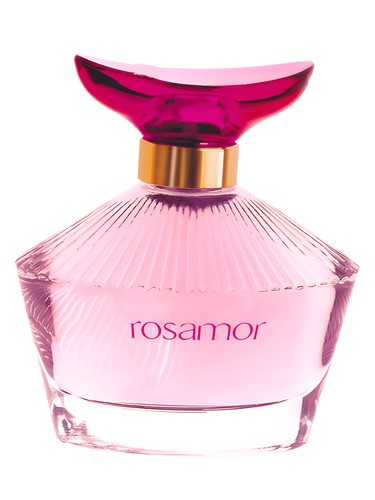
The first spray of Rosamor reveals Oscar de la Renta''s understanding of elegant restraint. This is not a fragrance that announces itself with bombast; instead, it opens with the delicate clarity of freesia mingling with Italian mandarin—a citrus note that feels more like filtered sunlight than sharpness. Lily-of-the-valley threads through this introduction, adding a green, slightly soapy quality that immediately signals this perfume''s daytime intentions. There''s something unmistakably optimistic about these opening moments, a brightness that feels both vintage in spirit and accessible in execution.
The Scent Profile
As Rosamor settles into its heart, the fragrance reveals its true nature as a white floral showcase. The composition becomes dominated by an opulent bouquet where rose and gardenia share center stage, their richness tempered by the almond-like sweetness of heliotrope. Indian tuberose brings a creamy, almost narcotic quality, while ylang-ylang adds its characteristic banana-tinged floralcy. This is where the perfume truly earns its name—that "amor" element emerging through a romantic, full-bodied rose accord that never quite tips into vintage territory despite its classical leanings.
The interplay here is sophisticated: the rose feels soft-focused rather than sharp, cushioned by the other white florals into something plush and embracing. The gardenia adds a velvet texture, while the heliotrope contributes a powdery dimension that begins to forecast the base notes'' direction. This heart phase is where Rosamor spends most of its time on the skin, a generous and unabashedly feminine display that wears its floral intensity with grace rather than aggression.
The base notes introduce the fragrance''s most intriguing turn. Sandalwood provides a creamy, woody foundation, while musk adds a subtle skin-like warmth. Tonka bean brings vanilla-adjacent sweetness, but it''s the tobacco note that proves most surprising—not the smoky, leather-bar variety, but rather a honeyed, slightly dried quality that adds unexpected depth to what could have been a straightforward floral. This tobacco element doesn''t dominate; instead, it whispers beneath the powder and musk, creating a gentle complexity that elevates the composition beyond simple prettiness.
Character & Occasion
The community data tells a clear story: Rosamor is overwhelmingly a daytime fragrance, and the numbers don''t lie. With spring scoring 86% and summer following at 64%, this is a perfume that thrives in warmth and natural light. The brightness of the opening notes and the white floral heart perform best when there''s actual sunshine to complement them—these are flowers that bloom in daylight gardens, not moonlit ones.
This is the fragrance for polished femininity: business meetings where you want to project approachability, weekend brunches, spring weddings, gallery openings in the afternoon. It speaks to someone who appreciates traditional beauty without being bound by it, who finds comfort in florals but doesn''t want to smell like their grandmother''s vanity (though that tobacco-tinged base does nod respectfully in that direction). The powdery quality—registering at 78%—gives it a refined, slightly retro character that might feel too formal for casual summer days but perfect for occasions requiring a certain elegance.
While it shows 22% wearability in fall, winter is largely off the table at just 19%. The composition simply doesn''t have the heft or spice to cut through cold weather; its beauty is too airy, too light-handed for scarves and overcoats.
Community Verdict
With a rating of 3.69 out of 5 from 428 votes, Rosamor sits comfortably in "good, not great" territory. This is a respectable score that suggests a fragrance with genuine appeal but perhaps limited distinctiveness in a crowded market. The voting base is substantial enough to consider this a reliable assessment—not a hidden gem with cult status, but rather a dependable option that delivers what it promises without necessarily exceeding expectations.
The rating suggests that those who reach for Rosamor appreciate it for what it is: a well-executed, classically feminine white floral that doesn''t try to reinvent the wheel. It''s the kind of score that indicates competence and wearability rather than innovation or passionate devotion.
How It Compares
The comparison fragrances reveal Rosamor''s positioning within the accessible luxury category. Sharing similarities with Noa by Cacharel and 5th Avenue by Elizabeth Arden places it firmly in the realm of refined, office-appropriate florals. The connections to J''adore by Dior and Trésor by Lancôme suggest a shared DNA of unapologetic femininity, while the Narciso Rodriguez For Her comparison hints at that musky, modern base despite the more traditional floral treatment.
Where J''adore tends toward brighter, more golden florals and Trésor leans sweeter and denser, Rosamor occupies a middle ground—powdery where J''adore is luminous, lighter where Trésor is heavy. It''s perhaps less distinctive than any of these comparisons, which may explain its middle-range rating, but it''s also more versatile than some of its richer cousins.
The Bottom Line
Rosamor represents Oscar de la Renta''s vision of American elegance through a floral lens—polished, appropriate, and quietly lovely. It won''t be anyone''s most daring fragrance, nor will it likely provoke strong reactions, but that''s not really the point. This is a perfume for those moments when you want to smell beautiful in the most classical sense: florals, powder, a whisper of warmth.
The 3.69 rating feels fair, perhaps even generous given how competitive the white floral category has become. For someone building a wardrobe of spring and summer daytime options, Rosamor offers reliable beauty at what''s typically an accessible price point from the house of Oscar de la Renta. It''s worth sampling if you already know you love gardenia-heavy compositions or if you''re drawn to that powdery-floral aesthetic that dominated the early 2000s but want something slightly more refined than many of that era''s offerings.
AI-generated editorial review