First Impressions
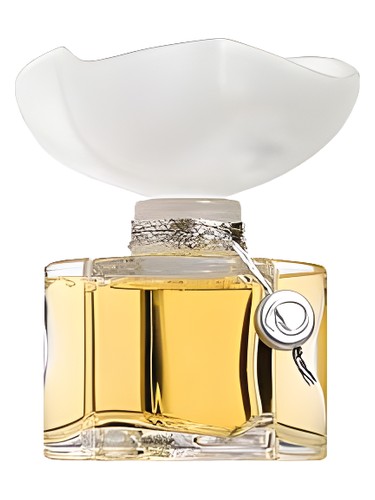
The first spray of Oscar transports you directly to 1977—not in a dusty, nostalgic way, but with the confidence of a woman who knows exactly who she is. This is white floral perfumery before it learned to whisper. The opening arrives as a paradox: creamy gardenia and orange blossom clash beautifully with the herbal bite of basil and the medicinal sharpness of cloves. There''s peach softness somewhere in the background, but it''s quickly overshadowed by coriander''s soapy-spicy kick. This isn''t a fragrance that eases you in gently—it announces itself, shakes your hand firmly, and refuses to apologize for taking up space.
The Scent Profile
Oscar''s composition reads like a maximalist''s fever dream, layering white florals upon aromatic herbs upon warm spices in a way that somehow coheres into something magnificent rather than muddled. The opening volley of cloves, gardenia, coriander, orange blossom, basil, bergamot, and peach should theoretically collapse under its own weight, but instead it creates this fascinating aromatic-floral tension. The basil and coriander provide an almost culinary freshness that cuts through the heady sweetness of gardenia and peach, while cloves add a dry, dusty warmth that hints at what''s coming.
As the fragrance settles into its heart, the true white floral beast emerges. Tuberose and jasmine form the backbone—rich, creamy, almost narcotic in their intensity. They''re joined by ylang-ylang''s banana-custard sweetness and the powdery elegance of iris and orchid. But Oscar refuses to be just another white floral. Lavender and rosemary weave through the composition, adding an aromatic freshness that keeps the florals from becoming suffocating. Rose adds a touch of classic femininity, but it''s subtle, almost deferential to the more assertive tuberose.
The base is where Oscar reveals its true staying power. Cloves return, now mellowed by myrrh and opoponax—both resinous, amber-like notes that wrap everything in a warm, slightly incense-like embrace. Sandalwood and vetiver provide woody structure, while amber, musk, and patchouli create depth and sensuality. And then there''s coconut—not tropical or suntan-lotion sweet, but more like the creamy, lactonic quality that reinforces the overall richness. The lavender also persists into the base, maintaining that aromatic quality that makes Oscar distinctive among its white floral peers.
Character & Occasion
With its dominant white floral character supported by aromatic herbs and woody-amber warmth, Oscar is decidedly a cool-weather fragrance. The data confirms this: it''s most at home in fall (100%) and winter (88%), though it can work in spring (68%). Summer wearers beware—this is a substantial fragrance that might feel overwhelming in heat, reflected in its low 42% summer rating.
Interestingly, Oscar walks both sides of the day-night divide with near-equal confidence (97% day, 92% night). This versatility speaks to its era—when a single signature scent was meant to carry you from boardroom to dinner reservation. It''s a feminine fragrance in the classic sense, designed for women who wanted to project authority and sophistication without sacrificing sensuality. This isn''t a playful or casual scent; it''s for occasions that require presence.
Community Verdict
The fragrance community''s engagement with Oscar reveals an interesting gap. With a solid 3.93 out of 5 rating from 2,138 votes, it enjoys respectable approval, yet the Reddit discussions around it are surprisingly sparse on actual wearing experiences. The sentiment score of 5.5 out of 10 suggests mixed feelings, though the available conversations focus more on vintage bottle authentication—discussions of "Stern" markings on packaging and France versus US production—than on the fragrance itself. This speaks to Oscar''s status as a collector''s item and period piece more than an actively worn fragrance in contemporary rotation.
The lack of detailed performance assessments or usage recommendations in the community data suggests Oscar may exist more in perfume lovers'' memories or vintage collections than on their skin. This isn''t necessarily a critique of the fragrance itself, but rather an indication that its bold, unapologetically retro style doesn''t quite align with current preferences for sheerer, more minimalist compositions.
How It Compares
Oscar sits comfortably among the great white floral powerhouses of its era and beyond. Its similarities to Coco Eau de Parfum by Chanel, Obsession by Calvin Klein, Poison by Dior, Amarige by Givenchy, and Arpège by Lanvin place it firmly in the tradition of no-holds-barred feminine fragrances that dominated the late 70s through early 90s. What distinguishes Oscar is its aromatic character—that persistent herbal quality from basil, rosemary, and lavender that prevents it from becoming purely a white floral bomb. Where Poison goes sweet-spicy and Obsession goes dark-oriental, Oscar maintains a brighter, more Mediterranean quality despite its richness.
The Bottom Line
Oscar deserves its 3.93 rating—it''s a well-constructed fragrance that accomplishes exactly what it set out to do in 1977. Whether that''s what you want in 2024 is another question entirely. This is not a fragrance for the faint-hearted or those seeking subtle sophistication. It''s loud, it''s rich, it''s unabashedly feminine in a way that feels both dated and, paradoxically, refreshing in our current era of whisper-soft skin scents.
If you love vintage white florals, if you thrill to the scent of tuberose and don''t mind smelling like you mean business, Oscar is worth exploring—particularly if you can find vintage formulations. It''s best suited for those who view fall and winter as their time to shine, who appreciate complexity and aren''t afraid of projection. Just know what you''re getting into: this is a fragrance that refuses to be ignored.
AI-generated editorial review