First Impressions
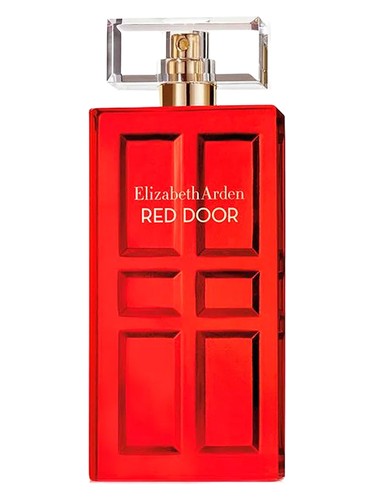
The first spray of Red Door is an immediate declaration. There''s no subtle introduction, no gentle hello—just an exuberant bouquet that fills the room before you''ve even capped the bottle. A clash of rose and plum greets you first, sweetened by the syrupy presence of peach and tempered by a curious whisper of anise. Orange blossom and violet flutter somewhere in the background, but make no mistake: this opening is about abundance, not restraint. It''s the olfactory equivalent of walking into a florist''s shop where every surface holds a vase, every vase overflows, and the air itself feels thick with pollen and possibility. You''ll know within seconds whether you''re stepping through that red door or turning away.
The Scent Profile
The opening''s fruity-floral exuberance gives way to what can only be described as a white floral orchestra playing at full volume. The heart is where Red Door truly reveals its 1980s DNA—a time when "more" was always better than "enough." Carnation takes center stage alongside rose, creating a spicy-sweet foundation that''s honeyed and almost edible. Tuberose and ylang-ylang bring their characteristically creamy, indolic richness, while jasmine, lily, freesia, lily-of-the-valley, and orchid crowd onto the stage like eager performers refusing to let anyone else have a solo.
This is floral maximalism at its finest, registering at 100% on the floral accord scale with white florals not far behind at 94%. The honey note weaves through everything, adding a viscous sweetness (62% sweet accord) that either reads as luxurious or cloying depending on your tolerance for opulence.
As Red Door settles into its base—and it takes its time getting there—a powdery softness finally emerges. Sandalwood and amber create a warm, resinous foundation, while benzoin adds a vanilla-like sweetness. Musk and heliotrope contribute to that distinctive powdery quality (55% powdery accord), giving the fragrance an almost talc-like finish that speaks directly to its late-80s origins. Vetiver and cedar provide woody grounding (48% woody accord), though they''re more supporting actors than stars. The warm spicy elements (47%) that began with carnation continue to pulse through the dry down, ensuring that even hours later, Red Door hasn''t lost its voice.
Character & Occasion
Red Door knows its place, and that place is decidedly not summer. The data tells a clear story: this is a winter fragrance first and foremost (90%), followed closely by fall (80%). Spring wearers drop to 42%, and summer? A mere 25% find it suitable for warm weather. This makes perfect sense—the dense floral composition and sweet, powdery base would wilt under July heat, but in the crisp cold of December, it blooms with purpose.
While 61% find it suitable for daytime wear, Red Door truly comes alive at night (100%). This is a fragrance for holiday parties, winter weddings, and evenings when you want to leave an impression that lingers long after you''ve left the room. It''s best suited for those with established fragrance preferences—particularly older demographics who remember when perfume was meant to announce your presence, not whisper it. Vintage collectors will appreciate its authentic late-80s composition, while those seeking a powerful signature scent will find Red Door delivers on projection and longevity in spades.
Community Verdict
The r/fragrance community''s relationship with Red Door is complicated, reflected in its middling 4.5 out of 10 sentiment score based on 59 opinions. This translates to the broader fragrance community as well, with a 3.3 out of 5 rating from 4,299 votes—respected, but not beloved.
The praise, when it comes, is emphatic. Red Door earns consistent recognition for being highly memorable and exceptionally long-lasting. Its sillage is legendary, and for many, it carries profound nostalgic value and sentimental family significance—this is often grandmother''s perfume, mother''s signature scent, a bottle on a dresser that meant someone special was getting ready to go out.
But the criticisms are equally strong. "Divisive and polarizing" appears repeatedly in community discussions. Many describe it as overpowering and genuinely difficult to remove once applied—a testament to its longevity, perhaps, but not always a welcome one. Younger audiences, in particular, find it unpleasant, associating it with outdated sensibilities rather than vintage charm. Its poor ratings on fragrance databases reflect a modern preference for lighter, more minimalist compositions.
The consensus? Red Door is appreciated primarily for nostalgia and family connections rather than contemporary appeal. It has a devoted but decidedly niche audience.
How It Compares
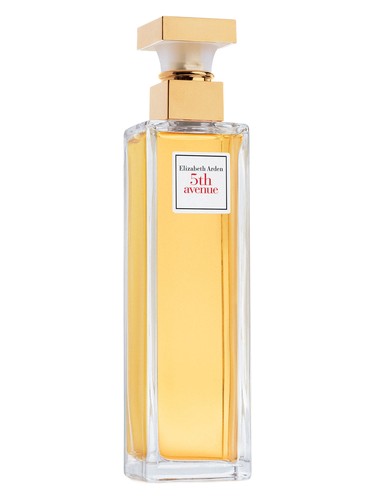
Red Door sits comfortably among other powerhouse florals of its era. Its closest companions include Amarige by Givenchy and Poison by Dior—both similarly divisive, both unapologetically bold. Elizabeth Arden''s own 5th Avenue offers a related aesthetic with slightly more modern refinement, while Poème by Lancôme and Classique by Jean Paul Gaultier share that sweet, heady floral DNA. Among these titans of 1980s and 90s femininity, Red Door holds its ground as perhaps the most uncompromising—it hasn''t been reformulated into submission, and it refuses to apologize for its intensity.
The Bottom Line
Red Door is not a fragrance for the uncertain. At over three decades old, it remains exactly what it was in 1989: a full-throttle floral statement that prioritizes presence over subtlety. Its 3.3 rating and mixed community sentiment don''t tell the whole story—this isn''t a perfume trying to please everyone, and perhaps that''s precisely its appeal for those who love it.
Should you try it? If you''re drawn to vintage fragrances, if you miss when perfume was an event rather than a whisper, or if you''re seeking something with genuine longevity and projection, absolutely. If you prefer modern minimalism, transparent florals, or anything described as "fresh," step away from the red door. This one''s not for you, and it''s perfectly content with that.
AI-generated editorial review