First Impressions
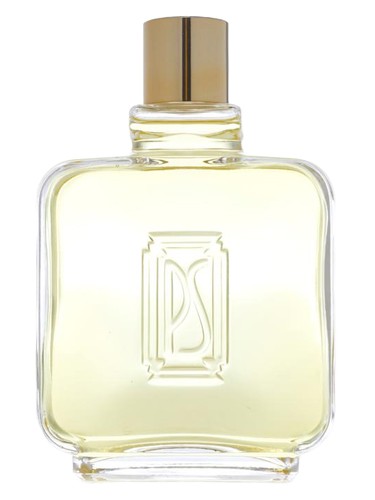
The first spray of PS Fine Cologne delivers an immediate lesson in late-seventies masculinity: lavender and sage surge forward with nutmeg''s warm rasp trailing close behind. This isn''t the polite, barbershop lavender of contemporary fougères—it''s assertive, almost medicinal in its herbal intensity, backed by a muscular musk accord that announces itself without apology. Within moments, you understand why this 1979 release has endured for over four decades. There''s an uncompromising directness here, a refusal to soften edges or court modern tastes. Whether that''s admirable or alienating depends entirely on which bottle you''ve managed to acquire.
The Scent Profile
The opening trio of lavender, sage, and nutmeg creates a distinctly aromatic introduction that reads immediately as vintage. The lavender dominates at 80% of the fragrance''s accord profile, but it''s never simple or one-dimensional. The sage adds a grey-green herbaceousness, while nutmeg provides warmth that hints at the spice development to come.
As PS Fine Cologne settles into its heart, the composition takes an unexpected turn. Ylang-ylang, rose, and jasmine emerge—a triumvirate of yellow florals that might seem incongruous in a masculine fragrance if not for the firm hand of cloves and additional spices keeping everything grounded. This floral heart, rating at 71% in the yellow floral accord, creates a fascinating tension. The flowers never become pretty or sweet; instead, they''re rendered almost abstract, providing richness and body while the spices maintain the composition''s masculine bearing. The warm spicy accord measures at 77%, ensuring these florals stay firmly within traditional masculine territory.
The base is where PS Fine Cologne reveals its true architecture. Musk dominates at 100% of the accord profile—the foundational pillar around which everything else revolves. Amber (73%) adds golden warmth, while oakmoss and patchouli provide the earthy, forest-floor complexity expected of late-seventies masculines. This is the DNA that connects PS Fine Cologne to the powerhouse fragrances of its era, that same musky-amber-mossy foundation that defined masculine sophistication before aquatics and fresh scents rewrote the rules.
Character & Occasion
PS Fine Cologne occupies an unusual position: it''s marketed as suitable for all seasons, and the community data shows zero preference for either day or night wear. In theory, this suggests remarkable versatility. In practice, this ambiguity might better reflect uncertainty than true adaptability. The fragrance''s warm spicy and musky character naturally gravitates toward cooler weather, and community feedback specifically highlights winter as its ideal season. For casual office wear, it offers a mature alternative to contemporary crowd-pleasers, though its vintage character demands confidence to wear well.
This is decidedly not a fragrance for the tentative or the trend-conscious. Its appeal lies squarely with those who appreciate mature, classic scent profiles—men who remember (or wish they''d experienced) the era when masculinity in fragrance meant something altogether different. The rating of 4 out of 5 stars from 798 votes suggests broad respect, even if passionate devotion remains concentrated among a specific demographic.
Community Verdict
Here''s where the story becomes complicated. The sentiment score of 6.5 out of 10 from Reddit''s fragrance community reveals significant ambivalence, and the reasons are telling. PS Fine Cologne suffers from the curse afflicting many vintage fragrances: reformulation has created a two-tier experience that divides the community.
The pros are clear enough. Those who appreciate classic, mature scent profiles find much to admire in PS Fine Cologne''s vintage-inspired composition. The spray bottle version delivers decent longevity and projection, offering genuine versatility for those willing to embrace its old-school aesthetic.
But the cons tell a more frustrating story. Community consensus indicates that newer formulations are significantly weaker than bottles produced before 2015. More damning still, splash versions are described as "noticeably weak and almost scentless"—a devastating assessment for any fragrance. Perhaps most importantly, PS Fine Cologne "does not live up to ''beast mode'' reputation claimed online," creating a gap between expectation and reality that leaves buyers disappointed.
This reformulation issue isn''t unique to Paul Sebastian, but it''s particularly acute here, where the fragrance''s reputation appears to rest largely on bottles that are increasingly difficult to find.
How It Compares
The comparison list reads like a roll call of masculine fragrance royalty: Kouros, Aramis, Paco Rabanne Pour Homme, Obsession for Men, Azzaro pour Homme. These are the heavy hitters of masculine perfumery, fragrances that defined and redefined what men''s scent could be. That PS Fine Cologne earns a place in this company speaks to its compositional legitimacy. The shared DNA is unmistakable—that musky, amber-laden, spice-inflected architecture that powered masculine fragrance through the late seventies and eighties.
Where it differs is primarily in accessibility and price point. Paul Sebastian has always positioned itself as a more approachable alternative to designer and prestige fragrances, offering similar olfactory territory at a fraction of the cost.
The Bottom Line
PS Fine Cologne presents a paradox. The composition itself—that lavender-driven, musky-floral-amber construction—remains worthy of its 4-star rating and its place alongside fragrance classics. For those seeking mature, traditional masculinity in a bottle, the blueprint is sound and the execution, at least historically, was solid.
The challenge is knowing what you''re getting. If you can locate a pre-2015 bottle or ensure you''re purchasing the spray version, PS Fine Cologne offers genuine value for those who appreciate vintage aesthetics. For casual office wear in winter months, it provides a distinctive alternative to modern releases.
But approach with eyes open. The "beast mode" reputation is exaggerated at best, misleading at worst. Splash versions appear to be essentially nonfunctional. And the reformulation lottery means your experience may vary dramatically from the fragrance''s reputation.
Who should try it? Those with a genuine affection for late-seventies masculine fragrance architecture, buyers willing to seek out older formulations, and anyone curious about the musky-lavender-amber profile that once defined masculine sophistication. Just don''t expect it to match the legend—expect instead a respectable, if diminished, echo of what once was.
AI-generated editorial review