First Impressions
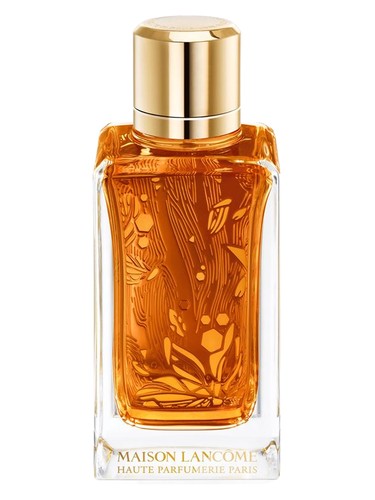
The first spray of Oud Ambroisie reveals Lancôme''s audacious proposition: what if oud wasn''t brooding and austere, but radiant and sweet? This is oud filtered through a honeycomb, dripping with amber light and softened by rose petals. Where many oud fragrances announce themselves with medicinal sharpness or leathery intensity, Oud Ambroisie opens with an almost confectionery richness—a golden sweetness that feels both indulgent and surprisingly refined. This isn''t the shadowy, incense-laden oud of traditional Middle Eastern perfumery. Instead, Lancôme has crafted something decidedly French: elegant, accessible, and utterly feminine.
The honey accord dominates from the outset, registering at full intensity in the fragrance''s DNA. But this isn''t cloying or syrupy; it''s nuanced, almost ambrosial, living up to the "ambroisie" (ambrosia) in its name. The oud hovers just beneath, present at 95% intensity—substantial enough to provide gravitas, yet restrained enough to let the sweeter elements sing.
The Scent Profile
Without specified top, heart, and base notes in the traditional pyramid structure, Oud Ambroisie reveals itself more as a harmonious blend than a linear progression. The dominant honey accord establishes the fragrance''s character immediately, creating a viscous, golden atmosphere that persists throughout the wear. This isn''t fleeting; it''s structural.
The oud, nearly as prominent, weaves through the composition like silk thread through brocade. At 95% intensity, it provides a woody depth and exotic richness without overwhelming the lighter elements. For those familiar with aggressive oud compositions, this interpretation may feel tamed—almost genteel—but that appears entirely intentional. Lancôme has rendered oud approachable, suitable for those who find traditional oud fragrances too challenging.
Rose emerges at 72% intensity, creating the classic oud-rose pairing that perfumery has celebrated for centuries. The rose here reads as velvety rather than fresh, its petals steeped in honey and warmed by wood. This triumvirate—honey, oud, and rose—forms the fragrance''s core identity.
Supporting these primary players, woody accords (61%) amplify the oud''s natural timber, while broader floral notes (52%) soften the edges and reinforce the feminine character. The overall sweetness registers at 50%, which explains why the honey never becomes cloying—it''s balanced by the woody and oud elements, creating complexity rather than confection.
The fragrance maintains its character remarkably well throughout wear, suggesting a well-blended composition where elements coexist rather than taking turns in the spotlight. This is modern perfumery at work: layered, simultaneous, dimensional.
Character & Occasion
The community data tells a clear story about Oud Ambroisie''s natural habitat: this is emphatically a cold-weather fragrance. Winter scores a perfect 100%, with fall following closely at 92%. Those percentages make sense—the honey-oud richness craves cool air, where it can bloom without becoming heavy. Spring (25%) and particularly summer (11%) are far less ideal; the sweetness and density would likely feel oppressive in heat.
The day-versus-night divide reveals interesting versatility. While 83% find it suitable for evening wear—where the opulence and sophistication truly shine—49% also embrace it for daytime. This suggests a fragrance with range, one that can accompany you from a winter afternoon meeting to an evening dinner, adjusting its personality to the lighting and occasion.
This is decidedly a fragrance for those who enjoy being noticed, but not necessarily announced. The richness commands attention, yet the femininity and sweetness keep it approachable rather than intimidating. It suits confident wearers who appreciate luxury without ostentation, and those seeking an entry point into oud-centric perfumery without diving into the genre''s more challenging expressions.
Community Verdict
With a solid 4.08 out of 5 stars from 344 votes, Oud Ambroisie has earned genuine appreciation from a substantial community. This rating suggests broad appeal—not a polarizing composition, but one that delivers on its promises consistently. The vote count indicates real engagement; this isn''t a forgotten flanker, but a fragrance that continues to attract attention and wear years after its 2016 release.
The rating reflects what the accord breakdown suggests: a well-executed, accessible take on oud that successfully appeals to those seeking something between mainstream florals and challenging niche compositions.
How It Compares
Lancôme positions Oud Ambroisie within a family of luxurious oud interpretations, alongside siblings like Oud Bouquet and Rôses Berberanza. The comparisons to Tom Ford''s Noir de Noir and Velvet Orchid place it in prestigious company—fragrances known for their opulent, unapologetic richness. The similarity to Maison Francis Kurkdjian''s Oud Satin Mood is particularly telling; both fragrances reimagine oud through a European lens, emphasizing beauty and wearability over authenticity to traditional oud profiles.
Where Oud Ambroisie distinguishes itself is through that pronounced honey accord. While rose-oud pairings abound, the ambrosial sweetness here creates a signature that sets it apart from drier, woodier, or more austere alternatives.
The Bottom Line
Oud Ambroisie represents Lancôme''s successful democratization of oud—a fragrance that delivers exotic richness without requiring an acquired taste. At 4.08 stars from a engaged community, it delivers consistent satisfaction, particularly for those drawn to sweet, woody, floral compositions with substance and longevity.
This isn''t for purists seeking authentic, challenging oud experiences. Instead, it''s for the wearer who wants oud''s mystique and depth, wrapped in honey and rose petals, suitable for a Parisian winter evening or an elegant fall occasion. If you''ve been curious about oud but intimidated by its reputation, or if you simply love rich, golden, enveloping fragrances that feel like luxury made wearable, Oud Ambroisie deserves a place on your testing list. Just save it for when the temperature drops—this is a fragrance that blooms in the cold.
AI-generated editorial review