First Impressions
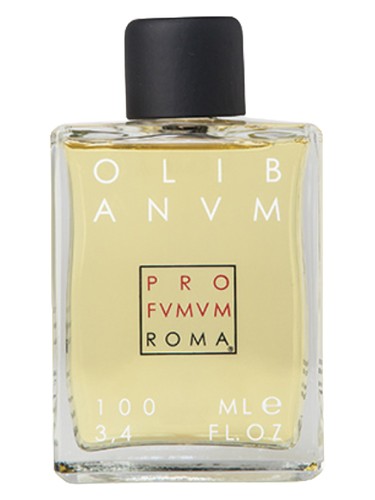
The first spray of Olibanum is an act of devotion. There''s no gentle introduction, no coy prelude—just the immediate, enveloping warmth of resinous amber billowing forth like incense smoke in a cathedral at dawn. This is Profumum Roma at their most direct: a fragrance that knows exactly what it is and announces it with quiet, assured confidence. The name, Latin for frankincense, telegraphs the intent, yet what unfolds on skin is more nuanced than a simple incense soliflore. Instead, Olibanum presents as a fully realized amber composition where sacred resins take center stage, supported by a constellation of warm spices and balsamic depth that transforms simple devotion into something approaching transcendence.
The Scent Profile
Without specified individual notes, Olibanum reveals its architecture through its accords—and what an architecture it is. The amber accord dominates completely, registering at maximum intensity, but this isn''t the sweet, vanilla-laced amber of conventional perfumery. This is amber in its most resinous, church-incense form, where frankincense resin is the beating heart.
The warm spicy accord at 60% creates a glowing nimbus around that central amber core, suggesting the heat of burning resins without veering into culinary territory. There''s a peppery quality, perhaps a touch of coriander or cardamom''s ghost, that keeps the composition from becoming too solemn. At 56%, the balsamic accord adds thickness and body—imagine the sticky sweetness of labdanum mingling with benzoin, creating a honey-dark richness that grounds the smokier elements.
And smoke there is, registering at 48%. This is the literal smoke of frankincense charcoal, the wisps that curl upward carrying prayer and petition. It''s surprisingly wearable despite this intensity, never acrid or overwhelming. The woody accord at 45% provides structural support, a dry cedar-like quality that prevents the amber from becoming too syrupy.
Most intriguing is the white floral accord at 35%—subtle but crucial. This suggests the liturgical association of frankincense with white church flowers, perhaps a whisper of tuberose or lily adding a creamy, slightly indolic counterpoint to all that resin and smoke. It''s this unexpected softness that makes Olibanum wearable as a feminine fragrance, though its character transcends gender boundaries entirely.
The evolution is less about dramatic shifts than a slow, meditative burn. What begins as bright resinous amber gradually deepens, the balsamic and woody notes emerging more prominently as hours pass, while that thread of smoke remains constant—a vertical line connecting earth to sky.
Character & Occasion
Olibanum is unequivocally a cold-weather fragrance. The community votes speak clearly: fall receives 100% approval, winter follows close at 92%, while summer trails at a mere 30%. This makes perfect sense—the dense, enveloping warmth of this amber would suffocate in July heat but feels like a cashmere-lined coat when autumn winds blow and winter deepens.
Spring at 44% represents the transition period, those cool mornings when you''re not quite ready to abandon the resins and spices that sustained you through darker months. This is a fragrance for contemplative walks through falling leaves, for gallery openings on brisk evenings, for sitting by fireplaces with leather-bound books.
The day-to-night ratio (80% day, 67% night) reveals versatility that might surprise given the intensity. Yes, Olibanum works beautifully for evening—dinner parties, concerts, intimate gatherings—but its meditative quality makes it equally suited to daytime wear. This isn''t a fragrance that shouts; it creates an aura. Wear it to the office on a Friday in November, to weekend markets, to museums on grey afternoons.
Originally classified as feminine, Olibanum has clearly found appreciation across the gender spectrum. Its incense-forward character and lack of conventional florals or fruits make it appealing to anyone drawn to resinous, contemplative scents.
Community Verdict
With a solid 4.04 out of 5 rating across 586 votes, Olibanum has achieved something noteworthy: clear appreciation without universal adoration. This isn''t a crowd-pleaser in the conventional sense, and that''s precisely its strength. Those who love it truly love it, recognizing in its focused amber-incense vision something increasingly rare in modern perfumery—unwavering commitment to a singular idea executed beautifully.
The rating suggests a fragrance that rewards understanding and patience. This isn''t love at first sniff for everyone, but for those who connect with its meditative character, it becomes indispensable.
How It Compares
Placed alongside Comme des Garçons'' Avignon, Olibanum reveals itself as the warmer, more amber-centric sibling—where Avignon emphasizes the austere stone-and-incense of Catholic churches, Olibanum leans into resinous sweetness. Compared to its Profumum stablemate Ambra Aurea, Olibanum is smokier and more overtly incense-focused. The comparison to Interlude Man by Amouage and Ambre Sultan by Serge Lutens positions it firmly in the category of serious, uncompromising amber fragrances for connoisseurs.
Among Profumum''s own Arso, Olibanum distinguishes itself by emphasizing amber over pure smoke, making it arguably more wearable while maintaining artistic integrity.
The Bottom Line
Olibanum succeeds because it refuses to compromise. In an era of focus-grouped crowd-pleasers, Profumum Roma delivers a frankincense-forward amber that asks you to meet it on its own terms. The 4.04 rating from nearly 600 voters confirms this isn''t a niche curiosity but a genuinely well-executed fragrance with an appreciative audience.
Is it worth exploring? Absolutely, particularly if you''re drawn to amber, incense, or resinous scents. Sample it on a cool day and give it time—this is a slow burn, not a flash fire. Those who find conventional ambers too sweet or incense fragrances too austere may discover in Olibanum the perfect middle ground. It''s a meditative companion for cold months, proof that focused simplicity often triumphs over baroque complexity.
AI-generated editorial review