First Impressions
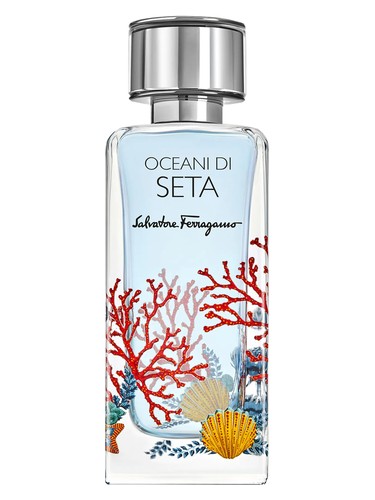
The first breath of Oceani di Seta—"Oceans of Silk"—delivers on its poetic promise with startling immediacy. Sea salt crystalizes on the skin, but this isn''t the aggressive mineral crash of a wave breaking against rocks. Instead, it''s the whisper-soft salinity you taste on your lips after an afternoon breeze along the coast, where the Mediterranean has been warmed by Italian sun and gentled by distance. There''s something decidedly refined about this opening, a restraint that signals Ferragamo''s intention: this is the ocean as imagined by a luxury fashion house, not a documentary recreation.
Within seconds, the salt begins its dance with something sweeter, something that suggests we''re not standing on a lonely shore but in a terraced garden overlooking the water, where cultivation and wilderness meet.
The Scent Profile
The architecture here is deceptively simple—just three notes doing the work of a dozen. That sea salt opening dominates the first fifteen minutes, delivering the 51% salty accord that community data confirms as the fragrance''s secondary signature. But unlike many marine fragrances that lean synthetic or ozonic, Oceani di Seta''s salinity feels almost edible, like the finish of good olive oil or the air inside a pristine seaside villa.
As the top note recedes, magnolia petals emerge as the fragrance''s true protagonist. This isn''t the heady, almost narcotic magnolia of Southern gothic gardens; it''s a cleaner, more watercolor interpretation. The magnolia here feels sheer and sun-bleached, its natural sweetness tempered by the lingering salt. This is where that dominant 100% floral accord takes command, though it''s a floral that never forgets it''s standing within view of the sea.
The listed 37% citrus accord makes itself known not as a distinct note but as a brightness that keeps the magnolia from becoming too soft or too sweet. It''s the difference between white petals in shade and white petals catching morning light.
The base transition is where Oceani di Seta reveals its fashion house pedigree. Heliotrope brings that characteristic powdery quality—the data shows 37% powdery accord—along with subtle vanilla undertones (32% vanilla accord). This isn''t dessert-like vanilla; it''s the barely-there sweetness that makes the fragrance feel skin-close and intimate. The heliotrope also contributes an almond-like nuance that some find reminiscent of high-end cosmetics or the interior of an expensive leather handbag.
What''s remarkable is how the salty quality persists even into the drydown, creating this constant dialogue between the powdery-floral comfort of the base and the crystalline edge of the opening. The marine accord (26%) never fully disappears—it just learns to share the stage.
Character & Occasion
The community consensus is decisive: Oceani di Seta is a summer perfume through and through, with 100% agreement on its warm-weather suitability. Spring claims 49% of votes, suggesting it works beautifully in that transitional season when the air first begins to warm. Fall (13%) and winter (8%) barely register, and honestly, that''s appropriate. This isn''t a fragrance that fights for attention in cold weather; it needs warmth to bloom properly, sun to illuminate its saltwater-silk character.
The day/night split tells the rest of the story: 78% day wear versus just 11% night. This is a fragrance for movement and sunlight—for lunches on terraces, afternoon shopping in coastal towns, garden parties that end before sunset. There''s an ease to it, a lack of pretension that makes it feel wrong for formal evening occasions but absolutely right for sophisticated daytime elegance.
This is perfume for the woman who owns linen in every shade of white and cream, who understands that true luxury often whispers rather than shouts. It''s too refined for teenagers, too delicate for those who prefer their fragrances as bold statements.
Community Verdict
With 379 votes landing at 3.66 out of 5, Oceani di Seta occupies interesting territory. This isn''t a universally beloved blockbuster, nor is it a misunderstood disaster. Instead, it''s a fragrance that knows its audience and serves them well while not attempting to convert those who prefer different olfactory territories. That rating suggests a well-executed vision that won''t be everyone''s taste—and there''s integrity in that. The solid vote count indicates genuine interest and discussion within the fragrance community, marking this as more than a fleeting release.
How It Compares
Oceani di Seta exists in conversation with several notable fragrances. A Drop d''Issey by Issey Miyake shares that delicate aquatic-floral balance, while Jo Malone''s Wood Sage & Sea Salt offers a similar coastal meditation (though earthier). Hermès'' Un Jardin Sur Le Nil brings comparable fresh sophistication, and interestingly, Ferragamo''s own Giungle di Seta appears as a sibling—part of what seems to be a "Seta" collection exploring silk''s meeting with different natural environments.
Where Oceani di Seta distinguishes itself is in that specific magnolia-heliotrope heart, which gives it a softer, more classically feminine character than some of its more unisex marine competitors.
The Bottom Line
Oceani di Seta won''t revolutionize your fragrance collection, but that''s not its ambition. This is a seasonal specialist that does exactly what it sets out to do with grace and refinement. The 3.66 rating reflects a fragrance that succeeds within clear boundaries rather than attempting universal appeal.
For summer wardrobes lacking a sophisticated daytime option that bridges floral and marine territories, this deserves consideration. It''s particularly suited to those who find typical marine fragrances too harsh or traditional florals too heavy. The concentration remains unspecified, which suggests moderate longevity—plan on reapplication for evening extension.
Skip it if you demand powerhouse projection or year-round versatility. Seek it out if you understand that some perfumes are meant for specific moments in specific seasons, and that there''s beauty in that specificity.
AI-generated editorial review