First Impressions
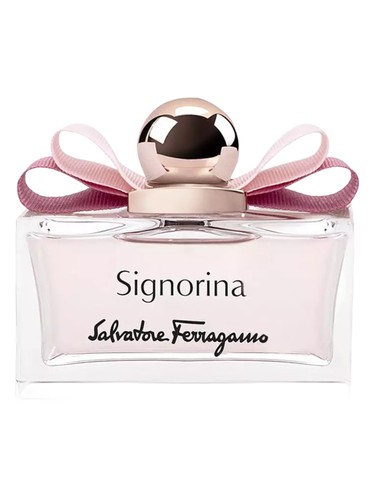
The first spray of Signorina announces itself with unabashed sweetness—a pink pepper and blackcurrant duet that tingles with both spice and fruit. This isn''t the subtle whisper of a sophisticated evening scent; it''s the bright, confident greeting of a fragrance that knows exactly what it wants to be. Within seconds, that initial burst softens into something more complex, as rose and peony begin their ascent through the sweetness. The overall impression is youthful, optimistic, and unapologetically feminine—think of it as the olfactory equivalent of a first date, complete with nervous excitement and carefully applied lipstick.
The Scent Profile
Salvatore Ferragamo''s 2011 creation opens with a compelling contrast: pink pepper providing gentle heat while blackcurrant delivers a tart, jammy sweetness. This top note phase is brief but effective, setting the stage for what becomes the fragrance''s true identity.
The heart is where Signorina reveals its floral soul. Rose takes center stage—not the green, thorny rose of classic perfumery, but a sweeter, more approachable interpretation. Peony adds a soft, powdery quality that keeps the composition light and airy, while jasmine contributes just enough indolic richness to prevent the whole affair from becoming too one-dimensional. These florals blend seamlessly, creating a bouquet that feels modern rather than vintage, accessible rather than challenging.
But it''s the base that makes Signorina truly distinctive. Panacotta—that creamy Italian dessert—isn''t a common perfume note, and here it manifests as a lactonic, almost vanilla-adjacent sweetness that wraps around the florals like silk. Musk provides the requisite skin-like warmth, while patchouli adds just enough depth to keep the composition from floating away entirely. This isn''t the dark, earthy patchouli of bohemian oils; it''s a cleaned-up, modern interpretation that serves more as structural support than as a featured player.
The result is a fragrance dominated by sweetness—registering at 100% in its accord profile—followed by rose at 74% and floral notes at 63%. That lactonic quality scores 53%, confirming what your nose already knows: this is a dessert-forward composition that happens to feature flowers, not the other way around.
Character & Occasion
Signorina''s versatility is one of its defining characteristics. Rated for all seasons, it adapts reasonably well to different temperatures, though the community feedback suggests it truly shines in warm weather when its fresh qualities (37% of the accord profile) can cut through the sweetness. The absence of specific day or night designation in the data reflects its chameleon nature—it''s casual enough for daytime wear but can transition to evening events, particularly those skewing younger and more informal.
This is quintessentially a fragrance for young women and teens. There''s nothing in its composition that explicitly prohibits older wearers, but its character—that unrestrained sweetness, that pink-tinted optimism—speaks most directly to those in their teens and twenties. It''s the fragrance equivalent of a fit-and-flare dress in a pastel shade: pretty, uncomplicated, and earnest in its femininity.
For everyday casual wear, Signorina excels. It''s approachable without being boring, distinctive without being challenging. Coffee dates, shopping trips, university classes, brunches with friends—these are its natural habitats.
Community Verdict
The Reddit fragrance community views Signorina with genuine warmth, awarding it a positive sentiment score of 7.5 out of 10 based on 70 opinions. Its broader rating of 3.82 out of 5 from 4,259 votes reinforces this generally favorable reception, placing it firmly in "good, not great" territory.
The pros cited are substantial: users consistently praise its fresh and appealing floral character, noting that it delivers good performance and longevity considering its price point. It''s become a popular choice among younger fragrance enthusiasts specifically because it offers that sweet spot of accessibility and quality. Its versatility for everyday wear earns repeated mentions.
The criticisms are equally consistent. The sweetness level proves divisive—what some find delightful, others experience as cloying or excessive. Several community members note that performance can be inconsistent depending on skin chemistry, a common complaint with sweeter, more synthetic compositions. These aren''t deal-breakers, but they''re real considerations for potential buyers.
How It Compares
Signorina occupies crowded territory. Its comparison set reads like a greatest hits of modern feminine blockbusters: Flowerbomb by Viktor&Rolf, Chloé Eau de Parfum, La Vie Est Belle by Lancôme, Chance Eau Tendre by Chanel, and J''adore by Dior.
Where it distinguishes itself is through that panacotta note—a creamy sweetness that''s more dessert-like than the gourmand vanilla of La Vie Est Belle or the pear-sweetness of Chance Eau Tendre. It''s sweeter and younger than the elegant restraint of Chloé, less bombastic than Flowerbomb, and more overtly confectionery than J''adore''s floral sophistication. It carves out its niche as the most unabashedly youthful of the group.
The Bottom Line
Signorina succeeds at exactly what it sets out to do: deliver an accessible, sweet-floral fragrance that appeals to younger wearers without insulting their intelligence. At its 3.82 rating, it''s not positioned as a masterpiece, and that''s perfectly fine—not every fragrance needs to reinvent the wheel. The community''s 7.5/10 sentiment score and predominantly positive feedback suggest a fragrance that consistently meets expectations.
The value proposition appears solid, with performance praised as good for the price point. For young women seeking a signature scent that''s distinctly feminine without being stuffy, or for anyone who gravitates toward sweet florals with a creamy edge, Signorina deserves consideration. Those who find sweet fragrances overwhelming or who seek something more sophisticated should probably look elsewhere—perhaps to its more restrained cousin, Chloé.
This is a fragrance that knows its audience and serves them well. Sometimes, that''s exactly enough.
AI-generated editorial review