First Impressions
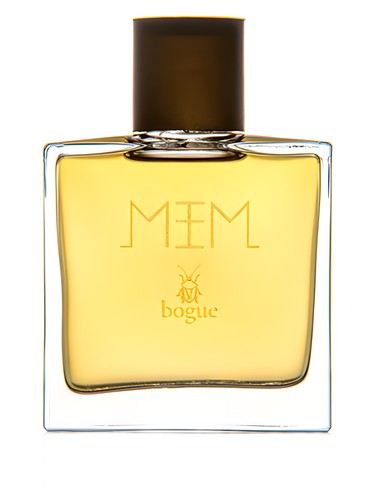
The first spray of MEM is a revelation in contradictions. Antonio Gardoni''s 2017 creation opens with an almost overwhelming declaration of lavender—not just one lavender, but four distinct varieties cascading over citrus brightness. Wild lavender tangles with blue lavender while lavender extract deepens the aromatic wave, cushioned by grapefruit and mandarin orange. It''s fresh and spicy simultaneously, aromatic in a way that feels both classical and utterly contemporary. This is lavender as you''ve never quite experienced it: not soapy, not simplistic, but verdant and alive with petitgrain''s bitter-green snap. And then, remarkably, it begins to vanish.
This disappearing act isn''t a flaw in composition—it''s the essential paradox of MEM. What announces itself with such confidence quickly softens into something so intimate, so close to the skin, that you''ll find yourself pressing your nose to your wrist, wondering if the fragrance has fled entirely or simply learned the art of discretion.
The Scent Profile
MEM''s evolution is a study in graceful transformation, even if that transformation happens at whisper volume. The lavender quartet that dominates the opening gradually yields to an extraordinary heart that defies easy categorization. Here, ylang-ylang''s creamy opulence meets champaca''s tea-like floralcy, but these familiar players are surrounded by unexpected companions: malt brings a toasted, almost edible quality, while mint adds cooling freshness. Bourbon geranium and damask rose provide traditional floral depth, but they''re tempered by laurels'' aromatic bite and vanilla''s soft sweetness.
This heart phase is where MEM reveals its true character—the musky accord (rated at 100%) begins its slow emergence, not as a sharp synthetic pulse but as an enveloping warmth. The fresh spicy notes (90%) and aromatic elements (89%) that defined the opening haven''t disappeared; they''ve simply been absorbed into something larger and more complex.
The base is where Gardoni''s mastery of classical perfumery techniques becomes undeniable. Civet and castoreum anchor the composition with their animalic richness (77% animalic accord), while musk and ambergris create that skin-like quality that makes MEM feel less like a fragrance worn on the body and more like an enhancement of the body itself. Siam benzoin, amber, and labdanum construct the amber accord (83%), golden and resinous, while sandalwood, Himalayan cedar, and palisander rosewood provide the woody framework (81%) that carries everything else. This is old-school perfumery—raw materials of exceptional quality, married with technical precision and unapologetic richness.
Character & Occasion
The data tells a clear story: MEM is a fall fragrance first and foremost (100%), with strong showings in spring (85%) and winter (81%), but considerably less suited to summer heat (41%). This makes perfect sense given its amber-woody construction and substantial base notes. The animalic musks that give MEM its character need cooler weather to bloom without overwhelming.
Interestingly, despite its richness, MEM skews heavily toward daytime wear (87%) versus evening (70%). This likely reflects its intimate nature—it''s not the fragrance you wear to fill a room or announce your entrance. It''s for close conversations, for personal meetings, for moments when proximity matters more than projection.
This is explicitly marketed as feminine, though the aromatic lavender opening and animalic base notes would feel equally at home on any gender. The reality is that MEM asks something of its wearer: confidence in subtlety, appreciation for the craft over the compliment, willingness to wear a fragrance primarily for oneself.
Community Verdict
The r/fragrance community''s response to MEM reveals the fragrance''s fundamental challenge. With a sentiment score of 6.5/10 across 66 opinions, reactions are decidedly mixed. The praise is specific and genuine: wearers appreciate the woody and creamy characteristics, the comfortable skin-scent quality, and the unique composition that stands apart from mainstream offerings.
But the criticisms are equally pointed and recurring. Multiple users report anosmia—the inability to smell the fragrance on themselves, particularly on initial wears. This isn''t uncommon with certain musk molecules, but it''s frustrating when you''ve invested in niche perfumery. Low projection and performance issues dominate the negative feedback. When a fragrance with this level of compositional complexity disappears within hours, or remains detectable only to the wearer, it raises questions about practical wearability.
The community consensus suggests MEM is best suited for intimate close-contact wear and personal appreciation rather than compliment-seeking. It appeals primarily to dedicated niche enthusiasts who value composition over performance, but even among that group, it struggles against similar offerings with better longevity and projection.
How It Compares
MEM''s similarity to Kouros by Yves Saint Laurent, Salome by Papillon, Tauer''s L''Air du Desert Marocain, Nicolai''s New York Intense, and MDCI''s Chypre Palatin places it squarely in the territory of unapologetic, classical-minded fragrances that prioritize natural materials and traditional construction. These are all scents with pronounced animalic or aromatic characteristics, often polarizing, always memorable.
What sets MEM apart—and potentially holds it back—is its restraint. Where Kouros projects its civet-laced lavender boldly, MEM whispers. Where Salome''s opulent florals announce themselves, MEM''s champaca and ylang-ylang remain close. This makes it perhaps the most wearable of its peers for modern contexts, but also the most likely to frustrate those seeking presence.
The Bottom Line
MEM''s 4.1/5 rating across 529 votes suggests broad appreciation, but that 6.5/10 community sentiment score tells the more nuanced truth: this is a fragrance that inspires admiration more often than love. The composition is undeniably masterful—Gardoni''s use of multiple lavender varieties, his layering of classical animalic materials, his creation of that perfect musky-woody-amber balance demonstrates serious perfumery skill.
But skill doesn''t always translate to wearability. If you experience anosmia to certain musks, MEM may simply disappear on your skin. If you need a fragrance with projection and presence, this will disappoint. The performance issues are real and documented.
Who should try MEM? Those who appreciate fragrance as an intimate art form rather than a social signal. Wearers who''ve found that many modern perfumes shout when they''d prefer a murmur. Anyone fascinated by the technical challenge of balancing four lavender varieties with animalic musks and precious woods. And perhaps most importantly, those willing to accept that sometimes the most beautiful things are meant only for close observation.
MEM is a fragrance for pressing your nose to your own wrist and discovering something new with each breath—even if no one else will ever notice you''re wearing it.
AI-generated editorial review