First Impressions
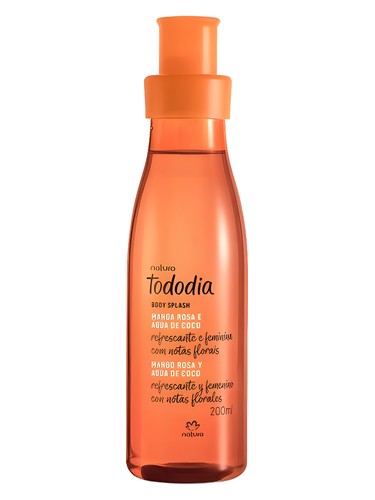
The first spray of Manga Rosa e Água de Coco is like stepping barefoot onto warm Brazilian sand, the ocean breeze carrying whispers of a beachside fruit market. This is immediate sunshine—no build-up, no pretense. A vibrant burst of citrus led by ginger, mandarin orange, and lemon zest collides with the creamy sweetness of coconut and the juicy exuberance of yellow fruits. There''s an almost dizzying abundance here, as pineapple, pear, apple, and melon jostle for attention alongside pomelo and lemongrass. It''s the olfactory equivalent of a packed tropical fruit stand at peak ripeness, yet somehow Natura has orchestrated this riot of ingredients into something surprisingly coherent and wearable. This isn''t shy or contemplative—it''s a fragrance that announces itself with confident, uncomplicated joy.
The Scent Profile
The opening moments are dominated by that spectacular citrus accord—registering at full intensity according to wearer impressions—with the ginger providing an unexpected fresh-spicy kick that prevents the composition from veering into simple fruit punch territory. The lemongrass adds a subtle herbal quality, grounding what could otherwise become cloying sweetness. The coconut, rather than presenting as a sunscreen-heavy tropical cliché, weaves through the citrus like cool coconut water rather than dense cream.
As the fragrance settles, the heart reveals a surprisingly elegant floral bouquet. Hibiscus takes center stage—a nod to the perfume''s name and Brazilian heritage—supported by orange blossom and jasmine. These aren''t the heavy, indolic white florals of classic perfumery; instead, they''re rendered in a lighter, more aqueous style that maintains the fresh character established in the opening. Lily of the valley contributes its characteristic soapy cleanliness, while violet and rose petals add subtle depth without overwhelming the composition''s breezy nature.
The base notes present an interesting contradiction on paper—musk, sandalwood, cedar, cashmeran, amber, vanilla, and labdanum suggest something far heavier than what actually develops on skin. In practice, these elements provide just enough structure to prevent the fragrance from evaporating into nothingness within the first hour. The woods register as a soft, slightly creamy foundation, while the amber and vanilla add a whisper of warmth without compromising the fresh character that defines this scent. The woody accord, measured at 27% intensity, functions more as a supporting player than a protagonist—exactly as it should in a composition this dedicated to brightness and levity.
Character & Occasion
The data tells the story clearly: this is a summer fragrance through and through, with absolute seasonal alignment. Spring claims a respectable 56% suitability, but fall and winter barely register at 11% and 4% respectively. This is not a fragrance fighting against its nature—it knows exactly what it wants to be.
The day/night split is even more pronounced, with 96% daytime suitability versus a mere 11% for evening wear. Manga Rosa e Água de Coco is unabashedly a daylight companion, designed for sun-soaked hours rather than candlelit dinners. Picture weekend brunch on a terrace, beach walks, summer office days with relaxed dress codes, or casual outdoor gatherings. This is the fragrance equivalent of a linen dress or crisp white shirt—effortlessly appropriate for warm-weather casual occasions.
The feminine classification fits, though the bright citrus and subtle spice could certainly be enjoyed across gender lines by anyone drawn to fresh, fruit-forward compositions. This isn''t a fragrance making bold statements about identity or occasion—it''s simply offering uncomplicated pleasure for those moments when you want to smell clean, fresh, and quietly joyful.
Community Verdict
With a solid 4.14 out of 5 rating from 639 votes, Manga Rosa e Água de Coco has clearly resonated with a substantial number of wearers. This isn''t a niche curiosity with fifty passionate devotees—this is a fragrance that has been tested in the real world by hundreds and emerged with impressive approval. The rating suggests a composition that delivers on its promises without major flaws or polarizing elements. It''s the kind of score that indicates reliability: not groundbreaking enough for universal 5-star worship, but well-crafted enough to avoid the disappointments that drag ratings below 4.0.
How It Compares
Natura positions this alongside their other fresh offerings—Kaiak, Frescor de Pitanga, and Acerola e Hibisco—suggesting a house specialty in bright, Brazilian-inspired compositions. The comparison to Dolce & Gabbana''s Light Blue is particularly telling: both occupy that sweet spot of accessible luxury, offering sophisticated freshness without intimidating complexity or luxury-house price points.
Where Light Blue leans into crisp apple and bamboo, Manga Rosa e Água de Coco embraces a more overtly tropical character. The coconut and hibiscus immediately signal its Brazilian DNA, while the extensive fruit accord creates a juicier, more exuberant personality than its Italian counterpart. Among Natura''s own lineup, the Essencial Exclusivo comparison suggests this fragrance appeals to those who want freshness with substance—not just a fleeting cologne.
The Bottom Line
Manga Rosa e Água de Coco succeeds by knowing exactly what it is and executing that vision with precision. This isn''t trying to be a complex, evolving journey through rare ingredients. It''s offering immediate, uncomplicated pleasure—and it delivers that promise with a 4.14 rating that reflects genuine satisfaction from a meaningful sample size.
For anyone seeking a reliable summer signature or a cheerful warm-weather rotation piece, this fragrance deserves consideration. It won''t challenge or transform your perspective on perfumery, but it will make hot days more bearable and casual moments more pleasant. The value proposition appears strong, particularly compared to designer alternatives in the fresh-fruity category. If you''ve enjoyed Light Blue but wish it had more tropical warmth, or if you''re drawn to the idea of pink mango and coconut water without the synthetic harshness that sometimes plagues tropical fragrances, give this one a test. Just save it for the sunshine—wearing this in January would be an act of wishful thinking rather than good fragrance sense.
AI-generated editorial review