First Impressions
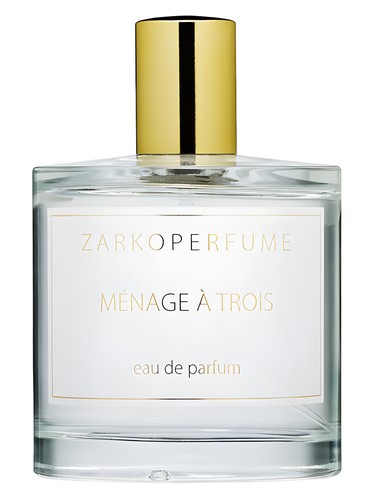
The first spray of Ménage à Trois is an exercise in restraint bordering on abstraction. There''s no grand entrance, no cascade of citrus or floral fanfare. Instead, ZARKOPERFUME''s 2016 release greets you with something close to silence—a clean, almost sterile whisper that hovers just above the skin. The musk arrives immediately, dominant and unapologetic, but it''s a modern interpretation: scrubbed, ozonic, with that peculiar synthetic clarity that recalls freshly laundered sheets dried in ocean air. Within moments, a powdery softness begins to bloom, tempering the aquatic sharpness with something warmer, more human. This is not a fragrance that announces itself across a room; it''s the olfactory equivalent of a knowing glance.
The Scent Profile
Without specified individual notes, Ménage à Trois reveals itself primarily through its accord architecture—and musk is the undisputed foundation, floor, and ceiling of this composition. At 100% presence in the accord profile, this isn''t merely a musky fragrance; it is musk, rendered in various textures and temperatures.
The opening phase brings that ozonic-aquatic character to the forefront—a 50% ozonic presence paired with 45% aquatic qualities creates something simultaneously airy and wet, like standing at the shoreline on an overcast morning. There''s a metallic quality to this beginning, a coolness that some might find refreshing and others might perceive as detached.
As the fragrance settles into its heart, the powdery accord (50%) asserts itself more confidently. This softness doesn''t read as vintage cosmetic powder; rather, it''s a diffused, almost gauzy quality that wraps around the musk like cashmere. The interplay between the sharp aquatic elements and this comforting powder creates the fragrance''s central tension—clinical yet intimate, distant yet touchable.
The base remains true to its musky foundation, though a subtle animalic undertone (15%) adds necessary depth, preventing the composition from floating away entirely into abstraction. There''s a whisper of sweetness (10%) that emerges in the dry-down, barely perceptible but crucial—it''s what keeps this from reading as purely functional, what distinguishes it from fabric softener or high-end laundry detergent.
Character & Occasion
The community data tells a clear story: this is summer''s fragrance, worn best in daylight. With a 98% summer rating and 100% day designation, Ménage à Trois knows its lane and stays firmly in it. This is the scent of minimalist linen wardrobes, sun-bleached driftwood, and that particular breed of effortless elegance that refuses to try too hard.
Spring claims 75% suitability, which makes intuitive sense—those transitional months when the air still carries a crisp edge but warmth is creeping in. The fragrance''s clean, powdery-ozonic character would complement cherry blossoms and spring rain beautifully. Fall and winter receive considerably less enthusiasm (43% and 30% respectively), and it''s not difficult to understand why. There''s nothing here to cocoon you against cold weather; this is a fragrance that needs heat to properly express itself against skin.
The stark day versus night split (100% to 26%) positions this firmly as a daytime companion. There''s no mysterious darkness here, no seductive weight. This is coffee meetings, gallery openings, weekend farmers markets—situations where you want to smell clean, interesting, but not demanding.
The feminine designation feels almost arbitrary given the minimalist nature of the composition. Anyone drawn to skin-scent musks and molecular fragrances will find common ground here, regardless of gender identity.
Community Verdict
With 440 votes landing at a 3.36 out of 5 rating, the community response to Ménage à Trois is decidedly mixed—and that''s perhaps the most honest thing you can say about it. This isn''t a crowd-pleaser, nor does it aspire to be. The rating suggests a fragrance that rewards those who "get it" while leaving others genuinely puzzled.
That middle-of-the-road score likely reflects the polarizing nature of minimalist, musk-forward compositions. For every wearer who appreciates the subtle sophistication and skin-like quality, there''s another expecting more development, more drama, more there there. This is worth exploring precisely because it provokes such varied responses—it''s a fragrance with a point of view.
How It Compares
The comparison list reads like a who''s-who of modern minimalism and skin scents. The connection to Narciso Rodriguez For Her is obvious—both build their identity around musk, though Rodriguez''s composition offers more sweetness and warmth. The inclusion of ZARKOPERFUME''s own MOLéCULE 234.38 and Escentric Molecules'' Molecule 01 positions Ménage à Trois squarely in the molecular fragrance conversation, where the goal is enhancement rather than transformation.
More surprising are the mentions of Chanel''s Chance Eau Tendre and Dior''s J''adore—both considerably more floral and conventional than this ozonic musk. The connection likely lies in the powdery softness and feminine marketing rather than actual scent DNA.
Within its category, Ménage à Trois occupies an interesting middle ground: more wearable than pure molecule fragrances, but more abstract than traditional musks.
The Bottom Line
Ménage à Trois asks a specific question: do you want to smell like something, or do you want to smell like an elevated version of your own skin? If you lean toward the latter, this warrants serious consideration despite its middling rating. The 3.36 score reflects division, not mediocrity—and in the realm of artistic fragrance, that''s often more interesting than consensus.
This isn''t a value play or a versatile wardrobe staple. It''s a summer skin scent for minimalists who appreciate restraint, who find beauty in negative space, who believe sometimes less really is more. If you''re drawn to the fragrances in its comparison set, if you''ve ever thought traditional perfumes try too hard, if you want summer in a bottle that doesn''t scream citrus and coconut—give this a test wear. Just know that you might not smell it much yourself. And for some wearers, that''s precisely the point.
AI-generated editorial review