First Impressions
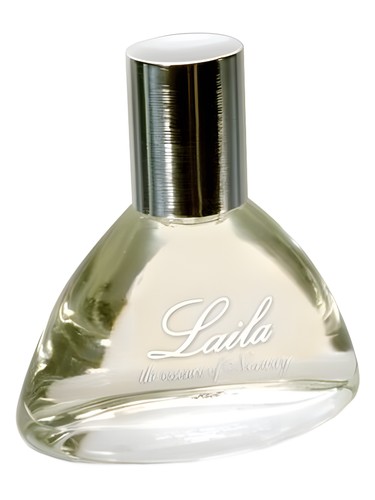
There''s something immediately arresting about Laila—a quality that feels both timeless and distinctly of its era. The first spray releases a wave of brightness that seems to shimmer in the air, catching light like morning dew on petals. This is floral perfumery at its most transparent, where flowers aren''t rendered in thick, heady oils but rather sketched with water and air. Created in 1995 by Norwegian designer Geir Ness, Laila captures that mid-90s fascination with clean, aquatic compositions, yet it possesses a floral intensity that prevents it from disappearing into the background. The opening is crisp and invigorating, suggesting both the coolness of Scandinavian fjords and the softness of Nordic wildflowers swaying in an alpine breeze.
The Scent Profile
While Laila keeps its specific note breakdown as enigmatic as a Nordic myth, its accord structure tells a revealing story. This is unequivocally a floral fragrance—the category registers at full strength—but it''s the supporting cast that makes it fascinating. The ozonic quality sits prominently alongside the flowers, creating that distinctive watery, almost electric quality that defined an entire generation of perfumes. Think of it as florals viewed through rain-streaked glass, softened and brightened simultaneously.
The fresh and aquatic accords work in tandem, contributing to an overall impression of cleanliness without sterility. There''s a lightness here, an airiness that suggests petals floating on water rather than pressed between heavy book pages. The herbal undertone adds a green, slightly bitter edge that prevents the composition from tipping into saccharine territory—imagine crushing jasmine stems along with the blooms, getting that vegetal juice alongside the sweet scent.
A whisper of fruitiness rounds out the experience, just enough to add a subtle juiciness without announcing itself as a distinct phase. Laila doesn''t follow the traditional perfume pyramid in an obvious, staged manner. Instead, it presents itself as a cohesive statement from start to finish, with subtle shifts rather than dramatic reveals. The floral heart remains constant, while the ozonic and aquatic elements seem to pulse and recede like waves, creating movement within an overall impression of luminous clarity.
Character & Occasion
The community has spoken decisively on this question: Laila is a daytime fragrance, suited for daylight hours with near-unanimous agreement. Only a fifth of wearers find it appropriate for evening wear, and honestly, that assessment feels right. This is a perfume that thrives in natural light, that complements rather than competes with the sun.
Seasonally, Laila finds its perfect moment in spring, where it scores an exceptional 96% approval rating. This makes intuitive sense—it captures that particular magic of the season''s first warm days, when winter''s grip finally loosens and the world turns green again. Summer follows closely at 80%, suggesting Laila has enough freshness to remain comfortable even when temperatures climb. The significant drop-off for fall and winter (both at 35%) confirms what the nose already knows: this is not a perfume for cashmere and candlelight. It needs air and movement.
The ideal Laila wearer appreciates subtlety over statement, freshness over intensity. This is for someone who wants to smell clean and polished at a morning meeting, refreshing during a spring garden party, or effortlessly put-together at a summer brunch. It''s particularly well-suited to professional environments where you want to make a positive impression without overwhelming a conference room.
Community Verdict
With 4.25 stars from 333 reviews, Laila occupies that sweet spot of being genuinely well-regarded without the breathless hype that surrounds blockbuster releases. This isn''t a perfume that 10,000 people have rushed to rate; it''s one that 333 people took the time to evaluate, and they liked what they found. That rating suggests consistent quality—few people seem to actively dislike it, while many find it genuinely appealing.
The relatively modest review count compared to mainstream giants also indicates Laila occupies a more niche position in the market, which can actually be an advantage. Those who discover it often feel they''ve found something slightly under the radar, a hidden gem that doesn''t announce itself on every passing wrist.
How It Compares
Laila shares DNA with some of perfumery''s most influential compositions. The most obvious comparison is L''eau d''Issey, Issey Miyake''s 1992 watershed moment that essentially created the aquatic floral category. Both perfumes approach florals through a lens of water and light rather than opulence. The connections to Bright Crystal, Chloé, J''adore, and Flowerbomb place Laila firmly in the lineage of elegant, feminine florals that aim for sophistication rather than shock value.
Where Laila distinguishes itself is in that pronounced ozonic quality—that fresh-air sharpness that feels distinctly of the mid-90s. It''s less sweet than Bright Crystal, less powdery than Chloé, less tropical than J''adore, and considerably lighter than Flowerbomb''s floral bomb approach. Laila occupies a space between minimalism and abundance, offering floral beauty without demanding center stage.
The Bottom Line
Laila deserves more attention than its modest review count suggests. This is a well-crafted floral aquatic that delivers exactly what it promises: clean, fresh, effortlessly pretty perfume for daytime wear. At 4.25 stars, it''s clearly satisfying those who try it, and that consistency matters more than fleeting trends.
Is it groundbreaking? No—and by 1995, the aquatic floral concept was already established. But Laila executes the concept with grace and wearability. It''s the perfume equivalent of a perfectly crisp white shirt: not revolutionary, but reliably excellent. For anyone seeking an alternative to mainstream fresh florals, particularly those with Nordic sensibilities or appreciation for understated elegance, Laila is absolutely worth exploring. Just save it for spring mornings and summer afternoons, where it truly sings.
AI-generated editorial review