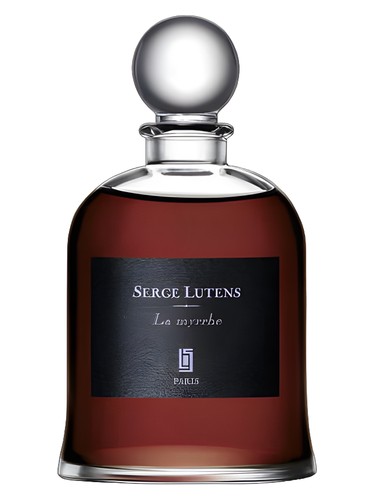
First Impressions
There''s nothing quite like the moment La Myrrhe touches skin—it''s an olfactory handshake that feels more like a benediction. Serge Lutens'' 1995 creation announces itself with an amber-drenched warmth that speaks in whispers of ancient rituals and forgotten temples. The myrrh at its heart isn''t the polite, watered-down version you might encounter elsewhere; this is resinous, unapologetic, almost medicinal in its authenticity. Within seconds, you understand why this fragrance inspires such vehement reactions. This isn''t a perfume that asks for your approval—it simply exists, take it or leave it.
The opening carries a surprising brightness, that citrus accord (registering at 62%) cutting through the amber density like a shaft of light through frankincense smoke. But make no mistake: the amber dominance at 100% establishes La Myrrhe''s true character immediately. This is a fragrance composed in shades of gold and ochre, warm and enveloping, with a sweet undercurrent (66%) that prevents it from becoming austere despite its sacred overtones.
The Scent Profile
Without specific note breakdowns provided, La Myrrhe reveals itself through its accord architecture—and what an architecture it is. The amber foundation supports everything else, a massive, honeyed base that could anchor a cathedral. That warm spicy presence at 72% manifests as something both comforting and challenging, the kind of spice you''d find in a medieval apothecary rather than a kitchen.
As the fragrance develops, the honey accord (41%) emerges more prominently, lending a viscous, almost narcotic quality to the composition. It''s not the light, floral honey of a spring meadow but something denser, darker—imagine honey that''s been left in a cedar box for decades, absorbing the wood''s essence and the passage of time itself.
The floral element at 56% acts more as a supporting player than a star, weaving through the resinous heart without ever quite blooming into full recognition. These are shadows of flowers, pressed and preserved, their original freshness transformed into something more contemplative. The citrus brightness that greets you initially never fully disappears but gradually becomes absorbed into the amber-honey-spice triumvirate, occasionally surfacing like a memory of daylight.
What makes La Myrrhe particularly fascinating is how static yet dynamic it is—the composition doesn''t so much evolve in dramatic stages as it does reveal different facets of the same gemstone as you turn it in different lights throughout the day.
Character & Occasion
The data tells a clear story: La Myrrhe is a cold-weather creature, scoring 100% for fall and 90% for winter. This makes perfect sense—its dense, resinous warmth would feel suffocating in summer heat (scoring a mere 26%), but wrapped in wool and cashmere during autumn''s first chill, it becomes a second skin of golden warmth.
Interestingly, the day/night split is nearly even—78% day versus 77% night—suggesting that La Myrrhe possesses a rare versatility within its seasonal boundaries. It''s perfectly appropriate for afternoon museum visits or evening dinners by candlelight, though its intensity and unconventional character make it better suited for those confident enough to wear something challenging rather than crowd-pleasing.
While marketed as feminine in 1995, La Myrrhe reads decidedly unisex by contemporary standards. Its incense-forward character and lack of traditional floral prettiness make it accessible to anyone drawn to the resinous, the sacred, the deliberately unconventional. This isn''t a fragrance for someone seeking compliments from strangers—it''s for those who view perfume as personal art rather than social lubricant.
Community Verdict
The Reddit fragrance community''s mixed sentiment (6.5/10) reveals La Myrrhe''s fundamental nature: it''s a fragrance that demands engagement and rarely receives indifference. Based on 47 opinions, the community appreciates its "distinctive and memorable incense character with myrrh prominence" and acknowledges how it "generates strong personal reactions and engagement."
But here''s where it gets interesting: that same distinctiveness becomes a liability. The descriptor "mummified" appears repeatedly—and while some find this ancient, preserved quality fascinating, others find it genuinely off-putting. The community consensus positions La Myrrhe as "polarizing" and "divisive," noting its "difficult mainstream appeal" and acknowledging it''s "not universally loved despite its uniqueness."
The community recommends it specifically for incense fragrance devotees, cold-weather wear, and collectors seeking adventurous scents. This is not damning with faint praise—it''s honest recognition that La Myrrhe serves a specific audience superbly rather than attempting to please everyone adequately.
How It Compares
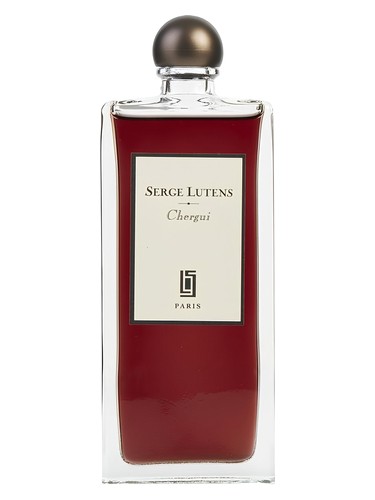
La Myrrhe sits in distinguished company among the similar fragrances listed: Chanel''s Coco and Coromandel, fellow Lutens creations Arabie and Chergui, and the legendary Shalimar. What unites these fragrances is their shared amber-oriental DNA and their refusal to apologize for their intensity.
Where La Myrrhe distinguishes itself is in its singular focus on myrrh as the defining character. While Chergui explores honey and tobacco, and Arabie ventures into spice-route exoticism, La Myrrhe remains more meditative, more austere. It''s the contemplative monk where its siblings are the adventurous merchants.
The Bottom Line
With a rating of 4.08 out of 5 from 674 voters, La Myrrhe occupies an interesting position: well-regarded overall, yet divisive in individual experience. This apparent contradiction makes sense when you consider that those who love it likely love it intensely, while those who don''t simply move on rather than rating it poorly.
Should you try La Myrrhe? Yes, if you have any interest in incense fragrances, if you collect Serge Lutens, or if you''re simply curious about what "mummified" might smell like as a compliment. No, if you prefer fresh, clean, or conventionally pretty fragrances, or if you need something safe for professional environments.
La Myrrhe isn''t about playing it safe—it never was. Nearly thirty years after its release, it remains as challenging and uncompromising as the day it was created. In an era of focus-grouped, mass-appeal releases, there''s something almost defiant about a fragrance that simply refuses to care whether you like it or not.
AI-generated editorial review