First Impressions
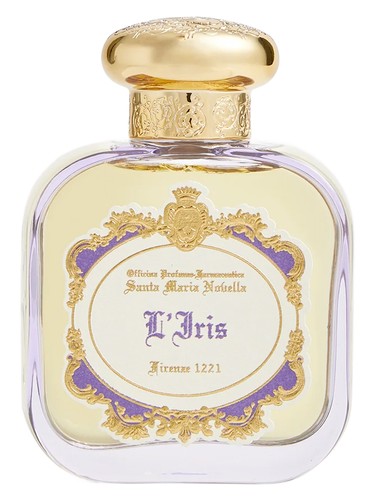
The first spray of L''Iris is a study in contrasts—bright neroli sunshine cut with an unexpected tingle of Sichuan pepper, creating an opening that feels both ladylike and delightfully unpredictable. This is no shy violet; Santa Maria Novella, drawing from nearly 800 years of perfumery tradition, announces this 2022 creation with confidence. Within moments, that initial sparkle settles into something softer, revealing the fragrance''s true identity: this is powder personified, but powder reimagined for those who''ve long dismissed the accord as dated or too overtly retro.
There''s an intelligence to this composition that becomes apparent immediately. The neroli provides luminosity without veering citrus-forward, while the Sichuan pepper—an unusual choice for a feminine iris composition—adds a subtle effervescence that keeps the opening from feeling too polite. It''s the olfactory equivalent of a perfectly tailored linen blazer: classic, refined, but with just enough edge to feel contemporary.
The Scent Profile
L''Iris unfolds in graceful waves, each phase revealing new dimensions while maintaining an unwavering allegiance to its powdery iris heart. The opening neroli and Sichuan pepper combination lasts perhaps twenty minutes—long enough to intrigue, brief enough not to overstay. That citrus element, which accounts for 67% of the overall accord profile, provides the scaffolding upon which everything else is built.
As the fragrance transitions into its heart, a triumvirate of white florals emerges: magnolia, jasmine, and geranium. This is where L''Iris truly distinguishes itself. Rather than allowing these traditionally potent notes to dominate, they''re rendered translucent, almost watercolor-like. The magnolia brings creamy softness, the jasmine adds subtle indolic depth without headiness, and the geranium—often a wildcard—contributes a green, slightly rosy facet that bridges the bright opening to the powdery base.
The floral accord registers at 86%, with white florals specifically at 81%, yet there''s no sense of being smothered by petals. These florals serve the iris rather than competing with it, creating what feels like a complete garden rather than a single bloom study.
Then comes the base, and here is where Santa Maria Novella''s expertise truly shines. The iris note, which dominates at 100% of the main accord profile, is supported by musk and ambergris in a way that feels simultaneously vintage and modern. This isn''t the sharp, metallic iris of some contemporary interpretations, nor is it the root-vegetable earthiness that can sometimes overwhelm. Instead, it''s soft, talc-like, reminiscent of expensive cosmetics and silk linings. The powdery accord, measured at 91%, creates an enveloping cloud that sits close to the skin—intimate rather than projecting.
The ambergris adds subtle salinity and warmth, preventing the composition from becoming too airy or ethereal, while the musk provides that skin-like quality that makes powdery fragrances feel like a second skin rather than an applied scent.
Character & Occasion
This is definitively a spring fragrance—the community data confirms what the nose knows, rating it 100% suitable for the season. There''s something about L''Iris that captures that particular moment when winter finally breaks, when you can leave the house without a heavy coat, when light fabrics and soft textures feel right again.
That said, it demonstrates surprising versatility across seasons: 59% find it appropriate for summer, 56% for fall, with even 36% wearing it in winter. This adaptability likely stems from its moderate presence and that fresh spicy element (65%) which adds just enough warmth to prevent it from feeling too delicate in cooler months.
The day/night split is more decisive: 82% recommend it for daytime wear versus just 31% for evening. This isn''t a fragrance that commands attention in a dimly lit restaurant or theater. Instead, it excels in natural light—office meetings, weekend brunches, gallery openings, garden parties. It''s the fragrance of competence and quiet confidence, of someone who doesn''t need to announce their arrival.
Community Verdict
With a 4.16 out of 5 rating from 527 votes, L''Iris has clearly resonated with those who''ve experienced it. This is a solidly above-average rating that suggests broad appeal while acknowledging this isn''t a crowd-pleaser in the universal sense. The relatively specific nature of powdery iris fragrances means they naturally divide opinion—you either love this aesthetic or you don''t.
What the rating suggests is that for those who appreciate this genre, Santa Maria Novella has delivered something genuinely compelling. The sample size of over 500 reviews provides statistical confidence that this isn''t a niche darling with only a handful of devotees, but rather a fragrance that''s found its audience and delivered on its promises.
How It Compares
The comparison fragrances tell an interesting story. Being mentioned alongside Frédéric Malle''s Iris Poudre immediately establishes L''Iris in exalted company—that''s considered by many to be the benchmark powdery iris. The inclusion of L''Eau d''Hiver (also Malle) and Diptyque''s Fleur de Peau suggests a family resemblance to those soft, skin-like compositions that prioritize intimacy over projection.
More intriguing is the connection to Hermès Un Jardin Sur Le Nil and Diptyque''s Orphéon—both greener, more unconventional compositions. This suggests L''Iris occupies interesting middle ground: more accessible than Iris Poudre''s austerity, more sophisticated than straightforward floral powders, with enough freshness to appeal to those who typically avoid overtly vintage-feeling fragrances.
The Bottom Line
L''Iris represents Santa Maria Novella''s ability to honor tradition while speaking to contemporary tastes. At a 4.16 rating, it''s not revolutionary, but it is exceptionally well-executed—and in the crowded iris category, that distinction matters. This is a fragrance that understands its assignment and delivers with grace.
Who should seek this out? Anyone looking for a refined spring signature, those who love powdery accords but want something less severe than the genre typically offers, and anyone curious about what nearly eight centuries of perfumery knowledge looks like in modern form. It''s particularly well-suited to those who prefer fragrances that enhance rather than announce, that feel like part of your personal style rather than a separate accessory.
The unknowns around concentration might frustrate some, but the performance appears adequate based on community satisfaction. This is a fragrance to experience on skin, in natural light, on a warming spring day—exactly as intended.
AI-generated editorial review