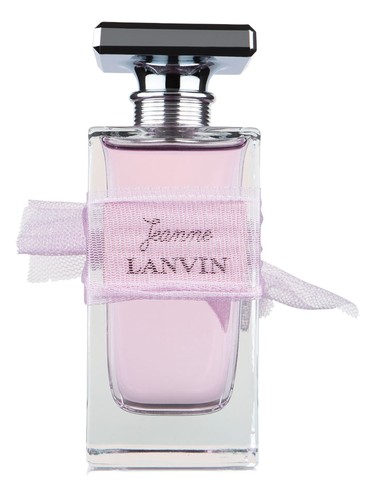
First Impressions
The first spray of Jeanne Lanvin announces itself with an exuberant burst of blackberry and pear, a combination that feels both sophisticated and playful. There''s an immediate juiciness here—not the cloying sweetness of candy, but rather the bright, slightly tart quality of fresh berries plucked at peak ripeness. A whisper of lemon cuts through the fruity abundance, adding just enough citrus sparkle to keep the opening from veering into dessert territory. This is fruit with polish, presented on fine china rather than in a market basket.
Named for the fashion house''s visionary founder, this 2008 release clearly aims to capture a certain French femininity—lighthearted yet refined, sweet but never saccharine. The impression is one of optimism bottled, the olfactory equivalent of a spring dress in berry-stained silk.
The Scent Profile
The heart reveals where Jeanne Lanvin truly establishes its character. As the initial fruit fanfare settles, raspberry joins the composition, layering jammy depth onto the brighter blackberry opening. This berry duo forms the backbone of the fragrance, accounting for that dominant 100% fruity accord that defines the scent''s personality.
But this isn''t a fruit soliflore. Peony and rose emerge to provide floral structure, their petals lending a soft, powdery quality that tempers the sweetness. Freesia adds a delicate, almost soapy cleanliness—the kind that evokes freshly laundered linen or a well-appointed powder room. The florals never quite steal the spotlight from the fruit, but they do offer necessary balance, preventing the composition from reading as too juvenile or one-dimensional. That 41% rose and floral accord rating tells the story: these blooms are supporting players, not the stars.
The dry down brings musk, sandalwood, and amber into focus, though they whisper rather than shout. The sandalwood provides a creamy, slightly woody foundation, while amber adds warmth without heaviness. Musk keeps everything close to the skin, creating an intimate rather than projecting finish. This base doesn''t transform the fragrance dramatically—Jeanne Lanvin remains recognizably fruity-floral from start to finish—but these notes do give the scent enough structure to last beyond a fleeting impression.
Character & Occasion
The data tells a clear story about Jeanne Lanvin''s natural habitat: this is quintessentially a spring and summer daytime fragrance. With spring suitability at 90% and summer at 70%, compared to just 20% for fall and 16% for winter, this is a warm-weather companion through and through. That 100% day versus 12% night rating underscores its purpose—this isn''t the fragrance you reach for when getting ready for evening cocktails or a romantic dinner.
Instead, picture Jeanne Lanvin for office meetings where you want to project approachability rather than power, for weekend brunches with friends, for any occasion that calls for pleasant rather than provocative. The 28% fresh accord and 17% citrus elements give it enough crispness for professional settings, while the 58% sweet rating keeps it undeniably feminine and soft.
This is a fragrance for someone who wants to smell nice—and that''s not a criticism, but a recognition of purpose. It''s the olfactory equivalent of good manners: agreeable, inoffensive, appropriate for family gatherings and conservative environments where you don''t want your fragrance to make a statement on your behalf.
Community Verdict
The fragrance community''s response to Jeanne Lanvin sits squarely in "modest appreciation" territory. With a sentiment score of 6.5/10 based on 24 opinions, it garners respect but not enthusiasm. The rating of 3.76 out of 5 from 4,338 votes reinforces this middle-ground position—solidly above average, but not inspiring devoted fans to sing its praises.
Community members acknowledge its place within the respected Lanvin fragrance legacy and appreciate its elegant versatility and attractive presentation. These are the fragrance equivalent of "nice person" compliments—genuine but not particularly distinctive.
The cons are telling: limited specific discussion and detailed reviews, with the fragrance appearing less frequently in collection mentions compared to its competitors. This suggests Jeanne Lanvin occupies that tricky space of being pleasant enough to keep but not compelling enough to talk about. It''s described as suitable for formal occasions, work meetings, and family gatherings requiring inoffensive scents—all contexts where "safe" trumps "memorable."
How It Compares
Positioned alongside Nina by Nina Ricci, Chance Eau Tendre by Chanel, and Dolce & Gabbana''s L''Imperatrice 3, Jeanne Lanvin runs in competitive company. These are all fruit-forward feminine fragrances aimed at daytime wear, but most of its companions enjoy stronger brand recognition or more distinctive compositions. Nina has its apple-centric whimsy and fairy-tale bottle, while Chance Eau Tendre benefits from the Chanel prestige and more nuanced construction.
Jeanne Lanvin holds its own in quality but struggles to carve out a unique identity. It''s prettier than generic fruity florals but less memorable than its designer peers.
The Bottom Line
Jeanne Lanvin is a well-executed fruity floral that does exactly what it sets out to do—and perhaps that''s both its strength and limitation. If you''re seeking an easy-wearing, berry-bright fragrance for spring and summer days, this delivers without drama. The blackberry and pear opening is genuinely lovely, and the overall composition balances sweetness with enough floral and fresh elements to maintain sophistication.
However, at this price point in the designer fragrance category, you''re competing with fragrances that offer either more complexity or stronger brand cachet. The modest community engagement suggests this is a fragrance more often liked than loved, worn but not treasured.
Who should try it? Those seeking an understated daytime scent for conservative environments, berry fragrance lovers who want sophistication over playfulness, or anyone building a versatile warm-weather rotation who values pleasant reliability over distinctive character. Just don''t expect it to become your signature—or the fragrance people ask you about.
AI-generated editorial review