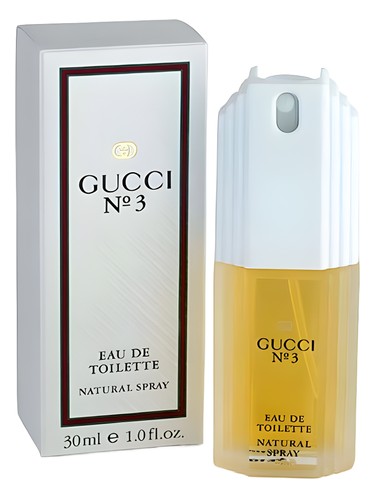
First Impressions
The first spray of Gucci No 3 is an exercise in contrasts—a verdant slap of green leaves and coriander that immediately announces this is no demure floral. There''s an aldehydic brightness here, a soapy-champagne effervescence that recalls the great French classics, but it''s tempered by something decidedly more grounded. The bergamot weaves through like a citrus ribbon, but it''s those green notes that dominate, creating an opening that feels like crushing fresh stems between your fingers in a formal garden. This is 1985 bottled: the era when power dressing met femininity, when shoulder pads didn''t preclude sensuality, and when a fragrance could be both crisp and opulent without apology.
The Scent Profile
Gucci No 3 unfolds like a carefully orchestrated performance in three acts. The opening movement—aldehydes, coriander, green leaves, and bergamot—creates what can only be described as a sparkling green canopy. The aldehydes provide that vintage lift, that particular kind of clean brightness that modern fragrances often shy away from, while the coriander adds an herbal, slightly spicy edge that keeps the composition from veering into simple freshness.
As the top notes settle, the heart reveals its true ambition: a white floral bouquet of considerable presence. Orris root lends a powdery, aristocratic quality, its earthy-iris character forming a bridge between the green opening and the floral heart. Tuberose and jasmine bring their characteristic richness—creamy, heady, bordering on indolic—while narcissus adds a greener, slightly honeyed facet. Rose and lily-of-the-valley weave through with their own distinct personalities, the rose providing classic elegance, the lily-of-the-valley contributing a crystalline dewiness. This isn''t a shy floral whisper; this is a full-throated declaration.
The base is where Gucci No 3 reveals its earthy soul. Oakmoss—that hallmark of the great chypre tradition—provides a damp, forest-floor foundation that''s become increasingly rare in modern perfumery. Leather adds an animalic edge, a suggestion of refinement and structure. Vetiver brings its smoky, rooty character, while patchouli contributes depth and a touch of darkness. Musk and amber round everything out with warmth and skin-like intimacy, creating a dry down that''s simultaneously earthy and comforting.
Character & Occasion
The data tells a story here: this is predominantly a fall fragrance (70%), though it performs admirably in spring (57%) and winter (55%). Summer, at 48%, is its least natural home—understandable given the substantial white floral heart and earthy base. This is a fragrance that thrives when there''s a chill in the air, when you want something with presence but not oppressive heaviness.
It''s overwhelmingly suited for daytime wear (100%), which speaks to its fundamental character: polished, professional, put-together. Yet it transitions to evening occasions with 63% confidence, suggesting versatility for the woman who moves from boardroom to dinner without changing her scent signature. This is the fragrance equivalent of a perfectly tailored blazer—impeccably appropriate yet undeniably sophisticated.
The dominant accords paint a clear picture: white floral at full strength (100%), supported by green (92%) and earthy (91%) elements. The aromatic (77%) and woody (71%) facets add complexity, while the aldehydic character (57%) provides that vintage sophistication. This isn''t a fragrance for the faint of heart or those seeking safe, crowd-pleasing sweetness. It''s for the woman who appreciates structure, who understands that femininity can be both soft and strong.
Community Verdict
With a rating of 4.34 out of 5 based on 460 votes, Gucci No 3 has earned genuine admiration from those who''ve experienced it. This is a respectable showing, particularly for a fragrance from 1985 that hasn''t necessarily maintained the same cultural visibility as some of its contemporaries. The rating suggests a perfume that rewards those who seek it out, that delivers on its promise of quality and character. It''s not a universally crowd-pleasing score—and frankly, it shouldn''t be. Fragrances with this much personality rarely achieve bland consensus; they inspire devotion from those who understand them.
How It Compares
Gucci No 3 exists in conversation with some of the most revered fragrances in the canon. Its kinship with Miss Dior, Chanel No 19, Knowing by Estée Lauder, First by Van Cleef & Arpels, and Ysatis by Givenchy places it firmly in the grand tradition of sophisticated, complex women''s fragrances from the 1980s. Like Chanel No 19, it embraces green notes and aldehydes with confidence. It shares Knowing''s earthy depth and First''s white floral opulence. Among these distinguished peers, Gucci No 3 distinguishes itself with its particular balance—perhaps greener than Miss Dior, earthier than First, more approachable than Ysatis. It occupies a sweet spot for those seeking vintage character with enough restraint for modern sensibilities.
The Bottom Line
Gucci No 3 is a fragrance that demands—and deserves—reconsideration. In an era when white florals often arrive drowned in fruit or vanilla, here''s one that stands on its own earthy, green foundation. The 4.34 rating from 460 voters represents more than statistical approval; it''s a testament to enduring quality. This isn''t the easiest fragrance to wear, nor the most immediately gratifying. It requires a wearer who appreciates complexity, who doesn''t mind standing out, who understands that true elegance sometimes means choosing character over comfort.
Should you seek it out? If you''ve ever felt that modern fragrances lack backbone, if you treasure your vintage Guerlains and Carons, if you believe oakmoss is perfumery''s most tragic casualty, then yes. If you''re curious about what sophisticated femininity smelled like before everything became berries and gourmands, absolutely. This is a fragrance for the vintage-curious, the chypre lover, the woman who wants her presence felt before she enters the room. It''s not perfect, but perfection is often boring. Gucci No 3 is anything but.
AI-generated editorial review