First Impressions
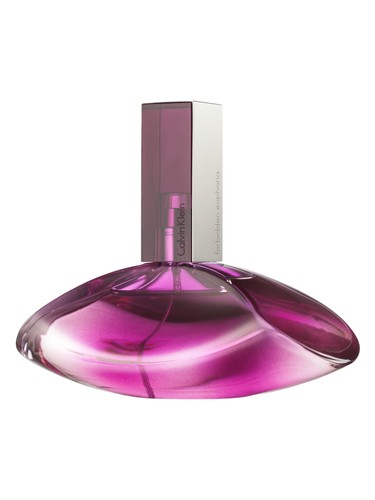
The moment Forbidden Euphoria touches skin, subtlety exits the room. This is raspberry in full bloom—not the tart, slightly jammy note you might find in niche perfumery, but a plush, candy-sweet interpretation that announces itself with confidence. Mandarin orange adds a citric sparkle, while peach blossom softens the edges with its fuzzy, almost creamy texture. If the original Euphoria from 2005 leaned into sultry, mysterious pomegranate, this 2011 flanker pivots entirely, embracing an unabashedly fruity character that dominates from the first spray. It''s the kind of opening that makes you either smile widely or reach for something more restrained—there''s no middle ground here.
The Scent Profile
The fruity explosion that defines Forbidden Euphoria''s opening is no accident—it scores a perfect 100% on the fruity accord scale, and you feel it immediately. Raspberry leads the charge with a sweetness that borders on syrupy, tempered slightly by mandarin orange''s bright citrus lift. Peach blossom adds a delicate floralcy that hints at the garden waiting in the heart, though it struggles somewhat to be heard over raspberry''s enthusiastic performance.
As the fragrance settles into its heart, the floral chorus arrives with impressive strength—that 96% floral accord rating speaks truth. Orchid brings its characteristic creamy, slightly indolic richness, while peony adds a fresh, rosy softness that keeps things from becoming too heavy. Jasmine weaves through with its own sweet floralcy, though in this composition it plays more of a supporting role than star turn. The interplay between fruit and flowers here is the fragrance''s defining characteristic: neither element fully dominates, creating instead a fruit salad spritzed with fresh petals.
The base is where Forbidden Euphoria finally gains some sophistication. Patchouli—registering at 33% in the accord breakdown—provides an earthy foundation that the fruity-floral top desperately needs. It''s not the dark, mossy patchouli of vintage compositions, but rather a softer, sweeter interpretation that modern perfumery favors. Cashmere wood adds a subtle woodiness (43% woody accord) that creates warmth without heaviness, while musk (41% musky accord) wraps everything in a skin-like embrace. The overall sweetness remains pronounced at 78%, making this a fragrance that never fully sheds its dessert-like quality.
Character & Occasion
The data reveals something interesting: while Forbidden Euphoria shines brightest in fall (92%) and winter (82%), it maintains surprising versatility across seasons, with spring still registering at 66%. Only summer lags significantly at 34%—understandable given that sticky sweetness and heat rarely make comfortable companions. This is a cold-weather friend, the kind of scent you reach for when you want to feel enveloped in warmth and softness.
The day/night split tells an equally revealing story. At 100% for day wear, Forbidden Euphoria clearly lives its best life in sunshine and casual settings—brunch dates, shopping trips, office environments that permit a sweeter aesthetic. Yet that 83% night rating suggests it doesn''t completely fade when darkness falls. It''s not a nightclub or black-tie fragrance, but it handles dinner dates and evening gatherings with charm.
This is a fragrance for someone who embraces femininity without apology, who appreciates sweetness without requiring complexity, and who prefers approachability over mystique. It skews younger in sensibility, though age matters less than attitude.
Community Verdict
With 2,614 votes landing at a solid 3.9 out of 5, Forbidden Euphoria occupies comfortable middle ground. This isn''t a polarizing masterpiece that some adore and others despise, nor is it a forgettable commercial release that generates shrugs. The rating suggests a fragrance that delivers on its promises—if you want fruity, sweet, and floral, you''ll get exactly that. The substantial vote count indicates this isn''t a forgotten flanker gathering dust, but rather a scent that continues to find its audience over a decade after release.
How It Compares
The similar fragrances list reads like a who''s who of beloved fruity florals: Chanel''s Chance Eau Tendre, Viktor&Rolf''s Flowerbomb, Lancôme''s Trésor Midnight Rose, Dior''s J''adore, and Nina Ricci''s Nina. What''s notable is that most of these comparisons sit higher in both price point and prestige. Forbidden Euphoria plays in the same sandbox but at a fraction of the cost. It lacks the refined elegance of J''adore and the explosive sophistication of Flowerbomb, but it captures a similar spirit with unashamed accessibility. If those fragrances are the designer versions, this is the contemporary interpretation—less complex perhaps, but no less enjoyable for its target audience.
The Bottom Line
Forbidden Euphoria succeeds because it knows exactly what it is and never pretends otherwise. This is sweet, fruity, floral comfort in a bottle—unchallenging, unpretentious, and unapologetic. At 3.9 stars, the community confirms it''s a well-executed example of its genre, even if it won''t revolutionize your fragrance worldview.
For those building their first fragrance wardrobe or anyone seeking an affordable, crowd-pleasing scent for cooler months, Forbidden Euphoria delivers solid value. It won''t offend, won''t mystify, and won''t empty your wallet. Sometimes that''s exactly what you need. Just know that if you prefer your florals green and your fruits tart, this raspberry-laden celebration of sweetness might feel like too much of a good thing.
AI-generated editorial review