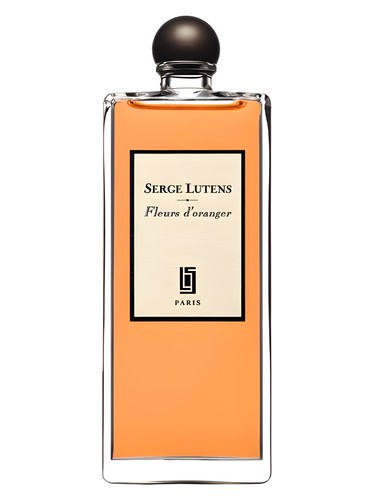
First Impressions
The first spray of Fleurs d''Oranger is an exercise in restraint and refinement. Serge Lutens, launching this composition in 1995, captured something rare: orange blossom in its most luminous, uncomplicated form. There''s an immediate brightness that fills the air—clean, almost startlingly pure—like stepping into a sunlit courtyard where the trees are heavy with white flowers. The neroli here isn''t drenched in syrup or smothered in supporting players; it simply exists, radiant and self-assured. This is the kind of opening that makes you pause, close your eyes, and just breathe.
The Scent Profile
While Serge Lutens keeps the specific note breakdown under wraps, the accord structure tells its own story. At 100%, white floral dominates with an authority that''s absolute yet never oppressive. The citrus element, registering at 39%, provides that characteristic neroli brightness—bitter-sweet, almost effervescent, with the clean sharpness of orange peel mixed with the honeyed softness of the blossoms themselves.
As the fragrance unfolds, a tuberose accord (26%) adds subtle creaminess without veering into the heady, narcotic territory that tuberose often claims. This is tuberose as a supporting actor, lending body and a whisper of indolic richness that keeps the composition from feeling too linear or thin. More intriguing is the animalic presence at 20%—not overwhelming, but enough to suggest skin, warmth, something living beneath all that pristine florality. It''s the difference between smelling cut flowers in a vase and blossoms still on the branch, warmed by body heat and afternoon sun.
The floral accord (14%) and sweet notes (13%) round out the experience, adding dimension without drama. This isn''t a fragrance that screams or seduces through dramatic evolution. Instead, it exists as a coherent whole from start to finish—a meditation on orange blossom rather than a story with distinct chapters.
Character & Occasion
Fleurs d''Oranger wears like second-skin sophistication. Rated for all seasons, it possesses that rare quality of adaptability—light enough for summer''s heat yet substantial enough not to disappear in cooler weather. The community consensus points strongly toward daytime casual wear, spring and summer seasons, and office environments where subtlety is valued over projection.
This is decidedly feminine in its original conception, though the clean neroli execution could certainly transcend traditional gender boundaries for those drawn to transparent white florals. It''s the kind of fragrance that works for the woman who wants to smell beautiful without announcing it to everyone in the elevator. Think weekend brunches, gallery openings, working from a sun-drenched café—moments when you want to feel polished but not performed.
The complete absence of day/night preference data (both at 0%) suggests a fragrance that''s more utilitarian than transformative, more about personal pleasure than making an impression at evening events. This is not your date-night drama or cocktail-hour statement.
Community Verdict
The Reddit r/fragrance community, drawing from 66 opinions, lands at a positive sentiment score of 7.5/10—appreciation tempered with notable reservations. The praise is consistent and specific: the neroli execution is clean and beautiful, the scent profile versatile and elegant, and the ingredient quality unmistakably high. This is recognized as quality work from a respected house.
But here''s where honesty matters: the longevity is disappointing. "Fades dramatically within a few hours" isn''t just one person''s experience—it''s the consistent chorus. The projection and sillage are minimal, and that fragile neroli note, so beautiful in the opening, simply doesn''t sustain. For a fragrance with a 3.99/5 rating from over 4,000 voters, this performance issue is the clear Achilles heel.
Users note that frequent reapplication is necessary to maintain presence throughout the day. In practical terms, this means keeping the bottle with you or accepting that Fleurs d''Oranger is a morning companion that will have quietly exited by afternoon.
How It Compares
The similar fragrances list reads like a who''s who of beloved feminines: Pure Poison by Dior, Alien by Mugler, Poeme by Lancôme, Coco Mademoiselle by Chanel, and Narciso Rodriguez For Her. What''s interesting is how different these actually are from each other and from Fleurs d''Oranger. Where Alien leans into woody amber intensity and Pure Poison explores white florals with more dramatic sweetness, Serge Lutens offers something more minimalist and introspective.
This is the quiet one in a room of compelling personalities—less immediately striking, perhaps, but possessed of a refinement that grows more appealing the longer you know it. If those other fragrances are declarations, Fleurs d''Oranger is a whisper.
The Bottom Line
A 3.99 rating from over 4,000 voters places Fleurs d''Oranger in solid "very good" territory, just shy of masterpiece status. That missing point likely reflects the longevity issues rather than any fault in composition or execution. This is a fragrance that does what it sets out to do beautifully—it just doesn''t do it for very long.
Who should try it? Anyone who loves neroli in its purest form, who values elegance over impact, and who doesn''t mind a fragrance that requires nurturing rather than simply wearing. It''s ideal for those building a wardrobe of subtle, sophisticated scents for professional or casual daytime wear.
Should you buy a full bottle? That depends on your relationship with reapplication. If you enjoy the ritual of refreshing your scent throughout the day, Fleurs d''Oranger offers genuine beauty. If you need something that performs from morning meeting to evening commute without intervention, look elsewhere. At nearly three decades old, this Serge Lutens remains relevant not because it''s revolutionary, but because it''s simply, genuinely lovely—even if that loveliness is heartbreakingly brief.
AI-generated editorial review