First Impressions
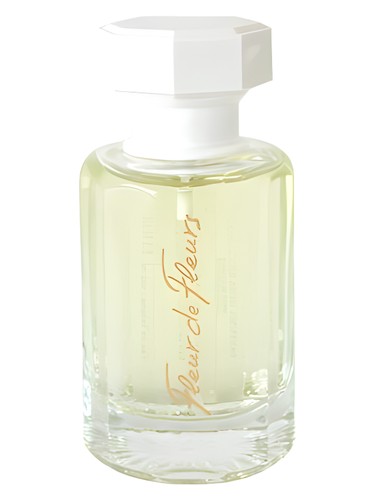
The first spray of Fleur de Fleurs announces itself with a crisp, green brilliance—like stepping through French doors onto a terrace overlooking an awakening garden. There''s an immediate sparkle from aldehydes, but this isn''t the soapy shimmer of classic Chanel territory. Instead, the aldehydes act as sunlight on dew, illuminating rather than dominating. Beneath that effervescence, crushed stems and citrus zest create a freshness that feels both manicured and alive. This is Nina Ricci in 1982, channeling the tail end of the grande dame era while hinting at the brighter, more approachable florals that would define the decade ahead.
The name—"Flower of Flowers"—might sound grandiose, but there''s truth in advertising here. This is an unabashedly floral composition, maxing out at 100% on the floral accord scale, yet it never feels cloying or one-dimensional. The greenness (63%) and fresh qualities (60%) keep everything crisp, while a subtle aldehydic backbone (33%) provides just enough vintage glamour to remind you this isn''t a modern department store offering.
The Scent Profile
The opening movement balances brightness with bite. Aldehydes provide the sparkle, but they''re tempered immediately by green notes that smell of snapped stems and crushed leaves. Bergamot and lemon add citrus clarity without going into cologne territory—they''re supporting players here, not stars. This is a calculated restraint that sets Fleur de Fleurs apart from many of its era; the top notes establish elegance without demanding attention.
The heart is where the composition earns its name. This is a white floral garden viewed from above, each bloom distinct yet harmonious. Lily-of-the-valley and hyacinth provide the core greenness, their cool, aqueous quality preventing the composition from becoming too heady. Lilac and magnolia add powdery sweetness, while cyclamen contributes a subtle honey-like nuance. Iris lends a rooty, almost earthy dimension that grounds the brighter florals, and ylang-ylang brings tropical creaminess without overwhelming. Jasmine weaves through everything, indolic but never overtly animalic. The surprise is rosemary—a fresh, herbal note that reinforces the garden setting and adds an unexpected aromatic bite.
The drydown shifts the narrative from flower bed to boudoir, though not dramatically. Sandalwood provides a creamy, woody foundation that feels elegant rather than heavy. Musk adds soft radiance, while civet—that notorious animalic note banned or restricted in modern perfumery—gives everything a subtle pulse of warmth and sensuality. It''s restrained compared to older perfumes, but it''s there, reminding you this is a fragrance from an era when perfumes weren''t afraid of a little wildness beneath their polished exterior.
Character & Occasion
The community data tells a clear story: Fleur de Fleurs is a spring fragrance first and foremost (99%), with strong summer showings (64%) and moderate versatility into fall (43%). Winter wearers are rare (33%), and for good reason—this fragrance thrives in warmth, when its green freshness feels life-affirming rather than austere.
It''s overwhelmingly a daytime scent (100% day versus 31% night), perfect for garden parties, outdoor lunches, office settings where you want to project polish without power-playing, or simply running errands while feeling composed. This isn''t a fragrance for dramatic entrances or intimate dinners; it''s for moments when you want to be effortlessly present, not memorable for your scent alone.
The white floral character (39%) and fresh spicy elements (34%) add enough complexity to keep things interesting through a long wear, but the overall impression remains one of refined approachability. This is a fragrance for someone who appreciates vintage aesthetics but doesn''t want to smell like they raided their grandmother''s vanity.
Community Verdict
With a solid 4.13 out of 5 stars from 379 votes, Fleur de Fleurs sits comfortably in "very good" territory. This isn''t a cult masterpiece with a tiny devoted following, nor is it universally adored. The rating suggests a fragrance that delivers on its promises without necessarily converting skeptics of the green floral genre. For those who love spring gardens, aldehydic florals, and 1980s elegance done with restraint, this is clearly a winner. The relatively robust voting base indicates this isn''t an obscure rarity—people are finding it, trying it, and mostly enjoying what they discover.
How It Compares
Fleur de Fleurs sits in distinguished company. Its kinship with First by Van Cleef & Arpels and Fidji by Guy Laroche places it firmly in the green floral family, while connections to Rive Gauche and the later Paris by Yves Saint Laurent suggest a bridge between different eras of French perfumery. The comparison to Diorissimo is particularly telling—both celebrate lily-of-the-valley with aldehydic brightness, though Fleur de Fleurs casts a wider botanical net.
Where it stands apart is in balance. It''s greener than First, more approachable than Rive Gauche, less singular in focus than Diorissimo. This breadth is both its strength and perhaps why it isn''t more widely discussed—it excels at being very good across multiple dimensions rather than being exceptional in one specific way.
The Bottom Line
Fleur de Fleurs deserves more attention than it receives. At 4.13 stars, it''s clearly satisfying those who seek it out, but it hasn''t achieved the cult status of some of its contemporaries. This may be precisely because it''s so wearable—there''s nothing challenging or controversial here, just excellent execution of the green floral brief.
If you''re drawn to spring gardens, vintage florals without heavy powder, or fragrances that feel polished without being formal, this deserves a place on your sampling list. It''s particularly appealing for those who find modern fresh florals too synthetic or simplistic but don''t want the overwhelming heft of true vintage powerhouses. The civet in the base means this still has some vintage DNA, but it''s civilized—a garden party, not a jungle.
Availability may be the biggest challenge; Nina Ricci fragrances from this era can be elusive. But for lovers of the genre, Fleur de Fleurs offers something genuinely lovely: a snapshot of 1982''s interpretation of timeless spring elegance, executed with skill and wearing with unexpected grace decades later.
AI-generated editorial review