First Impressions
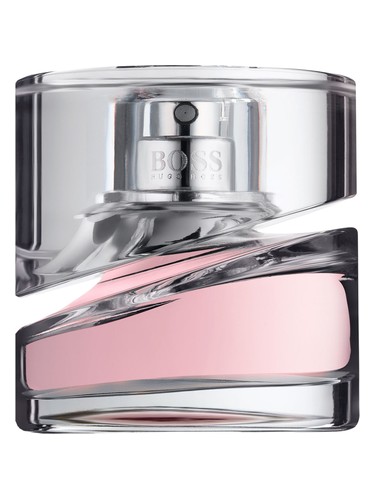
The first spray of Hugo Boss Femme announces itself with an unapologetic burst of brightness—tangerine and black currant colliding with freesia in a fizzy, almost effervescent opening. This isn''t a fragrance that whispers; it arrives with the confidence of cut flowers displayed in a sun-drenched room, their stems freshly trimmed and dripping with water. There''s an immediate sweetness here, the kind that feels young and optimistic, balanced by just enough citrus to keep it from veering into candy territory. It''s the olfactory equivalent of a pink angular bottle catching light on a dresser—pretty, modern for its time, and designed to be noticed.
The Scent Profile
Hugo Boss Femme builds its identity on a foundation of white florals that dominates at 95% of its accord profile, with the full floral character registering at maximum intensity. That opening trio of freesia, tangerine, and black currant creates a juicy, slightly tart introduction that lasts just long enough to make you smile before the heart reveals its true intentions.
The middle phase is where Femme shows its classical training. Bulgarian rose takes center stage alongside lily and jasmine, creating a bouquet that feels both opulent and approachable. The rose accord registers at 61%, substantial but not overwhelming, supported by those white floral companions that soften its edges. This isn''t the jammy, syrupy rose of Middle Eastern perfumery or the green, thorny rose of chypres—it''s a cosmetic, powdery interpretation that speaks directly to the mid-2000s aesthetic when fragrances like this were designed for maximum commercial appeal.
The base is where Femme takes an unexpected turn. Lemon tree and apricot join amber to create a finish that''s simultaneously woody-citrus and fruity-sweet. That 58% fruity accord, barely perceptible in the opening, blooms here with the apricot lending a soft, fuzzy quality that merges with amber''s warmth. The lemon tree (not just lemon, but the whole tree—leaves, wood, and all) adds a subtle earthiness that grounds what could otherwise float away into pure confection. It''s a clever construction, even if the execution feels more budget-friendly than luxury.
Character & Occasion
Hugo Boss Femme positions itself as an all-season fragrance, and the composition supports this versatility. The citrus elements (65% of the accord profile) provide enough freshness for warmer months, while the amber base and soft spicy notes (39%) offer substance when temperatures drop. This is a fragrance without strong seasonal allegiance—it adapts rather than dominates.
The lack of specific day/night data in the records suggests Femme occupies that versatile middle ground, though its bright, optimistic character naturally leans toward daylight hours. This is office-appropriate, class-appropriate, coffee-date-appropriate. It''s the fragrance equivalent of a well-chosen dress that works for multiple occasions without being particularly memorable at any of them.
The target demographic becomes clear when you consider the composition and price point together: young women, likely high school through early twenties, seeking something more sophisticated than body spray but not ready for (or interested in) niche complexity. Femme offered an accessible entry point into white floral territory, a training-wheels version of the more expensive compositions it clearly admired.
Community Verdict
The Reddit community''s mixed sentiment (5.5 out of 10) tells a story of nostalgia complicated by practical reality. With only 8 opinions available, the sample size is small but revealing. Users remember Femme fondly for its fruity-sweet profile and that distinctive pink angular bottle design, speaking to its effectiveness as a casual, everyday fragrance for young women on a budget.
But here''s the problem that dominates the conversation: Femme appears to be discontinued or extraordinarily difficult to locate. Multiple users express frustration with the scarcity and lack of online documentation, making verification or repurchase nearly impossible. This isn''t just "hard to find"—it''s entered that liminal space where a fragrance becomes more memory than reality, discussed in past tense by people who wish they''d bought a backup bottle.
The broader rating of 3.91 out of 5 from 4,625 votes on Fragrantica suggests Femme achieved solid if unspectacular reception during its availability. It was well-liked, not loved. Competent, not compelling. The kind of fragrance that served its purpose admirably without inspiring devotion—which may explain why Hugo Boss felt comfortable discontinuing it.
How It Compares
The similar fragrances list reads like a who''s-who of commercial white floral success: J''adore by Dior, Chance Eau Tendre by Chanel, Chloé Eau de Parfum, Pure Poison by Dior, Bright Crystal by Versace. These are the templates Femme studied, the aesthetic it aspired to capture at a fraction of the price. And by most accounts, it came reasonably close.
Where those luxury counterparts offer superior longevity, more refined ingredient quality, and greater complexity, Femme delivered the essential experience—that white floral-fruity sweetness that defined feminine fragrance in the 2000s. It was the accessible version of an expensive trend, and there''s no shame in that positioning. For someone exploring the category, Femme would have provided a representative experience without the financial commitment.
The Bottom Line
Hugo Boss Femme occupies an interesting space in fragrance history: moderately successful in its time, fondly remembered by those who wore it, yet now nearly impossible to experience firsthand. That 3.91 rating reflects its competent execution—good enough to recommend, not distinctive enough to mourn deeply.
If you somehow stumble upon a bottle, it''s worth exploring as a time capsule of mid-2000s fragrance trends. The white floral-fruity combination, the emphasis on accessibility over artistry, the pink packaging—it all speaks to a specific moment in commercial perfumery. For those who wore it in high school, it carries nostalgic value that transcends the liquid itself.
But for most, Femme''s greatest value is as a reference point. If you love those similar fragrances listed above, you understand what Femme was attempting. It walked so others could run, offering an affordable interpretation of luxury white florals to a generation just beginning their fragrance journeys. That it''s now gone doesn''t diminish what it accomplished: being exactly what it needed to be, when it needed to be it, for the people who needed it most.
AI-generated editorial review