First Impressions
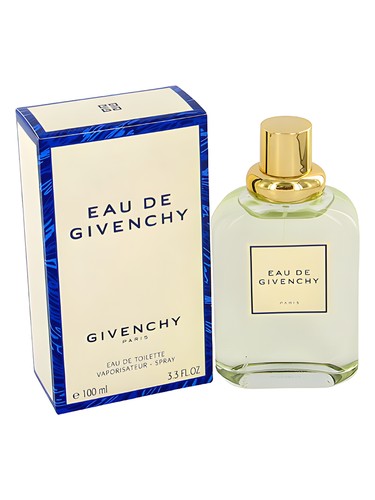
The first spray of Eau de Givenchy delivers a paradox in a bottle. A bright burst of grapefruit and bergamot mingles with an unexpected whisper of mint, creating an opening that feels both crisp and mysteriously soft. There''s fruit here—mandarin orange lending sweetness—but it''s tempered by a green freshness that keeps the citrus from veering too sunny. Within moments, you sense what''s coming: a tidal wave of white florals waiting just beneath the surface, patient and powerful. This is not a fragrance that announces itself quietly. It''s a 1980 statement piece, created in an era when perfumes were meant to fill rooms and turn heads, yet it carries a peculiar vulnerability that becomes apparent only after you''ve worn it for hours.
The Scent Profile
The heart of Eau de Givenchy is where it reveals its true ambitions—and its complications. Lily-of-the-valley dominates, supported by a sprawling garden of honeysuckle, narcissus, jasmine, orris root, cyclamen, ylang-ylang, rose, and tuberose. It''s an almost excessive abundance of white and yellow florals, the kind of composition that modern perfumery has largely abandoned in favor of restraint. The lily-of-the-valley brings a soapy, clean brightness, while the tuberose adds creamy depth and the narcissus contributes a green, slightly indolic edge. The orris root lends a powdery softness that prevents the bouquet from becoming too sharp, though the overall effect remains unapologetically bold.
This floral avalanche is grounded—barely—by a base of oakmoss, musk, cedar, and sandalwood. The oakmoss provides that classic chypre-adjacent character, earthy and slightly bitter, while the woods add structure without overwhelming the composition. The musk rounds everything out with a soft, skin-like warmth. The base feels almost like an afterthought compared to the florals, as if the perfumer knew that once you''ve committed to this many white flowers, there''s no point in pretending subtlety was ever the goal.
The accord breakdown tells the story clearly: white floral at full intensity, followed by green at 55%, citrus at 53%, and yellow floral at 52%. It''s woody enough (38%) to avoid being purely decorative, but make no mistake—this is a floral showcase first and foremost.
Character & Occasion
Eau de Givenchy knows its lane: spring claims 89% suitability, with summer following at 78%. This is a warm-weather fragrance that thrives when worn against bare skin, in gardens, during daytime hours. The data confirms it''s 100% a daytime scent, dropping to just 21% for evening wear. It''s too bright, too green-fresh for candlelit dinners or autumn evenings. Fall registers at only 28% suitable, and winter at 21%—numbers that reflect the fragrance''s fundamental character as a celebration of blooming things and sun-warmed citrus.
Who is this for? According to the performance data, that''s complicated. This isn''t a fragrance that works universally. It demands compatible skin chemistry, and when it doesn''t get it, the results can be disappointing or even off-putting.
Community Verdict
The community sentiment sits at 6.5 out of 10—decidedly mixed—and the reasons why reveal something fascinating about perfume''s deeply personal nature. Based on 36 opinions from the fragrance community, Eau de Givenchy emerges as a divisive creation that some wearers treasure and others struggle with.
The pros are compelling: admirers praise its unique and interesting scent profile, noting its iconic cultural significance in fragrance history. Those for whom it works report good longevity and performance, celebrating its distinctive character that stands out from contemporary offerings.
But the cons are equally significant and unusually specific. The overwhelming concern centers on skin chemistry compatibility. Multiple wearers report that while they personally enjoy the fragrance, it performs poorly on their skin or projects in ways that create unintended impressions. Some describe it as smelling sickly sweet or cheap on certain wearers—a damning assessment that suggests serious chemistry issues. There are projection problems, with the scent apparently translating differently to others than it does to the wearer themselves. Perhaps most tellingly, community members note it''s underrated and overlooked by the mainstream fragrance world.
The recommendation? This is best for personal enjoyment despite others'' opinions, for fragrance collectors and enthusiasts, and crucially, for those with compatible skin chemistry. It''s a gamble—one that pays off beautifully for some and disappoints others.
How It Compares
Eau de Givenchy sits in distinguished company: Anais Anais by Cacharel, Diorissimo by Dior, Arpège by Lanvin, and its Givenchy sibling Ysatis. Perhaps most intriguingly, it''s compared to 24 Faubourg by Hermès, suggesting it punches above its current reputation. These are classics, heavy-hitters from an era when white florals ruled. Where Diorissimo focuses purely on lily-of-the-valley and Anais Anais offers gentler romance, Eau de Givenchy goes for baroque abundance—more flowers, more complexity, more risk.
The Bottom Line
With a rating of 4.18 out of 5 from 519 votes, Eau de Givenchy commands respect despite—or perhaps because of—its polarizing nature. This is not a safe blind buy. It''s a fragrance that demands testing, patience, and honest self-assessment about whether your skin chemistry can handle its particular magic.
For those it works on, this is an underrated gem: a complex, culturally significant white floral with genuine character and staying power. For others, it may remain frustratingly incompatible, a beautiful idea that never quite translates. The truth is, you won''t know which camp you fall into until you try it. If you''re a collector of vintage-style florals, if you have the patience to test how it wears over hours, if you''re willing to risk the chemistry experiment—Eau de Givenchy might reward you with something genuinely special. Just don''t expect it to work miracles for everyone.
AI-generated editorial review