First Impressions
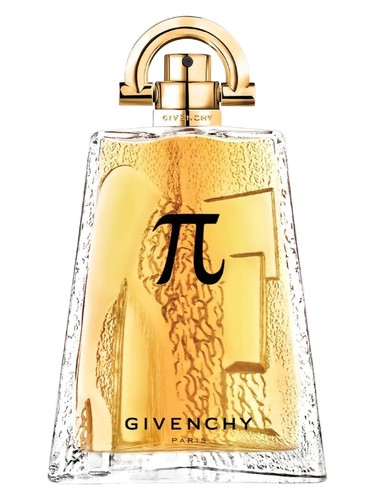
The first spray of Givenchy Pi delivers an unexpected contradiction: herbaceous brightness punctuated by aromatic complexity. Mandarin orange mingles with the green, almost medicinal snap of tarragon and rosemary, while basil adds an earthy whisper. This isn''t the opening you''d expect from a fragrance dominated by a vanilla accord at 100%—instead, it''s a brief, luminous meditation on Mediterranean herbs and citrus that sets the stage for something altogether different. Like the mathematical constant it''s named after, Pi presents an infinite series of calculations, though unlike its namesake, these equations resolve far more quickly than you might hope.
The Scent Profile
Those bright top notes—mandarin orange dancing with tarragon, rosemary, and basil—fade with notable haste, a recurring complaint that colors the community conversation around this 1998 masculine. What emerges in their wake is where Pi truly reveals its identity. The heart notes introduce anise with its sweet licorice character, softened by neroli''s honeyed orange blossom facets and the green floralcy of geranium and lily-of-the-valley. This middle phase bridges the aromatic opening with the destination Pi has always been traveling toward.
The base is where the fragrance finds its true voice—and where that dominant vanilla accord finally makes sense. Here, vanilla intertwines with almond and tonka bean to create a gourmand warmth that borders on edible. Benzoin adds resinous depth and amplifies the amber qualities (rated at 53% in the accord profile), while cedar provides just enough woody structure to prevent the composition from collapsing into pure dessert territory. The nutty facets (28% in the accord breakdown) come primarily from that almond note, which pairs seamlessly with the vanilla to create what many describe as an intimate, skin-like sweetness.
The evolution tells a story: from bright and herbal, through floral and anisic, to finally settle into a warm, vanillic embrace. The problem, as the community repeatedly notes, is that this journey happens too quickly and too quietly.
Character & Occasion
The seasonal data tells a clear story: this is emphatically a cold-weather fragrance. Winter scores a perfect 100%, with fall close behind at 92%. Spring drops to 38%, and summer limps in at just 18%. That vanilla-amber-almond base simply doesn''t want to compete with heat—it thrives in cooler air where sweet, warm fragrances provide comforting contrast to the chill.
The day/night breakdown is equally revealing: while Pi manages a respectable 61% for daytime wear, it truly comes alive at night with a 94% rating. This makes intuitive sense. The intimate projection that frustrates many wearers becomes an asset in close-quarters evening situations. Those date nights and intimate encounters that the community recommends? They''re not just marketing speak—they''re the natural habitat for a fragrance that refuses to broadcast beyond your personal space.
This is a masculine fragrance in the late-90s sense: sweet without being cloying, warm without being heavy, approachable without being generic. It sits comfortably in that era when men''s fragrances began embracing vanilla and gourmand elements more openly, paving the way for the sweeter masculines that would dominate the 2000s.
Community Verdict
The 34 community opinions paint a picture of affectionate frustration. With a sentiment score of 6.5/10—decidedly mixed—Pi inspires genuine love for what it is, tempered by disappointment in what it isn''t.
The praise is consistent: this is a beautiful, amazing scent with that compelling interplay of citrus, florals, and creamy vanilla-almond. It''s versatile enough for various occasions and remarkably affordable on the grey market. When it works, it''s intimate and sexy, perfect for those close-range moments.
But the criticisms are equally uniform and impossible to ignore. Longevity sits somewhere between 3-5 hours maximum, with projection that barely extends beyond the wearer''s skin. Multiple voices suspect reformulation since the early 2000s, suggesting the original formula packed more punch. Those gorgeous top notes vanish almost immediately, rushing toward base notes that, while pleasant, can feel heavier than the opening promises. Perhaps most frustrating: Pi only exists as an EDT, with no parfum or even EDP concentration available to address these performance issues.
The community''s pragmatic advice: buy it for the scent itself, but accept that you''ll need multiple sprays and frequent reapplication. Think of it as a fragrance for home wear, casual relaxation, or layering with other scents to boost performance. Set your expectations accordingly, and Pi rewards you. Expect projection and longevity, and you''ll be disappointed.
How It Compares
Pi''s similar fragrances list reads like a who''s who of sweet, crowd-pleasing masculines: Versace Eros, Jean Paul Gaultier Le Male, Tom Ford Tobacco Vanille, Mugler A*Men, and Dolce & Gabbana The One for Men. What''s telling is that several of these—particularly Eros and Le Male—are known for significantly stronger performance. Pi pioneered this sweet-vanilla-for-men territory in 1998, but its descendants learned to project their voices more effectively.
Against Tobacco Vanille, Pi is the affordable, lighter alternative. Next to A*Men''s chocolate patchouli intensity, Pi feels refined and restrained. It occupies a middle ground: sweeter and more approachable than traditional masculines, but less aggressive than the club-ready powerhouses that would follow.
The Bottom Line
That 4.16 rating from 8,844 votes tells you something important: despite its flaws, people genuinely like Givenchy Pi. This isn''t a niche curiosity or a polarizing oddity—it''s a broadly appealing fragrance hamstrung by execution issues.
Should you buy it? Yes, if you understand what you''re getting. At grey market prices, Pi offers remarkable value for a genuinely beautiful scent composition. It''s perfect for those who prefer subtle fragrances, anyone tired of overprojecting powerhouses, or collectors interested in late-90s sweet masculines. It excels in intimate settings, cool weather, and evening wear.
Skip it if you demand longevity and projection, if you''re seeking your signature scent for the office, or if frequent reapplication frustrates you. The performance issues are real, consistent, and apparently here to stay.
Givenchy Pi remains a beautiful equation with a disappointing solution—mathematically interesting, practically flawed, but somehow still worth calculating.
AI-generated editorial review