First Impressions
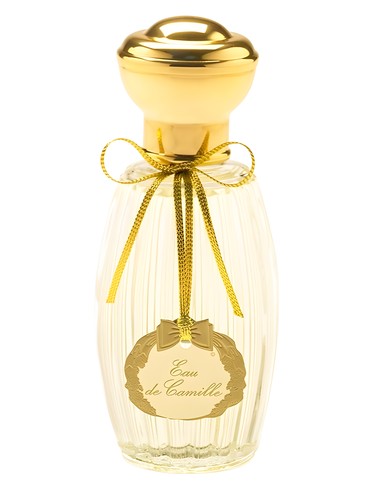
The first spray of Eau de Camille transports you to a dew-covered garden at sunrise, where white petals unfurl against a backdrop of crushed stems and verdant leaves. This is not a polite, powdered white floral—it arrives with an almost shocking greenness, the kind that makes you think of chlorophyll and sap rather than perfume counter propriety. Created by Goutal in 1983, Eau de Camille belongs to an era when femininity didn''t require softness, when a fragrance could be both delicate and assertively botanical.
The dominant white floral accord registers at full intensity, yet it''s the nearly-as-powerful green element (96%) that defines this composition''s character. There''s a crispness here, an almost ozonic quality (25%) that suggests morning air and wet grass rather than hothouse blooms. This isn''t a fragrance that announces itself from across a room—it creates an intimate atmosphere, a personal garden that moves with you.
The Scent Profile
Without specified note breakdowns, Eau de Camille reveals itself through its accord structure—and what a revealing structure it is. The white floral element dominates completely, but this is white floral filtered through a distinctly green lens. Imagine narcissus, lily of the valley, perhaps jasmine, but captured at dawn when their petals still hold the night''s coolness and the stems have been freshly cut.
That 96% green accord doesn''t simply support the florals—it challenges them, creating a tension that keeps the composition from drifting into conventional prettiness. This greenness has texture: it''s the snap of a stem, the bitter edge of leaves crushed between fingers, the chlorophyll-rich scent of a garden after rain. The 68% fresh accord amplifies this verdant quality, while a subtle 25% ozonic note adds an airy, almost mineral dimension that prevents the composition from feeling heavy or earth-bound.
As the fragrance develops, a 21% fruity undercurrent emerges—likely the natural sweetness that certain white florals possess rather than an obvious fruit note. It''s the kind of fruity-floral sweetness you might find in honeysuckle or certain jasmine varieties. A whisper of yellow floral (13%) adds complexity, perhaps suggesting narcissus or freesia, flowers that bridge the gap between white and gold, between innocence and indulgence.
Throughout its evolution, Eau de Camille maintains a remarkable consistency. This isn''t a fragrance of dramatic transformations but rather one of subtle shifts in emphasis, like watching light change across a garden over the course of a morning.
Character & Occasion
The data speaks unequivocally: Eau de Camille is a spring fragrance first and foremost (85%), with strong summer appeal (69%). It''s purpose-built for renewal, for the season when white flowers actually bloom and green things push through soil. The modest fall showing (23%) and near-absence in winter (11%) makes perfect sense—this is not a fragrance that thrives in cold weather or benefits from layering under heavy clothes.
The day/night breakdown is even more decisive: 100% day, a mere 12% night. Eau de Camille is unabashedly diurnal, meant for sunlit hours and outdoor settings. This is a fragrance for garden parties, outdoor lunches, morning walks through parks, bicycle rides along tree-lined paths. Wearing it to an evening event would feel as incongruous as showing up in tennis whites to a cocktail party.
Who is this for? Someone who appreciates botanical accuracy over abstract beauty, who finds romance in greenhouses and conservatories rather than boudoirs. It suits those who wear femininity lightly, who prefer their florals unsweetened and their beauty unadorned.
Community Verdict
Here''s where we encounter a frustrating gap: the provided Reddit community data doesn''t actually discuss Eau de Camille, instead covering an entirely different fragrance experience. With 22 opinions supposedly collected but none substantively addressing this Goutal creation, we''re left to rely solely on the numerical rating—a respectable 3.98 out of 5 from 349 voters.
That rating suggests a fragrance that satisfies more than it excites, that finds its devoted following without achieving universal acclaim. Nearly a 4-star rating indicates quality and competence, a fragrance that delivers on its promise without necessarily transcending it. The lack of extensive community discussion might speak to Eau de Camille''s status as a quieter, less polarizing creation—it doesn''t seem to inspire passionate defenses or strong rejections.
How It Compares
The listed similar fragrances paint an illuminating picture. Diorissimo, perhaps the most famous lily of the valley soliflore ever created, shares Eau de Camille''s spring-garden sensibility and green-white floral focus. Le Chevrefeuille, another Goutal creation, confirms the house''s expertise with fresh, botanical compositions. The inclusion of Fracas—that notorious tuberose powerhouse—seems initially surprising, but both fragrances share an uncompromising approach to white florals, even if their expressions differ wildly in volume.
Grand Amour and Eau De Charlotte, both from Goutal, position Eau de Camille within a family of thoughtful, nature-inspired feminine fragrances that prioritize authenticity over mass appeal. Where Eau de Camille distinguishes itself is in that remarkable green-to-white floral ratio—few fragrances balance these elements so evenly.
The Bottom Line
Eau de Camille earns its 3.98 rating honestly. This is a fragrance of conviction and clarity, one that knows exactly what it wants to be: a green-white floral for spring and summer days, period. No hedging, no attempt at versatility, no concessions to evening wear or cold weather appeal.
For someone seeking a fresh, botanical white floral that skews more garden than perfume counter, Eau de Camille delivers beautifully. Its 1983 vintage shows in its straightforward construction and unapologetic femininity—this predates the era of strategic ambiguity and focus-grouped accessibility. You''re buying four decades of Goutal''s botanical expertise in a bottle.
The question isn''t whether Eau de Camille is good—it clearly is. The question is whether you want what it offers: a crisp, green, decidedly daytime experience that blooms best in warm weather. If that description makes your heart quicken, seek this one out. If you''re looking for something more adaptable, more evening-appropriate, or more cold-weather friendly, keep searching. Eau de Camille refuses to be all things to all people, and that stubborn specificity is precisely its charm.
AI-generated editorial review