First Impressions
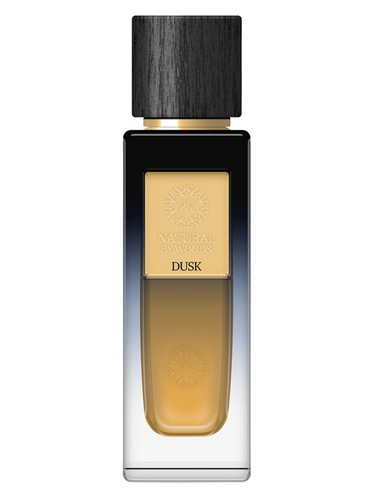
The first spray of Dusk reveals an immediate paradox—a fragrance marketed as feminine that speaks in a decidedly androgynous voice. Apple and mandarin orange burst forth with unexpected restraint, their brightness tempered by an herbal lavender that feels more apothecary than floral boutique. This isn''t the candied apple of conventional women''s fragrances, nor is it the sharp citrus of traditional masculines. Instead, Dusk opens with a composed, almost meditative quality, as if the twilight hour itself had been distilled into liquid form.
Within minutes, the warm spicy accord—which dominates at 100%—begins its slow ascent, wrapping around those fresh opening notes like evening shadows lengthening across a forest floor. There''s an immediate sophistication here, a complexity that suggests The Woods Collection had no interest in playing by established rules when they released this in 2020.
The Scent Profile
The evolution of Dusk unfolds with deliberate pacing. Those initial top notes of apple, lavender, and mandarin orange create an intriguing tension—fruity yet herbal, bright yet grounded. The apple never veers sweet, instead maintaining a crisp, almost woody quality that hints at what''s to come. The lavender, particularly, feels crucial to the composition''s identity; it''s this aromatic backbone (66% in the accord profile) that prevents the fragrance from sliding into conventional territory.
As the heart emerges, Dusk reveals its most fascinating layer. Violet, geranium, and jasmine form a floral trio that refuses to bloom predictably. The violet adds a powdery, almost iris-like sophistication, while geranium contributes a green, slightly minty facet that keeps things from becoming too plush. Jasmine, often the diva of floral compositions, plays a supporting role here—its indolic richness merely suggested rather than announced. This restraint is key; the florals serve the spice rather than competing with it.
The base is where Dusk truly settles into its identity. Vanilla arrives with a 71% presence in the accord structure, but this isn''t dessert. Instead, it''s warmed and complicated by cardamom and pepper, creating that fresh spicy element (65%) that gives the fragrance its distinctive personality. The woody notes, sandalwood, and patchouli form a foundation that''s simultaneously creamy and dry, earthy and refined. Sandalwood lends its characteristic milky smoothness, while patchouli—often problematic in heavy doses—remains subtle, adding depth without overwhelming. The result is a base that feels both comforting and complex, familiar yet unexpected.
Character & Occasion
Here''s where Dusk becomes genuinely intriguing. The data shows this as an all-season fragrance with no particular lean toward day or night wear, and that versatility is both its strength and its challenge. This is a fragrance that demands a certain confidence from its wearer—someone comfortable with ambiguity, with occupying a space between categories.
The warm spicy dominance means Dusk wears beautifully in cooler months, when that vanilla-cardamom-pepper combination can fully bloom against cold air. Yet the fresh opening and aromatic lavender prevent it from becoming oppressive in spring or even moderate summer evenings. It''s a true chameleon, adapting to its environment and the wearer''s chemistry.
As for occasions, Dusk defies the typical day-to-night binary. It''s refined enough for professional settings where you want to project sophistication without aggression, yet intimate enough for evening wear when you want something more personal than crowd-pleasing. This is a scent for galleries and wine bars, for autumn walks and late dinners, for anyone who appreciates fragrance as conversation rather than declaration.
Community Verdict
With a rating of 4.56 out of 5 from 797 votes, Dusk has clearly resonated with those who''ve encountered it. This is a substantial sample size, and that rating places it firmly in "beloved" territory. The enthusiasm suggests that while Dusk may not be for everyone, those who connect with it do so deeply. This isn''t a fragrance that inspires lukewarm reactions—it''s polarizing in the best way, attracting those who appreciate its unconventional approach while perhaps confusing those seeking more straightforward compositions.
How It Compares
The comparisons to fragrances like Layton by Parfums de Marly, Le Male Le Parfum, and La Nuit de l''Homme are revealing. These are predominantly masculine fragrances known for their spicy-sweet profiles, which underscores just how transgressive Dusk''s "feminine" classification really is. Like Layton, it balances vanilla with spice in sophisticated measure. The Le Male Le Parfum comparison suggests a similar iris-vanilla tension, while La Nuit de l''Homme shares that cardamom-centered warmth.
What distinguishes Dusk is its aromatic lavender component and that unique apple-violet combination in the opening and heart. Where those designer and niche masculines often lean into power and projection, Dusk maintains a more intimate, skin-like quality—spicy and warm, yes, but never aggressive.
The Bottom Line
Dusk by The Woods Collection is a fragrance that challenges categorization while delivering genuine olfactory pleasure. Its 4.56 rating reflects a composition that knows exactly what it wants to be—complex, warm, aromatic, and unapologetically itself. For those exhausted by the sugary vanilla bombs or one-dimensional florals that dominate the feminine fragrance market, Dusk offers a refreshing alternative.
This is for the person who raids both sides of the fragrance counter, who appreciates spice and depth, who wants something versatile enough for everyday wear but distinctive enough to feel special. At an unknown concentration, longevity and projection remain question marks, but the composition itself is undeniably accomplished.
Should you try it? If you''ve ever wished your vanilla came with cardamom, if you find comfort in woody ambiguity, if you believe fragrance transcends gender—then yes, absolutely. Dusk deserves a place on your testing list, and quite possibly, on your skin.
AI-generated editorial review